Tired of shallow slots and the acrid smell of burnt-out motors?
Hiding pipes and conduits in solid concrete is a notoriously grueling task. Relying on the wrong tool ruins your project timeline. It frequently leads to costly rework and unnecessary physical fatigue. A modern brushless wall cutter resolves this exact issue. It delivers the sustained torque and precision required for professional-grade installations. In this comprehensive guide, you will discover exact cutting depths and learn how to match machine specifications to your trade. You will also understand why upgrading your equipment is essential for modern construction workflows.
Key Takeaways
Standard Depth Range: Most standard brushless models can slot between 20mm and 42mm deep. This depends entirely on the specific blade setup and housing design.
Heavy-Duty Depth: Industrial-grade models utilizing larger 150mm blades can seamlessly reach maximum depths of up to 50mm.
Project Specifics: Electrical wiring typically requires 20mm to 25mm depths. Plumbing pipes generally demand 30mm to 50mm of clearance.
Brushless Advantage: A brushless motor provides sustained torque. This ensures the tool does not bog down or stall when hitting dense cured concrete aggregates.
Blade Size Matters: The absolute maximum slotting depth is directly dictated by the diameter of the diamond blades installed on the spindle.
Industry Trends: The Shift Toward Smart Brushless Technology
Recent market analyses highlight a massive shift in the construction power tool sector. Professionals are rapidly abandoning traditional brushed tools in favor of brushless and smart-motor technologies. This transition is largely driven by stricter occupational safety regulations regarding silica dust exposure. There is also a relentless demand for higher on-site efficiency. As contractors face tighter deadlines, the sustained torque and zero-maintenance profile of brushless technology are becoming mandatory industry standards. Upgrading is no longer just about premium features; it is about remaining competitive and compliant on modern job sites.
The Short Answer: How Deep Can a Brushless Wall Cutter Actually Slot?
When engineering a construction or renovation layout, knowing the precise mechanical limitations of your tools is critical. The cutting depth of a slotting tool is not infinite. It is strictly constrained by mechanical design and blade geometry. Generally speaking, these machines can cut anywhere from 20mm to 50mm deep.
Standard Depths for 115mm and 125mm Blades
Smaller machines are engineered prioritizing maneuverability and overhead use. They typically utilize 115mm or 125mm diamond blades. With a 115mm blade, the maximum cutting depth usually tops out around 25mm to 30mm. Stepping up to a 125mm blade allows the machine to reach depths of 30mm to 35mm. These dimensions are the gold standard for residential electrical work. The primary objective here is to recess standard PVC conduits or wiring neatly beneath the plaster line.
Maximum Depths for 150mm Blades
For more demanding commercial applications, heavy-duty wall chaser models are absolutely required. These robust units accommodate 150mm diamond blades. Thanks to the larger diameter, these machines can push depths up to 40mm. In some specialized industrial models, they can even reach 50mm. This extreme depth is necessary for recessing larger plumbing waste pipes or thick insulated HVAC lines without compromising the surface integrity of the wall.
Width Versus Depth Capabilities
Beyond pure penetration, channel width plays an equally crucial role. These machines feature highly adjustable cutting widths. Operators can fine-tune the channel width from a narrow 8mm up to a wide 40mm. This is achieved by manually adding or removing interlocking spacer rings on the mounting spindle between the blades.
| Blade Diameter | Average Max Depth | Average Adjustable Width | Primary Application |
| 115mm | 25mm - 30mm | 8mm - 30mm | Low-voltage cables, small wiring |
| 125mm | 30mm - 35mm | 8mm - 30mm | Standard electrical conduits |
| 150mm | 40mm - 50mm | 8mm - 40mm | Plumbing pipes, HVAC lines |
Key Factors That Determine Cutting Depth
Understanding why a machine cuts to a specific depth requires a closer look at its physical and mechanical components. You cannot simply force a tool to cut deeper than its structural design allows. Doing so risks catastrophic equipment failure and severe injury.
Diamond Blade Diameter
The geometry of the tool acts as the primary limiting factor. A diamond blade features a center hole where it mounts to the spindle of the machine. The upper half is heavily shielded by a safety guard. Consequently, only the bottom quadrant of the blade is exposed to penetrate the masonry. A 150mm blade cannot cut 150mm deep. The locking nut and the guard housing restrict the usable cutting radius to roughly 40mm to 50mm.
Motor Power and Torque
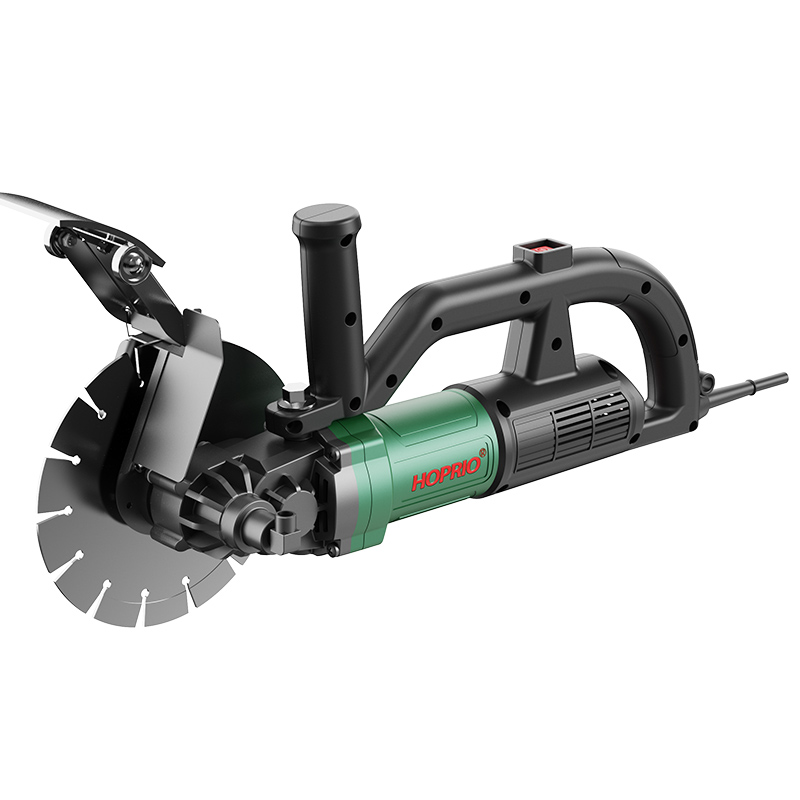
Physical blade size means nothing if the motor lacks the muscle to spin it through dense material. High-wattage machines are necessary to handle deeper cuts without stalling. For instance, a 4000W AC brushless motor provides the massive torque required for continuous deep slotting. As you increase the cutting depth, you exponentially increase the friction and drag against the surface of the blade. A machine with insufficient torque will quickly overheat or trigger its internal electronic overload protection long before reaching its maximum physical depth.
Material Density
The substrate being cut significantly dictates both the achievable depth and the speed at which you can work. Gliding 40mm deep into soft aerated cinderblock feels almost effortless. It puts minimal strain on the motor. However, pushing a concrete cutter to its maximum depth in cured reinforced concrete containing hard river rock aggregate is highly demanding. In these high-friction scenarios, operators must adopt a slower feed rate. This deliberate pace allows the brushless motor to maintain its optimal RPMs.
Matching Slot Depth to Your Specific Project Requirements
Selecting the right tool requires aligning its mechanical capabilities with the specific building codes and spatial requirements of your trade.
Electrical Wiring and Conduits
Electricians generally deal with smaller diameter materials. Standard PVC electrical conduits usually measure 16mm or 20mm in diameter. To properly conceal these conduits, the slot needs to be 20mm to 25mm deep. This precise depth allows the conduit to sit flush or slightly recessed. It leaves a 5mm buffer for plaster or filler to cover it smoothly. For this specific application, a lightweight compact machine swinging 115mm or 125mm blades is undeniably the most efficient choice.
Plumbing and HVAC Pipes
Plumbers and HVAC technicians face an entirely different set of challenges. Water supply lines, PVC drainage pipes, and thick insulated copper pipes demand significantly more space. A standard water pipe might require a 35mm to 50mm slot to ensure it does not protrude past the raw wall surface. Therefore, plumbers require heavy-duty machines capable of housing 150mm blades to achieve these deeper and wider channels.
Smart Home Installations and Data Cables
Modern smart home setups necessitate running multiple low-voltage data cables alongside traditional wiring. These sprawling installations rarely require deep cuts. Instead, they demand shallow and wider trenches. A depth of 15mm to 20mm is usually sufficient. The width might need to be expanded to 30mm to accommodate thick cable bundles side-by-side without crushing their delicate internal shielding.
Why Choose Brushless Over Traditional Brushed Models?
For professionals who slot walls daily, the internal mechanics of the tool matter just as much as its external specifications. Transitioning from traditional brushed motors to a modern brushless cutter offers objective mechanical advantages. These directly impact on-site productivity and safety.
Sustained Power Under Load
Traditional motors rely on carbon brushes to physically conduct electricity to the spinning rotor. Under heavy loads, the internal friction spikes. This causes the motor to bog down and lose crucial RPMs. Brushless motors utilize an electronic circuit board to intelligently control power delivery. This micro-controller actively senses the resistance the blade encounters and adjusts the current on the fly. The blade maintains a relentless and consistent speed. This prevents dangerous stalls when hitting dense aggregate.
Longer Lifespan and Zero Maintenance
Carbon brushes are an inherent wear item. In high-dust environments like concrete cutting, they degrade rapidly. This requires frequent and annoying replacements. A brushless motor eliminates these physical brushes entirely. With fewer moving parts and drastically less internal friction, the motor generates significantly less heat. This fundamental design shift extends the overall lifespan of the tool and completely eliminates the downtime associated with brush maintenance.
Lighter Weight and Better Ergonomics
By eliminating the bulky commutator and brush assembly, these modern motors boast a vastly superior power-to-weight ratio. They are structurally much more compact. When an operator has to hold a heavy tool horizontally against a wall for extended periods, weight matters. Reducing the machine weight by even a single kilogram significantly mitigates physical fatigue and dramatically improves precise depth control.
Wall Cutter Versus Angle Grinder: Which is Better for Deep Slots?
When tasked with creating channels for conduits or pipes, many contractors initially consider using a standard angle grinder equipped with a masonry blade. While an angle grinder can technically score concrete, relying on it for deep repetitive slotting introduces severe mechanical limitations and unacceptable safety hazards.
Precision and Depth Control
The most critical difference lies in structural design. Standard angle grinders lack an integrated base plate. When an operator plunges an angle grinder into a brick surface, the depth of the cut relies entirely on manual estimation and arm stability. This inevitably leads to uneven channels. Some sections may be too shallow to house a 25mm conduit, while others may cut unnecessarily deep.
Conversely, a dedicated brushless machine features a highly engineered adjustable base plate. This mechanism allows the operator to set a strict physical limit on blade penetration. Once the depth gauge is locked firmly at 30mm, the machine will not cut a millimeter deeper. This ensures absolute flawless uniformity across the entire length of the channel.
Single Pass Versus Double Pass Efficiency
Creating a slot with an angle grinder requires drawing two parallel lines and making two separate freehand cuts. Keeping these two cuts perfectly parallel over a long distance is incredibly difficult. Furthermore, this archaic method doubles the operational time and accelerates expensive blade wear.
A professional wall slotting machine utilizes an extended arbor designed to mount two or more diamond blades simultaneously. By placing spacer rings between these blades, the operator determines the exact width of the channel. The machine effortlessly cuts both sides of the slot in a single efficient pass. Advanced models can mount up to five blades. This effectively pulverizes the material in the center and eliminates the need for tedious manual chiseling later.
Dust Management and Safety
Cutting masonry generates hazardous respirable crystalline silica dust. Angle grinders operate with open guards. They project a massive plume of dust and debris directly into the surrounding environment. Aftermarket dust shrouds exist for grinders, but they often suffer from poor sealing and severely restrict visibility.
A purpose-built cutter is engineered from the ground up with a fully enclosed blade housing and a direct high-velocity vacuum port. When paired with an appropriate HEPA dust extractor, this closed-loop system captures up to 95 percent of airborne particulates right at the source. This ensures strict compliance with occupational safety regulations.
Step-by-Step Guide: Setting Your Machine for the Perfect Depth
Achieving the correct slot depth is a matter of basic mathematics and proper tool calibration. Setting the depth incorrectly can result in exposed pipes that interfere with plastering. Follow these technical steps to configure your equipment accurately on the job site.
Step 1: Measure Your Conduit or Pipe
Never set your cutting depth to the exact diameter of the material you intend to install. If you are installing a standard 20mm electrical PVC conduit, a 20mm slot will leave the conduit perfectly flush with the bare wall. This leaves absolutely no room for filler or drywall compound.
The industry standard is to add a minimum of 5mm to 10mm of clearance to your measurement. Therefore, for a 20mm conduit, calculate a target depth of 25mm to 30mm. If you are installing a 40mm plumbing waste pipe, your target depth should be set between 45mm and 50mm.
Step 2: Adjusting the Base Plate and Depth Gauge
Ensure the machine is completely disconnected from its power source before making any mechanical adjustments. Locate the depth adjustment lever or locking knob. This is typically situated near the rear handle or alongside the blade guard.
Loosen the locking mechanism to free the base plate. Most professional machines feature a graduated scale stamped directly into the metal housing. Pivot the base plate until the indicator aligns with your calculated target depth. Tighten the locking lever firmly. Apply downward pressure on the base plate with your hands to verify that the locking mechanism holds securely. It must not slip under the intense vibration of the motor.
Step 3: Executing the Cut
Once the depth is set and the vacuum hose is attached, position the machine against the wall. Do not start the motor with the blades touching the masonry. Rest the front rollers of the base plate against the wall. Leave a small gap between the diamond blades and the surface.
Engage the trigger and allow the brushless motor to reach its maximum RPM. Slowly pivot the rear of the machine toward the wall, plunging the blades into the concrete. You will feel the base plate stop the plunge exactly at your preset depth. From there, let the tool do the heavy lifting. Apply steady even pressure in the direction of the cut. Allow the sustained torque of the motor to maintain a consistent feed rate.
Essential Safety and Dust Control Tips
Operating high-torque machinery equipped with diamond blades requires strict adherence to safety protocols. The physical hazards include jarring kickback, acoustic damage, and long-term respiratory illness caused by silica exposure.
Mastering Dust Extraction
Dry-cutting concrete releases microscopic silica particles. Chronic inhalation of these particles leads to silicosis. Relying solely on a basic shop vacuum is dangerously insufficient.
Your machine must be connected to a Class M or Class H HEPA-certified dust extractor. The vacuum must possess a high Cubic Feet per Minute rating to match the massive volume of dust generated by dual 150mm blades spinning at 6,000 RPM. Ensure your vacuum utilizes an automatic filter-cleaning mechanism like reverse airflow pulsing. This prevents the fine concrete powder from clogging the HEPA filter and dropping the suction pressure mid-cut.
Wet Cutting Versus Dry Cutting
While high-capacity vacuums handle dry cutting effectively, heavy-duty industrial projects often require wet cutting. Advanced tools feature integrated water feed attachments. Utilizing a dust-free wet cutting tool serves two critical functions.
First, introducing a steady flow of water completely suppresses airborne dust. It turns the silica into a heavy manageable slurry. Second, the water acts as a crucial coolant for the diamond matrix. When pushing a machine to its maximum 50mm depth in heavily reinforced high-PSI concrete, thermal buildup can warp the steel blade cores. Wet cutting significantly extends the lifespan of your expensive consumables.
Personal Protective Equipment
Even with superior dust extraction, personal protective equipment remains mandatory. Operators must wear a half-face particulate respirator fitted with P100 filters. Standard paper dust masks do not provide adequate sealing against silica. The acoustic output of cutting solid concrete indoors often exceeds 100 decibels. Industrial-grade earmuffs are essential to prevent permanent hearing damage. Utilize anti-vibration heavy-duty work gloves to maintain a secure grip and reduce the transmission of mechanical shock to the hands.
What to Look for When Buying a Brushless Concrete Cutter
Selecting the appropriate equipment requires carefully matching the machine specifications to the structural realities of your daily projects. Purchasing an underpowered machine will result in stalled blades. An oversized machine may cause unnecessary operator fatigue on lighter residential jobs.
Maximum Depth and Width Specifications
The primary metric to evaluate is the absolute maximum cutting capacity. If your trade primarily involves low-voltage wiring, a compact machine utilizing 115mm blades with a maximum depth of 30mm is highly efficient. It is easy to maneuver in tight spaces.
Plumbers and commercial HVAC technicians dealing with larger pipes should exclusively look at machines capable of mounting 150mm blades. Verify the spacer ring configurations to ensure the machine can achieve a width of at least 40mm. Upgrading to a specialized tool with a 4000W AC brushless motor ensures continuous operation without the frustration of thermal overloads.
Blade Capacity Configurations
Examine the arbor length of the machine. Traditional models hold exactly two blades. These cut the outer borders of the channel. This requires the operator to follow up with a rotary hammer to aggressively break out the middle section.
High-efficiency models feature an extended arbor capable of housing up to five diamond blades stacked closely together. This multi-blade configuration grinds the entire channel into fine dust in a single pass. While this requires significantly more motor torque, it drastically reduces the overall time spent on site. Professionals prefer a dedicated brushless unit that integrates advanced motor management to handle the intense friction of five simultaneous blades.
Ergonomics and Handle Design
Cutting vertical and horizontal slots requires significant physical leverage. You are often working in awkward positions or confined spaces. Carefully evaluate the handle architecture of the machine.
Look for models featuring adjustable multi-position D-handles. These allow the operator to dynamically shift their grip depending on whether they are pushing the machine vertically down a wall or dragging it horizontally across a ceiling. Check the material of the handles. High-impact ABS plastic with rubberized over-molding provides superior grip. It actively helps dampen the high-frequency vibrations generated during deep concrete penetration.
FAQ
Can a brushless wall cutter cut through reinforced concrete or rebar?
Yes, but the capability relies heavily on the quality of the consumables rather than just the machine. High-grade laser-welded diamond blades designed specifically for reinforced concrete can shear through standard rebar. When the blades contact steel, you will feel a distinct change in vibration. The operator must reduce the feed rate immediately. Pushing too hard will overheat the diamond segments, potentially causing them to detach. It may also trigger the electronic overload protection, temporarily shutting down the motor to prevent catastrophic damage.
How wide can a wall slotting machine cut?
The cutting width is highly customizable. Most professional machines allow for adjustable widths ranging between 8mm and 40mm. This is achieved by disassembling the arbor and manually adding or removing interlocking metal spacer washers between the diamond blades. The exact maximum width is ultimately dictated by the length of the threaded mounting spindle.
Do I have to chisel out the middle after cutting?
If you are operating a standard two-blade setup, yes. The machine will only cut the two parallel boundary lines of the trench. This leaves a solid core of concrete in the middle. You must use a rotary hammer drill equipped with a flat chisel bit to knock out this center strip. If you utilize a multi-blade machine equipped with four or five blades, the entire interior of the slot is pulverized during the cut. This requires zero follow-up chiseling.
Is a brushless cutter better for overhead slotting?
Absolutely. Brushless motors eliminate the heavy physical components found in traditional brushed motors. This results in a significantly higher power-to-weight ratio. The tool is physically lighter and more compact. This drastically reduces shoulder and arm fatigue when holding the machine against a ceiling for extended periods. Brushless technology also produces less internal mechanical friction, resulting in lower operational vibration.
How do you maintain a straight line when cutting deep slots?
Maintaining a straight line requires proper setup before pulling the trigger. Always draw a clear highly visible guide line on the wall using a chalk line or construction marker. Many modern machines feature a built-in laser guide or a notch on the front of the base plate. Align this notch with your drawn line. Let the weight and momentum of the machine do the work. Forcing the tool sideways will cause the blades to bind and veer off course.
What happens if the wall cutter overheats during a deep cut?
Professional brushless machines are equipped with smart electronic controllers. If you push the machine too hard into dense concrete, the controller senses the spike in thermal temperature and electrical current. It will automatically cut power to the motor to prevent the internal coils from melting. If this happens, remove the tool from the slot. Let it rest for a few minutes to cool down. Check your blades for glazing and resume cutting at a slower more deliberate feed rate.
Upgrading your construction arsenal with the right equipment transforms grueling concrete work into a streamlined and profitable process. Whether you are an electrician needing precise 25mm channels or a plumber requiring robust 50mm deep trenches, investing in modern brushless technology is the smartest choice for your business. For professionals looking to maximize their on-site efficiency with high-powered, dust-free, and highly durable equipment, explore the advanced 4000W AC brushless solutions available at Hoprio to find the perfect machine that matches your exacting project demands.


