Often considered the most underutilized tool in the shop, selecting the wrong Straight Grinder carries a high operational cost. Premature motor burnout, excessive operator fatigue, and compromised surface finish frequently result from inadequate torque. Spec sheets routinely obscure real-world performance. Buyers struggle to match RPM, wattage, and thermal management capabilities to specific applications. Heavy material removal demands vastly different specifications than precision deburring. You need a technical evaluation framework to cut through marketing claims. Assess these tools based on internal build quality, power delivery, and long-term reliability. A proper evaluation prevents costly downtime and ensures your operators have the right tool for sustained, aggressive material removal.
Key Takeaways
Application Dictates Power: Distinguish between light-duty tasks requiring high RPMs and heavy material removal requiring high torque and wattage (1050W to 3500W).
Thermal Management is Critical: Highlight that budget models often fail due to insufficient copper windings and undersized bearings, leading to rapid overheating during continuous use.
Form Factor Alignment: Summarize the ergonomic and functional differences between straight configurations, mini sizes, and right-angle alternatives for specific access requirements.
Safety and Fatigue: Emphasize that vibration reduction, noise management, and proper trigger mechanisms are non-negotiable for operator safety and compliance in industrial settings.
Defining the Baseline: Straight Grinder vs. Die Grinder
Problem Framing
Industry professionals frequently confuse straight grinders with standard die grinders. This confusion leads to poor purchasing decisions and rapid tool failure on the shop floor. Establishing proper success criteria requires understanding the mechanical limits of each tool type. A die grinder handles light deburring, gasket removal, and fine detail work. A straight grinder tackles heavy stock removal, deep weld blending, and aggressive surface preparation. Treating them interchangeably guarantees subpar results. When a fabricator grabs a lightweight die grinder to hog out a heavy slag deposit, the motor bogs down. The operator pushes harder, the internal temperature spikes, and the stator burns out. Conversely, using a massive straight grinder for delicate aluminum polishing ruins the workpiece. You must define the exact material removal rate your shop requires before looking at tool specifications.
Size and Handling Differences
Physical footprint dictates operational control. Standard die grinders feature a compact, one-handed profile. Operators hold them like oversized markers for intricate metalwork. They weigh very little, allowing for high precision over short durations. Straight grinders demand a rigid two-handed grip. They feature elongated bodies, massive metal gear housings, and significant weight. This bulk provides the necessary stability to control heavy accessories biting into dense metal. You cannot safely operate a full-sized straight model with one hand without risking severe kickback. The secondary handle on a straight grinder allows the operator to apply heavy downward pressure. This leverage is mandatory when running large flap wheels or heavy resinoid stones. Without that physical mass, the tool would bounce off the work surface, chattering and leaving a terrible finish.
Standard vs. Mini Configurations
Manufacturers now offer mini straight grinders to bridge the gap between die grinders and full-sized models. Evaluate your access requirements carefully. A compact, lightweight profile excels in tight linear access points. Pipe fitters often use mini models to clean up internal root passes inside six-inch pipes. The shorter barrel allows maneuverability where a full-sized tool simply will not fit. However, mini models sacrifice internal motor mass and cooling capacity. When your application requires sustained pressure on flat stock or heavy I-beams, a full-sized body is mandatory. The extra weight of a standard straight grinder absorbs vibration. It prevents the tool from skipping. If your operators spend eight hours a day grinding heavy plate steel, handing them a mini grinder will destroy the tool and exhaust the operator.
Power and Torque Discrepancies
Die grinders excel at high-speed detail work. They often spin at 25,000 RPM or more. They rely on sheer speed rather than torque to remove material. Straight grinders are engineered for sustained torque. They power through heavy stock removal without bogging down. When you press a large abrasive cone into a cast iron block, a die grinder stalls immediately. A straight grinder maintains its RPM, transferring the motor's raw power directly into the cut. Torque is the twisting force that keeps the spindle turning under load. High torque allows you to use larger diameter accessories. It lets you push harder against the workpiece. In heavy fabrication, torque always wins over free-spinning RPM.
The "If You Can Only Have One" Dilemma
Choosing between a right-angle grinder and a straight grinder involves strict access trade-offs. Right-angle grinders dominate confined, lateral spaces. They excel at flush-cutting and surface grinding on wide, flat planes. The 90-degree gear head allows the operator to lay the tool flat against a table. Straight models offer superior overall handling for deep internal pipe grinding. They provide unmatched control for linear surface prep. If your work involves reaching down into cylinders, smoothing long internal seams, or porting engine blocks, the straight configuration wins every time. The inline design aligns the operator's forearms directly behind the cutting accessory. This straight-line force transfer reduces wrist strain during heavy plunging operations.
Core Evaluation Dimensions for a Straight Grinder
Motor Power and Wattage Requirements
Motor wattage dictates the tool's absolute ceiling for material removal. The wattage spectrum typically spans from 1050W up to 3500W. Entry-level models sit around 1050W. These handle standard fabrication tasks, sheet metal edge prep, and light weld blending. Heavy foundry work requires the upper end of that spectrum. You must specify a Heavy Duty Straight Grinder based on material density. Grinding cast iron demands massive torque to keep the wheel spinning under heavy operator pressure. Aluminum requires less torque but demands consistent power to prevent the abrasive from loading up and stalling the motor. A 2500W motor will effortlessly drive a 3-inch grinding stone through thick steel slag. A 1050W motor attempting the same task will overheat within minutes. Always buy 20% more wattage than your daily average task requires. This overhead prevents the motor from running at maximum capacity all day, significantly extending its lifespan.
RPM and Speed Control
Rotational speed must match the accessory and the material. A High Speed Straight Grinder excels when using smaller abrasives or carbide burrs. These accessories need high RPM to cut cleanly without catching or shattering. However, running large flap wheels at maximum speed will burn the material and destroy the abrasive. Variable speed dials are non-negotiable for versatile shops. Dialing down the RPM prevents heat discoloration on stainless steel. It significantly extends the life of expensive abrasive wheels. When working with heat-sensitive alloys like titanium, high RPMs create localized work hardening. The metal becomes too hard to grind effectively. Lowering the speed keeps the cut cool. It allows the abrasive grains to fracture and expose sharp edges properly.
Collet Size and Spindle Capacity
Accessory compatibility hinges entirely on the collet or spindle design. Standard collet sizes include 1/4-inch, 6mm, and 8mm. Light tasks utilize 1/4-inch shanks. Heavy-duty applications demand 8mm collets to prevent shank deflection under load. When you apply heavy lateral pressure, a thin 1/4-inch shank can bend. This causes massive vibration and immediate accessory failure. Some massive straight grinders bypass collets entirely. They use threaded spindles to mount large grinding stones directly. Always check the maximum wheel diameter ratings. Exceeding the manufacturer's diameter rating creates lethal safety hazards. An oversized wheel spinning at high RPM can shatter instantly due to excessive centrifugal force. Shrapnel from a disintegrated grinding stone easily penetrates standard safety glasses and heavy work shirts.
| Wattage Range | Typical RPM | Collet / Spindle Size | Ideal Application |
| 1050W - 1500W | 20,000 - 30,000 | 1/4-inch / 6mm | General fabrication, heavy deburring, weld prep. |
| 1500W - 2500W | 12,000 - 20,000 | 8mm / Small Threaded | Aggressive stock removal, pipe beveling. |
| 2500W - 3500W | 6,000 - 12,000 | Large Threaded Spindle | Foundry casting cleanup, heavy steel grinding. |
Assessing Build Quality and Thermal Management
Internal Component Integrity
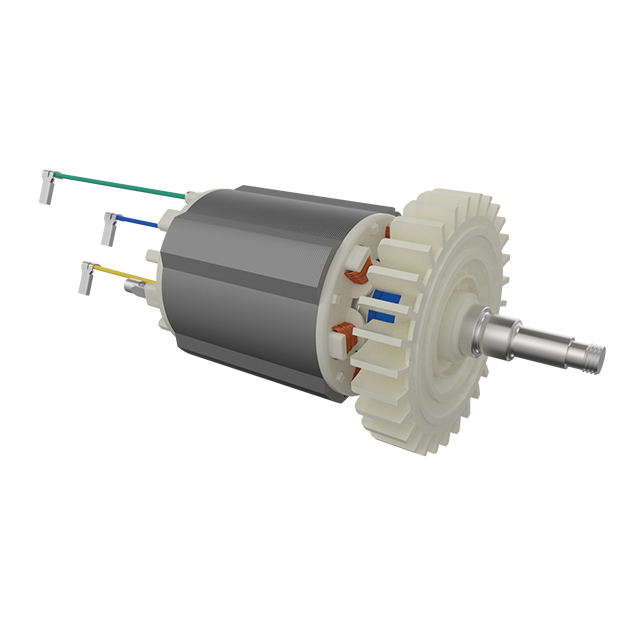
Spec sheets rarely detail internal motor construction, yet this dictates tool lifespan. Copper winding density in the armature and stator is the primary factor. High-density copper handles electrical loads efficiently. Budget models skimp on copper, substituting thinner wire or aluminum blends. This results in rapid heat buildup during sustained loads. When the windings overheat, the internal insulation melts, causing a catastrophic short circuit. A heavy tool usually indicates dense, high-quality copper windings. Furthermore, look for epoxy-coated armatures. Metal dust generated during grinding is highly conductive. If this dust settles on unprotected motor windings, it causes immediate shorts. Industrial models encapsulate their windings in thick resin to armor them against abrasive particle ingress.
Bearing Quality and Placement
Bearings take the brunt of the physical abuse during grinding. Oversized, sealed bearings are mandatory. They prevent microscopic abrasive dust from penetrating the motor housing. Dust acts like sandpaper on moving parts, destroying standard bearings in weeks. High-quality bearing placement reduces runout at the collet. Runout is the slight wobble of the accessory. Even a millimeter of runout causes severe vibration. It ruins carbide burrs and accelerates operator fatigue. Manufacturers achieve low runout by placing the front bearing as close to the collet as possible. This minimizes the unsupported length of the spindle. When evaluating a tool, insert a long burr and spin it by hand. Any visible wobble indicates poor bearing alignment or a cheap collet mechanism.
Heat Dissipation in Continuous Use
Continuous grinding generates massive thermal loads. An Industrial Straight Grinder must run for multi-hour shifts without thermal overload. Evaluate the airflow design and housing materials. Metal gear housings act as heat sinks. They pull thermal energy away from the motor and bearings, dissipating it into the surrounding air. All-plastic bodies trap heat internally. Look for large, strategically placed exhaust vents. These should direct hot air away from the operator's hands and face. Tools that get too hot to hold after ten minutes fail the industrial standard. Advanced models feature internal cooling fans that scale with the RPM, forcing high-velocity air over the stator regardless of the load.
Excessive heat radiating through the grip area within the first fifteen minutes of use.
A distinct burning plastic or ozone smell emitting from the exhaust vents.
Sudden drops in RPM without a corresponding increase in operator pressure.
Discoloration or warping of the plastic housing near the gear case.
Grease leaking from the front spindle bearing due to thermal breakdown of the lubricant.
Power Source Trade-offs: Pneumatic vs. Corded vs. Cordless
Pneumatic (Air) Grinders
Pneumatic grinders dominate continuous industrial assembly lines and shipyards. They offer an unbeatable power-to-weight ratio because they lack heavy internal electric motors. There is zero risk of electrical motor burnout, no matter how hard the operator pushes. The expanding exhaust air naturally cools the tool during operation. You can stall a pneumatic grinder all day without damaging the internal components. However, pneumatic tools require massive infrastructure. You need high-capacity shop air compressors, heavy hoses, and constant inline lubrication to keep them running. They are useless outside a properly equipped facility. Pressure drops in the air line immediately reduce torque, making consistent performance highly dependent on your shop's compressor capacity.
Corded Electric Grinders
Corded electric models remain the standard for consistent, heavy-duty output where high-volume air is unavailable. They deliver relentless torque for heavy fabrication. You plug them in, and they run at full power until the job is done. When evaluating corded models, inspect the cable durability and strain relief. The junction where the power cord enters the tool housing is the most common failure point. Industrial models feature thick, rubberized cords and reinforced strain relief boots. These survive being dragged across concrete floors, stepped on by steel-toed boots, and pulled around sharp metal edges. Look for models with easily accessible carbon brush ports. This allows operators to swap worn brushes in minutes without disassembling the entire tool housing.
Cordless (Battery) Grinders
Cordless technology has advanced rapidly. Modern brushless motors paired with high-output battery platforms deliver impressive burst power. They excel in mobile repair, pipeline maintenance, and remote field scenarios. You eliminate trip hazards and the need for heavy extension cords. However, aggressive grinding tasks drain batteries exceptionally fast. A high-wattage equivalent cordless grinder might deplete a large 8Ah battery in ten minutes under heavy load. Ecosystem compatibility is critical. Buy into your existing shop battery platform, whether 12V compact or 18V/20V heavy-duty systems. This maximizes your return on investment and avoids redundant charger purchases. Cordless models are excellent secondary tools, but they rarely replace corded or pneumatic options for continuous, eight-hour grinding shifts.
Implementation Risks and Safety Considerations
Operator Fatigue, Ergonomics, and Noise
Daily operator fatigue directly impacts shop productivity and safety. Analyze the tool weight and grip diameter. A grip that is too wide forces the operator to strain their forearms, leading to cramping and reduced control. Active vibration damping systems separate the motor housing from the grip handles. This drastically reduces hand-arm vibration syndrome, a serious occupational hazard that causes permanent nerve damage. Acoustic footprints also matter. High-speed operation generates severe noise. Cheaper models with poorly machined gears run significantly louder, often emitting a high-pitched scream. This requires stricter hearing protection protocols and limits communication on the shop floor. High-quality helical gears run smoother and quieter, reducing the overall decibel output of the fabrication bay.
Switch Types and Safety Mechanisms
Switch selection dictates operational safety. Paddle switches, often called dead-man switches, require constant pressure. If the operator drops the tool or suffers a medical emergency, the motor stops instantly. Slide switches often feature lock-on capabilities. These reduce hand fatigue during long continuous runs but present a massive hazard. If the tool binds and kicks out of the operator's hands, a locked-on grinder will thrash wildly across the floor, causing severe injuries. Commercial fabrication shops frequently enforce strict compliance requirements, mandating paddle switches to prevent runaway tool accidents. Always check your local safety regulations and corporate compliance policies before purchasing lock-on grinders for a commercial environment.
Kickback and Electronic Protections
Modern straight grinders incorporate advanced electronic protections. Electronic clutches monitor the spindle RPM constantly. If the accessory snags in a tight corner and the RPM drops suddenly, the clutch cuts power to the motor in milliseconds. This protects the user from violent kickback, which can easily break wrists or throw the operator off balance. Soft-start features are equally important. They gradually ramp up the motor speed when the trigger is pulled. This prevents the high-torque motor from jerking the tool out of the operator's hands upon startup. It ensures immediate control and prevents the accessory from gouging the workpiece before the operator is ready to begin the cut.
Conclusion
The best straight grinder is one where the internal build quality perfectly matches the thermal demands of your specific application. Dense copper windings and sealed bearings are non-negotiable for heavy-duty survival. Spec sheets only tell half the story; physical construction dictates the reality on the shop floor. You must align the tool's torque output, collet capacity, and power source with the daily realities of your fabrication environment. Buying an underpowered tool saves money upfront but costs thousands in downtime and replacement parts.
Follow these next steps to finalize your procurement process:
Audit your primary abrasive types and required wheel diameters to determine the exact RPM range your new tool must support.
Inventory your existing shop battery ecosystems to ensure any cordless purchases align with your current chargers and high-capacity packs.
Track your operators' daily continuous usage hours to determine if you need a standard corded model or a pneumatically driven system for extreme thermal management.
Review your facility's safety compliance manuals to confirm whether lock-on slide switches are permitted or if paddle switches are strictly mandated.
FAQ
Q: What is the difference between a straight grinder and an angle die grinder?
A: The primary difference lies in the spindle orientation and power output. A straight grinder has the spindle inline with the motor, offering high torque and a two-handed grip for heavy, linear material removal. An angle die grinder positions the spindle at a 90-degree angle, utilizing a smaller motor designed for high-speed, one-handed detail work in tight, lateral spaces.
Q: If I can only buy one, should I get a straight or right-angle grinder?
A: Straight grinders are generally easier to handle and provide superior stability for deep, linear access. This makes them the most versatile first choice for general fabrication. You should only choose a right-angle grinder as your primary tool if your work is exclusively confined to tight, lateral spaces where a straight body cannot fit.
Q: How many watts do I need for a heavy duty straight grinder?
A: Heavy-duty applications generally require motors rated between 1500W and 3500W. This high wattage ensures the motor generates enough torque to maintain its RPM under heavy operator load. Anything under 1500W will likely bog down or overheat when aggressively grinding dense materials like cast iron or thick steel plate.
Q: Why do budget straight grinders overheat so quickly?
A: Budget models overheat because they lack sufficient copper windings in the motor, forcing the existing wires to carry too much current. They also utilize smaller bearings and feature poor internal airflow designs. This combination traps heat inside cheap plastic housings, causing the tool to get uncomfortably hot in the hand very quickly.
Q: What collet size is standard for an industrial straight grinder?
A: The 1/4-inch and 6mm collets are standard for most general-purpose industrial straight grinders. However, true heavy-duty models designed for massive stock removal often support 8mm collets or feature threaded spindles to safely secure heavy-mass accessories and prevent shank deflection under extreme pressure.
Q: Can a high speed straight grinder be used for polishing?
A: High speed is generally engineered for aggressive material removal using small burrs. Polishing requires variable speed control to significantly lower the RPM. Using a high-speed grinder without a variable dial for polishing will generate excessive friction, instantly burning the material and destroying the polishing pad.
Q: Are cordless straight grinders powerful enough for metal fabrication?
A: Modern brushless cordless models offer excellent burst power and can handle quick fabrication tasks. However, they drain batteries exceptionally fast under continuous load. For sustained, heavy stock removal over a full shift, corded or pneumatic options remain vastly superior to cordless tools.


