The quality of a weld is determined long before the arc is ever struck. Flawless welds rely entirely on proper setup. Yet fabricators often struggle with weak joints, excessive filler metal waste, and failing inspections. These costly issues frequently stem from poor edge preparation on thick materials. Upgrading your workflow with a dedicated beveling machine solves these exact problems. It serves as the ultimate tool for preparing metal edges efficiently. In this guide, we break down exactly why investing in mechanical edge milling is critical. You will see how it maximizes joint strength, saves immense amounts of time, and consistently meets strict industry standards.
Key Takeaways
Optimal Root Access: Utilizing mechanical edge preparation ensures full weld fusion on thick materials. This results in stronger joints that easily pass rigorous non-destructive testing.
Precision and Consistency: Mechanical edge milling guarantees a uniform angle across the entire length of the workpiece. It completely eliminates the dimensional inconsistencies associated with manual grinding.
No Heat-Affected Zone: Unlike flame or plasma cutting, mechanical bevelers cold-cut the metal. This preserves the original metallurgical integrity of the metal and prevents brittle edge hardening.
Massive Time Savings: Automated and portable milling tools drastically reduce preparation time. They lower overall labor costs and significantly boost shop floor throughput.
Enhanced Safety: Mechanical milling produces heavy manageable metal chips rather than toxic fumes or hazardous airborne dust. It creates a far safer environment for operators.
The Critical Role of Joint Preparation in Steel Fabrication
In the demanding realm of heavy-duty metal fabrication, preparing the joint dictates the ultimate structural integrity. When joining thick materials, simply butting two square edges together and applying a weld bead fails miserably. Proper setup requires modifying the metal edges to create a specific geometry like a V-groove or J-groove. This precise modification allows the filler material to bond deeply. It is a non-negotiable requirement for structural applications and pressure vessels where failure brings catastrophic consequences.
Why Deep Root Access Requires a Sloped Edge
Consider the physics at play. The welding arc must reach the absolute bottom of the joint to ensure structural soundness. When welding plates thicker than approximately 5mm without a prepared edge, the weld pool remains trapped near the surface. This inevitably results in incomplete fusion. It leaves a dangerous void at the center of the joint acting as a hidden stress riser. By removing material to create a sloped edge, the welding arc penetrates down to the root face. Without this physical access, achieving the mechanical strength specified by engineering blueprints is impossible.
The Engineering Behind the Perfect Angle
The specific chamfer angle applied to the edge is a carefully calculated parameter. Standard angles like 30 degrees or 45 degrees provide the exact volume necessary for the filler metal. Too narrow? The welder cannot manipulate the electrode properly. This leads to trapped slag inclusions. Too wide? The joint requires massive amounts of filler metal and prolonged heat input. Wasting expensive consumables is only part of the problem. It also dramatically increases the risk of thermal distortion. A mathematically precise angle perfectly balances joint strength with material efficiency.
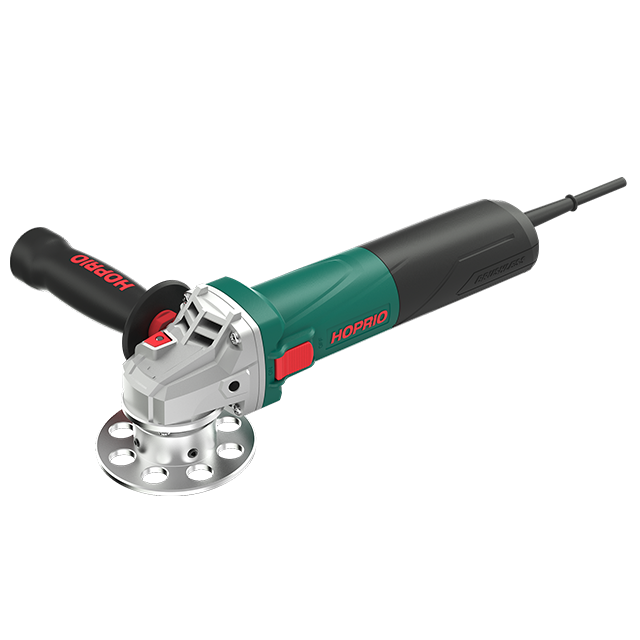
What is an Industrial Edge Milling Tool and How Does It Work?
A specialized industrial power tool is required to cut a precise sloped edge on a metal workpiece prior to welding. Unlike abrasive angle grinders that slowly wear away material through friction, these advanced machines use mechanical cutting processes. They shear the metal away cleanly. They handle rugged materials including carbon steel, stainless steel, and aluminum.
The Mechanics of High-Efficiency Milling
At its core, the working principle relies on high-speed rotary milling. Take a modern 1250W high-efficiency handheld unit for example. It is equipped with a heavy-duty brushless motor and a robust milling head housing multiple tungsten carbide inserts. As this head rotates at high RPMs, the carbide inserts cleanly bite into the raw steel. They shear away the edge layer by layer. To ensure absolute accuracy, the machine utilizes a guide plate system locking securely onto the metal surface. This mechanical referencing maintains a constant depth and angle. The operator's applied pressure or fatigue level no longer dictates the quality. Because the cutting action is purely mechanical, it produces a continuous smooth surface finish requiring zero secondary cleaning.
Core Advantages of Mechanical Edge Preparation
Investing in dedicated weld preparation equipment fundamentally transforms the fabrication workflow. Beyond simple convenience, highly empirical data shows why adopting this technology is critical for competitive operations.
Unmatched Precision and Uniformity
Manual edge preparation relies heavily on physical skill and stamina. This naturally introduces human error over long shifts. Hand grinding often results in undulating edges and widely varying angles. An automated milling machine completely eliminates these variables. Once calibrated, it delivers an identical profile from the first inch to the last. This uniformity is especially crucial for automated welding systems like sub-arc tractors requiring exact joint geometries to prevent costly defects.
Cold Cutting Eliminates the Heat-Affected Zone
Thermal cutting methods introduce massive localized heat into the metal edge. This rapid heating and cooling cycle alters the crystalline microstructure. It creates a hardened brittle Heat-Affected Zone highly susceptible to underbead cracking. Specifically, mechanical milling is a cold-cutting process. It systematically shears the metal without elevating its core temperature. The original metallurgical properties remain completely unchanged and ready for immediate welding.
Drastic Reduction in Preparation Time
Time-motion studies in high-volume fabrication environments consistently demonstrate that mechanical milling outperforms manual grinding by a staggering margin. Preparing a 20-foot length of 1-inch thick plate might take an operator several exhausting hours using an angle grinder. In contrast, a self-propelled machine processes that exact same edge in a matter of minutes. This drastic reduction in prep time directly translates to lower labor overhead.
Cleaner and Safer Work Environment
Occupational health and safety are paramount in metal fabrication. Traditional angle grinders generate hazardous airborne silica while exposing operators to debilitating Hand-Arm Vibration Syndrome. Thermal cutting produces toxic smoke and blinding sparks. Furthermore, mechanical milling eliminates breathable particulate matter. It produces heavy curled metal chips falling safely to the ground. This drastically reduces the risk of shop fires and complies with stringent OSHA regulations.
Analyzing the Shift Toward Mechanization in Fabrication
Looking at the broader industrial landscape, there is a massive shift transforming how fabrication shops operate. Recent market analyses highlight a rapid transition toward mechanized edge preparation. This trend is largely driven by a severe shortage of skilled veteran welders.
As experienced tradespeople age out of the workforce, companies increasingly rely on automated milling equipment to bridge the widening skill gap. Heavy-duty brushless chamfering machines allow even junior operators to consistently produce code-ready flawless joints. They bypass the need for years of manual grinding experience. Strict infrastructure regulations now demand tighter tolerances on structural joints. Mechanized beveling is no longer just a productivity hack. It has become a mandatory compliance strategy for modern steel fabrication facilities aiming to maintain high throughput despite workforce fluctuations.
Mechanical Milling vs. Traditional Preparation Methods
When evaluating operational bottlenecks, fabricators must objectively compare mechanical milling against traditional thermal and abrasive methods. Making a data-driven decision here directly impacts project timelines.
Flame and Plasma Cutting Drawbacks
Thermal cutting methods like oxy-fuel torches are undeniably fast for severing material. However, they introduce significant metallurgical drawbacks for edge prep. When a plasma torch cuts a bevel, it leaves behind a layer of oxidized dross and a hardened edge. Welding codes strictly prohibit welding directly over dross. Consequently, the operator must perform a mandatory secondary operation. They spend hours grinding the thermally cut edge down to bright pure metal. In contrast, mechanical milling is a seamless one-step process.
The Inefficiency of Manual Angle Grinding
Manual angle grinding remains a ubiquitous method for thinner gauges. Yet for heavy-duty fabrication, relying on abrasive discs is incredibly slow and highly inaccurate. Grinding wheels wear down quickly, driving up consumable costs. Mechanical equipment replaces abrasive friction with high-speed carbide shearing.
| Preparation Method | Processing Speed | Metallurgical Impact | Post-Processing Required | Edge Consistency |
| Mechanical Milling | Fast | None Cold Cut | None Ready to Weld | Excellent |
| Plasma Cutting | Very Fast | Alters Metallurgy | High Grinding Required | Moderate |
| Manual Grinding | Very Slow | Minimal | None | Poor |
Exploring Different Types of Beveling Equipment
Selecting the correct equipment requires a comprehensive understanding of the specific categories available. Each type is engineered to excel in distinct fabrication environments.
Portable and Handheld Units
Portable units are engineered for maximum maneuverability. These lightweight machines are brought directly to the workpiece. They serve as the ideal solution for field operations and fabricating complex contoured shapes. Modern portable units featuring 1250W high-efficiency brushless motors possess robust torque. They mill aggressive angles on tough materials effortlessly.
Self-Propelled Machines for Heavy Plate
For heavy infrastructure projects involving massive steel plate, self-propelled machines represent the industry gold standard. Instead of requiring an operator to push the tool, these heavy-duty machines clamp directly onto the material edge. Utilizing an automated drive system, they walk themselves down the entire length at a controlled speed. This hands-free operation maximizes the lifespan of carbide inserts and guarantees a flawless continuous edge.
A Practical Guide to Choosing the Right Machine
Procuring the optimal edge preparation equipment requires an engineering-based assessment. Over-specifying leads to unnecessary capital expenditure. Under-specifying results in bottlenecked production.
Matching Motor Power to Material Yield Strength
The primary determining factor is the metallurgical characteristic of the material. Processing standard A36 mild steel requires different motor torque profiles compared to milling work-hardened stainless steel. Ensure the machine's motor capacity and the specific grade of carbide inserts perfectly match your primary materials. A heavy-duty brushless motor is often required for continuous high-load operations.
Verifying Angle Adjustability and Joint Geometry
The structural joint design dictates the required profile. While a standard V-groove is common, thicker plates often require J-grooves. A J-groove significantly reduces the total cross-sectional volume of the joint, meaning far less filler metal is needed. Verify that the equipment's milling head is fully adjustable to accommodate precise profiles.
Meeting Stringent Welding Codes and Quality Control
In critical sectors such as aerospace and structural steel, weld quality is strictly non-negotiable. Utilizing mechanical edge preparation provides a massive strategic advantage.
Passing Non-Destructive Testing
Fabricators must routinely comply with highly stringent regulatory codes like the AWS D1.1 Structural Welding Code. These standards mandate precise prequalified joint geometries. Manual grinding inherently results in fluctuating angles causing severe defects like lack of fusion. Precision milling achieves absolute dimensional accuracy. This exact preparation allows the arc to achieve full penetration effortlessly. It virtually eliminates the likelihood of critical defects being flagged during strict Ultrasonic Testing.
Conclusion
Upgrading your edge preparation process is an absolute necessity for modern competitive metal fabrication. It guarantees perfect root access, exact angles, and actively protects the metallurgical integrity of your materials. Mechanical milling saves immense amounts of time, slashes consumable costs, and drastically improves overall joint quality. Stop losing money on outdated manual grinding and thermal cutting rework. If you are ready to elevate your shop floor throughput and safeguard your inspection rates, explore the high-efficiency brushless chamfering equipment from Hoprio to find the perfect match for your specific operational needs.
Frequently Asked Questions
Does mechanical milling improve weld root fusion?
Yes, it significantly improves the structural integrity of the joint. By milling a precise geometric groove, the equipment allows the welding arc and the molten filler metal to reach the absolute bottom of the joint. This preparation is critical for ensuring full fusion on thick materials. It prevents weak joints and catastrophic structural failures under heavy load.
Can a single machine cut different joint angles?
Modern industrial equipment is designed to be highly adaptable. Professional machines feature infinitely adjustable milling heads or utilize interchangeable cutting inserts. This modular design allows operators to set and lock in precise angles ranging from 15 to 60 degrees depending on the rigorous engineering requirements of the welding procedure specification.
Is cold cutting better than a plasma cutter for edge prep?
For the specific task of edge preparation, mechanical milling is vastly superior. A high-definition plasma cutter is excellent for rapidly severing metal. However, the thermal process leaves behind a hardened heat-affected zone and rough dross that must be manually ground away. A mechanical machine cold-cuts the material. It leaves a pristine weld-ready edge in a single pass without altering the metal's inherent properties.
What is the maximum thickness a portable beveler can handle?
The maximum thickness depends entirely on the machine's motor power and cutting head design. High-efficiency 1250W portable machines can comfortably process plates up to 30mm thick in multiple passes. For extreme heavy-duty applications exceeding 50mm, self-propelled automated tractors are generally recommended to maintain consistent torque and reduce operator fatigue.
How often do the tungsten carbide inserts need replacing?
Insert lifespan varies based on the material hardness, cutting speed, and operator technique. When milling standard mild steel, a high-quality set of carbide inserts can typically process hundreds of meters before dulling. Most modern inserts feature multiple cutting edges. When one edge dulls, the operator simply rotates the insert to a fresh edge, maximizing consumable efficiency.


