In high-volume fabrication and finishing environments, tool-induced downtime directly erodes profit margins. Inconsistent material removal slows down production lines, and operators face constant bottlenecks when equipment fails to deliver sustained performance. Traditional brushed motors suffer from thermal overload, requiring frequent maintenance during continuous shifts. Cordless alternatives introduce their own set of problems. Battery-swapping creates workflow interruptions, and voltage drops compromise the final finish quality. You need equipment built for relentless daily operation.
Evaluating the shift to a Corded Brushless Random Orbital Sander requires understanding modern tool architecture. Sustained power delivery changes how operators approach heavy stock removal. Advanced motor electronics maintain speed under intense pressure, and integrated dust management aligns with strict professional production requirements. We will explore why this specific configuration dominates continuous professional use.
Key Takeaways
Uninterrupted Power Delivery: Corded configurations eliminate the voltage sag and runtime limitations inherent to battery-powered platforms during heavy material removal.
Extended Operational Lifespan: Brushless motor architecture eliminates carbon brush replacement, reduces internal friction, and extends the operational lifespan of the tool under continuous load.
The Dust Extraction Synergy: Because professional environments mandate active dust extraction, the mobility advantage of cordless tools is negated by the necessary vacuum hose tether, making corded models the logical choice for 99% of internal shop work.
Application Versatility: From aggressive stock removal to delicate stone countertop polishing, variable speed control ensures consistent RPMs regardless of applied surface pressure.
The Engineering Case for Brushless Motors in Continuous Operations
Thermal Management and Motor Longevity
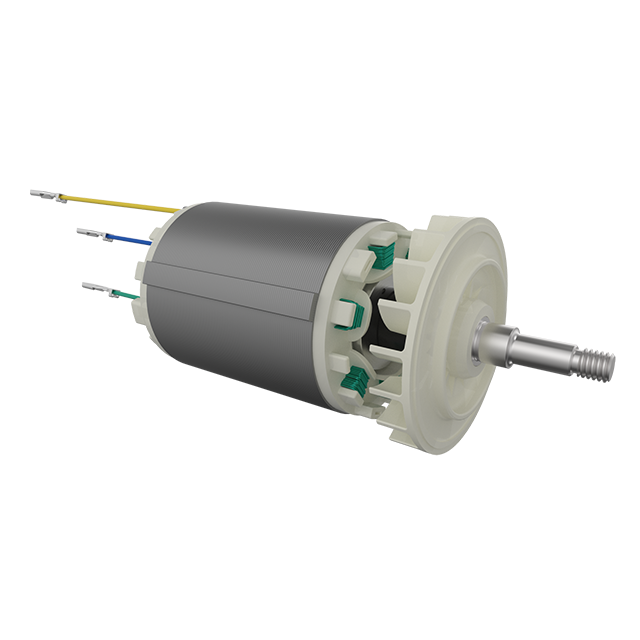
Brushless DC motors represent a massive leap in power tool engineering. Traditional motors rely on carbon brushes pressing against a rotating commutator. This physical contact generates immense friction, which inevitably creates excess heat. Heat acts as the primary enemy of electric motors. It degrades wire insulation, warps internal components, and melts the epoxy securing the copper windings. Brushless motors eliminate this physical connection entirely. They use electronic circuit boards to alternate the electrical current, while magnets on the rotor respond to this alternating magnetic field.
The absence of physical brushes drastically reduces heat generation. Superior thermal dissipation prevents motor burnout. Operators can run these tools for multi-hour sanding sessions without stopping to let the equipment cool down. The internal housing remains cool to the touch even after heavy stock removal. This thermal efficiency protects the internal microprocessors and prevents heat transfer to the operator's hands. Cooler operation directly translates to a longer tool lifespan. You avoid the catastrophic failures common in older brushed designs, keeping your production line moving.
Electronic Speed Control under Load
Continuous sanding requires consistent pad rotation. Inconsistent speeds create uneven scratch patterns, which demand costly and time-consuming rework. Brushless motors utilize internal microprocessors to monitor resistance. Hall effect sensors detect the exact position of the rotor thousands of times per second. When an operator applies heavy downward pressure to level a seam or remove a defect, the motor senses the load. The circuit board instantly delivers more current to the electromagnets, maintaining consistent RPMs regardless of surface resistance.
Variable speed dials allow operators to transition seamlessly between tasks. You can dial up the speed for aggressive leveling, then lower the RPMs for sanding delicate parts. Lower speeds prevent burning sensitive materials like thin wood veneers or acrylic plastics. Brushed motors typically bog down under heavy pressure. Their RPMs drop significantly, leading to gouging and ruined workpieces. Electronic speed control ensures predictable, flawless results every single time.
Quick Spindown and Workflow Efficiency
Workflow efficiency relies on eliminating wasted seconds. Traditional sanders continue spinning long after you release the trigger. Operators must wait for the pad to stop completely before setting it down. Setting a spinning tool down damages the workpiece and can tear the abrasive pad. Brushless motors feature advanced electronic braking capabilities. The microprocessor reverses the magnetic field instantly upon trigger release.
This rapid pad spindown takes less than two seconds. Operators can set the tool down immediately. They can swap grits, wipe away dust, or inspect the surface without delay. These saved seconds accumulate into saved hours over a production week. Rapid spindown accelerates cycle times and keeps the workflow moving smoothly. It also enhances safety by preventing accidental contact with a spinning abrasive.
Corded vs. Cordless: The Reality of High-Volume Production
Overcoming the Battery Drain Bottleneck
Continuous random orbital sanding demands massive energy. The amp-hour requirements are exceptionally high compared to intermittent tools like drills or impact drivers. A sander under heavy load can draw the equivalent of 15 amps at 120 volts. Cordless models rapidly deplete even heavy 5Ah or 8Ah batteries. An operator might drain a high-capacity battery in just fifteen to twenty minutes of aggressive sanding. This creates a severe bottleneck in high-volume production.
Cordless ecosystems carry significant hidden operational burdens. You must purchase multiple high-capacity batteries per tool and set up extensive charging stations to keep up with the drain. Operator downtime during battery swaps kills productivity. Batteries also suffer from voltage sag as they discharge. The tool loses power and efficiency before the battery completely dies, altering the scratch pattern. Corded tools provide infinite runtime. They deliver maximum voltage from the first minute to the last.
The Dust Extraction Paradox
Professional environments operate under strict safety regulations. OSHA compliance regarding silica and wood dust requires active dust management. Quality control also demands a clean work surface to prevent stray grit from causing deep scratches. You must connect sanders to HEPA dust extractors. This operational reality changes the cordless equation entirely. The tool must be tethered to a vacuum hose.
If a tool is already tethered to a hose, battery mobility becomes irrelevant. Adding the weight of a battery offers zero practical advantage. It only introduces runtime limitations. A Corded Orbital Sanders Machine is the logical choice here. You bundle the power cord with the extraction hose using a protective sleeve. This creates a single, manageable tether. You get infinite power without sacrificing any actual mobility on the bench.
Power-to-Weight Ratio and Ergonomics
Batteries add significant mass to hand tools. This mass sits high on the tool body, raising the center of gravity. A high center of gravity makes the tool prone to tipping. Operators must grip the tool tighter to keep it flat on the workpiece. Removing the battery mass lowers the tool's center of gravity. Brushless corded models feature an incredibly low profile, often standing less than four inches tall.
This lower profile improves operator control dramatically. The hand rests closer to the work surface, reducing wrist fatigue during extended horizontal use. The tool glides smoothly without fighting the operator. Cordless tools do have a niche for brief overhead work or remote punch-list tasks without power access. However, corded remains vastly superior for continuous, stationary benchwork.
Tool Profile Comparison
| Tool Type | Average Height | Center of Gravity | Operator Fatigue Level |
| Corded Brushless | 3.5 - 4.0 inches | Extremely Low | Minimal |
| Corded Brushed | 5.5 - 6.5 inches | Medium | Moderate |
| Cordless Brushless (with battery) | 6.0 - 7.5 inches | High | High |
Evaluating a Corded Brushless Random Orbital Sander for Your Shop
Vibration Control and Operator Safety
Continuous professional use exposes operators to physical strain. Hand-Arm Vibration Syndrome is a critical occupational risk in fabrication shops. Prolonged exposure causes nerve damage, numbness, and restricted blood flow. Professional-grade sanders must prioritize vibration mitigation. Look for tools with internal counterbalancing. Precision-machined counterweights offset the eccentric motion of the pad, absorbing the kinetic energy before it reaches the handle.
Evaluate the vibration-dampening metrics carefully. Manufacturers measure this in meters per second squared. Lower numbers indicate better protection. A rating below 2.5 m/s⊃2; is ideal for all-day use. Superior vibration control protects your workforce and keeps them comfortable during long shifts. It also improves the final finish. Less vibration means the abrasive stays in consistent, flat contact with the surface, preventing chatter marks.
Pad Size Selection: 5-Inch vs. 6-Inch Platforms
Choosing the right pad size dictates your workflow efficiency. The 5-inch pad is the industry standard for versatility. It excels at efficient grinding on complex shapes and navigates tighter contours easily. The smaller diameter allows for better control on vertical surfaces. It is ideal for face frames, narrow trim, chair legs, and delicate parts where a larger pad would overhang and tip.
The 6-inch pad is optimized for rapid material removal. It covers significantly more surface area per rotation. This size dominates large, flat surface work. It is perfect for tabletops, solid surface counters, and auto body panels. The 6-inch platform utilizes larger abrasives, which last longer and cut faster due to the increased surface velocity at the outer edge. Assess your primary applications before committing to a platform size.
Orbit Diameter (Stroke) Selection
The orbit diameter defines how aggressive the tool cuts. It is the distance the pad travels off its center axis during rotation. A larger orbit removes material faster but leaves deeper, wider scratches. A smaller orbit removes material slower but leaves a tighter, finer finish. Understanding this correlation is vital for tool selection.
Use a 2.5mm orbit for ultra-fine finishing. It is perfect for final sanding before clear coats or polishing. Use a 5mm orbit for general-purpose work. It balances stock removal with finish quality, making it the most common choice for woodshops. Use an 8mm or larger orbit for aggressive stock removal. It strips paint, levels rough lumber, and shapes body filler quickly.
Orbit Diameter Selection Guide
| Orbit Size (mm) | Primary Application | Material Removal Rate | Finish Quality |
| 2.5mm (3/32") | Ultra-fine finishing, clear coat prep | Low | Exceptional |
| 5.0mm (3/16") | General purpose, intermediate sanding | Medium | Excellent |
| 8.0mm (5/16") | Aggressive stock removal, shaping | High | Good (Requires refinement) |
Pad Compatibility and Abrasive Ecosystems
Dust extraction efficiency relies heavily on the backing pad. Traditional 5-hole or 8-hole patterns are becoming obsolete in high-end fabrication. Modern multi-hole or net abrasives require specialized pads. These pads feature dozens of holes for optimal airflow. They capture dust directly from the cutting edge, preventing the abrasive from loading up with debris.
Evaluate proprietary versus universal abrasive mounting systems. Some manufacturers lock you into their specific hole patterns, limiting your abrasive choices. Universal hook-and-loop systems offer more flexibility, allowing you to source abrasives from multiple vendors. Check the durability of the hook-and-loop material. Continuous heat from heavy sanding can melt cheap hooks, causing pads to fly off during operation. High-quality pads use heat-resistant hooks designed for continuous duty.
High-Demand Applications: Where a Corded Orbital Sanders Machine Excels
Hardwood Furniture and Cabinetry Production
Cabinetry production demands absolute perfection. Defect-free cross-grain sanding is a strict requirement before finishing. Veneer preparation requires a delicate touch to avoid sanding through the thin top layer. Brushless sanders deliver the consistency needed for these tasks. Consistent RPMs prevent "pigtail" swirl marks in dense hardwoods like oak, hickory, or maple. Swirl marks often remain invisible until the stain is applied, and by then, the rework is incredibly costly.
The low profile of these tools allows cabinetmakers to feel the wood. You can detect minor surface variations through the tool body. The variable speed control lets you slow down for edge work, ensuring you do not round over crisp profiles. The integrated dust extraction keeps the grain clean. Clean grain accepts stain evenly, resulting in a flawless final product without blotching.
Stone Countertop Polishing and Solid Surface Fabrication
Fabricating granite, quartz, and solid surface materials presents unique challenges. These materials are incredibly dense and require specialized diamond or silicon carbide abrasives. Driving heavy abrasives demands sustained torque. Brushed motors often stall or overheat under this load. Brushless motors excel in Stone Countertop Polishing because they maintain torque even at lower RPMs.
The electronic speed control prevents stalling when polishing compounds become sticky. You can apply heavy pressure to level epoxy seams without losing pad rotation. The sealed circuit boards resist the fine, highly abrasive dust generated by stone fabrication. The consistent power delivery ensures a high-gloss, factory-quality finish on every countertop, eliminating dull spots caused by RPM drops.
Abrasive Progression for Solid Surface Seams
| Step | Grit Level | Purpose | Recommended Orbit |
| 1 | 80 - 120 Grit | Leveling the adhesive seam flush with the deck | 5.0mm or 8.0mm |
| 2 | 220 - 320 Grit | Removing deep scratches from the leveling phase | 5.0mm |
| 3 | 400 - 600 Grit | Establishing a matte to satin finish | 2.5mm or 5.0mm |
| 4 | 800+ or Polishing Pad | Achieving high gloss and blending the finish | 2.5mm |
Automotive Bodywork and Gelcoat Restoration
Automotive and marine restoration involve massive surface areas. Fairing body filler requires aggressive leveling to create perfectly straight panels. Featheredging paint requires precise control to blend old and new coatings seamlessly. Marine fiberglass restoration demands relentless power to cut through oxidized gelcoat. A corded brushless sander handles all these phases effortlessly. Continuous runtime is an absolute necessity when working on large vehicle panels or boat hulls.
Stopping to change batteries ruins your rhythm and can cause two-part fillers to cure unevenly while you wait. The lightweight design reduces shoulder fatigue during vertical panel work. The 8mm orbit options strip old gelcoat rapidly, while the 2.5mm orbit options refine clear coats before final buffing. These tools provide the reliability needed to keep paint booths moving and prevent bottlenecks in the prep department.
Implementation Risks and Adoption Considerations
Initial Capital Investment vs. Long-Term Value
Upgrading your shop equipment requires careful financial planning. Professional-grade corded brushless models carry a higher upfront cost than consumer-grade brushed models. However, this initial capital investment pays dividends rapidly through operational efficiency. You must calculate the return on investment based on eliminated downtime and increased output.
Factor in the eliminated costs of replacement batteries and chargers that cordless systems require. Calculate the savings from reduced maintenance downtime, as you no longer pay technicians to replace carbon brushes or repair burnt commutators. Consider the extended tool life. Brushless models often outlast brushed models by a factor of three. When you analyze these metrics, the long-term value heavily favors the brushless architecture for any serious fabrication shop.
Cable and Hose Management
Adopting corded tools introduces a specific workflow friction point. You must manage the power cord and vacuum hose simultaneously. Dragging hoses across a freshly sanded workpiece can mar the surface. Hoses catching on bench edges cause operator frustration and can pull the tool out of alignment. Proper mitigation strategies are essential for a smooth transition.
Utilize overhead boom arms to suspend the hoses above the workstation. Boom arms eliminate drag and keep the cords completely out of the operator's way. Use integrated hose-and-cable sleeves. These fabric sleeves bundle the power cord and vacuum hose together, preventing tangling and snagging on corners. Always invest in anti-static extraction hoses. Anti-static hoses prevent dust buildup on the outside of the hose and eliminate static shocks during operation.
Conclusion
Audit your current dust extraction setups for HEPA compliance and hose compatibility to ensure seamless integration with new tools.
Conduct an in-shop trial to evaluate tool ergonomics and vibration levels under actual production conditions with your operators.
Standardize your abrasive ecosystems to utilize multi-hole or net abrasives for superior dust capture and longer pad life.
Install overhead boom arms at primary workstations to streamline cable and hose management, preventing surface marring.
Select specific orbit diameters based on your primary materials, dedicating 5mm tools for general prep and 2.5mm tools for final finishing.
FAQ
Q: Why is a brushless sander better than a brushed one?
A: Brushless sanders operate cooler and require zero brush replacements. They maintain consistent speed under heavy loads using internal microprocessors. They feature rapid electronic spindown for faster workflow. Without the bulky brushed motor housing, they offer a lower, more ergonomic profile that reduces operator fatigue during long shifts.
Q: Do I need a cordless sander if I use a shop vacuum?
A: No. For internal shop work, if you are already tethered to a dust extraction hose, a cordless sander provides no mobility advantage. It only introduces unnecessary battery weight, voltage sag, and runtime limitations. A corded model bundled with the vacuum hose is far more efficient.
Q: What orbit size is best for stone countertop polishing?
A: A 5mm orbit is typically the industry standard for stone and solid surfaces. It offers a perfect balance between aggressive leveling for epoxy seams and the ability to achieve a high-gloss, scratch-free final polish using fine diamond abrasives.
Q: Should I choose a 5-inch or 6-inch random orbital sander?
A: A 5-inch sander is ideal for general-purpose work, delicate parts, tight contours, and vertical surfaces. A 6-inch sander covers significantly more surface area per rotation, making it better for rapid material removal on large tabletops, auto body panels, and broad solid surfaces.
Q: How long do brushless orbital sanders last?
A: In professional environments, brushless sanders significantly outlast brushed models. The elimination of carbon brushes reduces internal friction and heat. With better thermal management and sealed electronics, they operate for thousands of hours before requiring basic bearing replacements.


