For many fabrication shops, achieving a flawless metal finish remains a persistent bottleneck. Post-welding work ultimately defines the overall quality and safety of the final product. Imagine a shop floor where a critical stainless steel assembly is nearing completion. Suddenly, a traditional grinder overheats and stalls halfway through blending a visible joint. This scenario is all too common. Traditional tools often struggle with thermal overload, power drops, and frequent maintenance when tasked with heavy-duty metalworking.
Fortunately, the transition to advanced motor technology offers a definitive solution to these operational hurdles. By eliminating mechanical friction, modern grinders run cooler and last longer. They deliver the sustained torque required for demanding industrial applications. In this comprehensive guide, we will explore the critical importance of post-weld processing. We will also examine exactly how upgrading your equipment elevates product quality, workplace safety, and overall shop efficiency.
Key Takeaways
Deburring & Weld Seam Cleaning are non-negotiable steps for ensuring structural integrity, safety, and aesthetic appeal.
A brushless motor eliminates carbon brush friction. This results in a tool that runs cooler and delivers consistent RPMs under heavy loads.
Using specialized equipment significantly reduces rework and prevents costly joint failures.
Upgrading your shop inventory lowers long-term maintenance costs and improves operator ergonomics.
The Critical Role of Deburring and Weld Seam Cleaning in Metal Fabrication
Achieving a high-quality finish requires far more than just precise cutting and strong welding. The post-processing stages truly determine the final reliability of the component. Before diving into specific techniques, we must acknowledge a broader shift in the manufacturing landscape. Recent industry trajectory reveals a definitive move toward advanced surface finishing. Driven by stringent quality standards in aerospace, automotive, and architectural metalwork, modern manufacturing is abandoning acceptable rough finishes. Today's market demands mathematically precise tolerances. Furthermore, tightening occupational safety regulations regarding operator vibration exposure compel shop managers to adopt ergonomically superior technologies. The integration of smart electronics in handheld tools is no longer a luxury but a baseline requirement for staying competitive.
What is Metal Deburring?
Metal deburring is the meticulous process of removing small raised edges, sharp protrusions, or dross. These jagged remnants remain attached to a workpiece after mechanical shearing, laser cutting, or drilling. When raw material is deformed, the metal often fractures at the edge.
Beyond the immediate physical dangers of severe laceration hazards, leaving burrs on a fabricated part compromises the project functionally. These protrusions alter dimensional tolerances, preventing interlocking components from fitting together smoothly. Specifically, burrs act as microscopic stress concentrators where mechanical fractures can initiate. They actively prevent protective coatings from adhering properly, paving the way for premature rust and corrosion.
The Importance of Weld Seam Cleaning
Once pieces are joined, the focus shifts to removing slag, spatter, heat tint, and oxidation. These byproducts accumulate around a joint during the welding process. When metals are fused using methods like Stick or Flux-Cored welding, a brittle layer of protective slag forms over the weld pool.
If this slag and the surrounding spatter are not completely eradicated, the structural integrity of the joint cannot be accurately inspected for micro-cracks. Proper surface clearing ensures compliance with specific engineering codes. It also prepares the metal for final finishing or powder coating, guaranteeing a clean appearance.
Common Challenges with Traditional Metal Deburring Tools
While traditional brushed motors have served as the backbone of metal shops for decades, they present significant operational bottlenecks. Recognizing these limitations is the first step toward optimizing shop floor productivity.
Overheating and Power Loss
Older tool designs utilize a mechanical commutator and carbon brushes to transmit electrical current to the spinning armature. This physical contact generates substantial friction and excessive heat. When an operator bears down on a heavy steel plate to remove stubborn slag, the motor draws more amperage to maintain its speed. This excess current combined with inherent physical friction causes traditional motors to overheat rapidly. Consequently, the tool experiences a noticeable drop in torque. The operator must ease off or risk catastrophic motor burnout.
The Hidden Costs of Carbon Brushes
The reliance on carbon brushes introduces a continuous maintenance requirement. Because they are wear items, they physically degrade over time through constant friction. In a high-volume fabrication environment, replacing these brushes leads to frequent equipment downtime. If neglected, the metal brush holders can gouge the commutator, destroying the entire tool.
Operator Fatigue and Inconsistency
To generate sufficient power, traditional brushed tools require heavy copper windings on the rotating armature. This specific design makes the equipment inherently heavy and highly prone to gyroscopic vibration. Prolonged exposure to these heavy machines leads to severe operator fatigue. As physical exhaustion sets in, the operator's ability to maintain a steady angle deteriorates, directly resulting in a poor-quality finish.
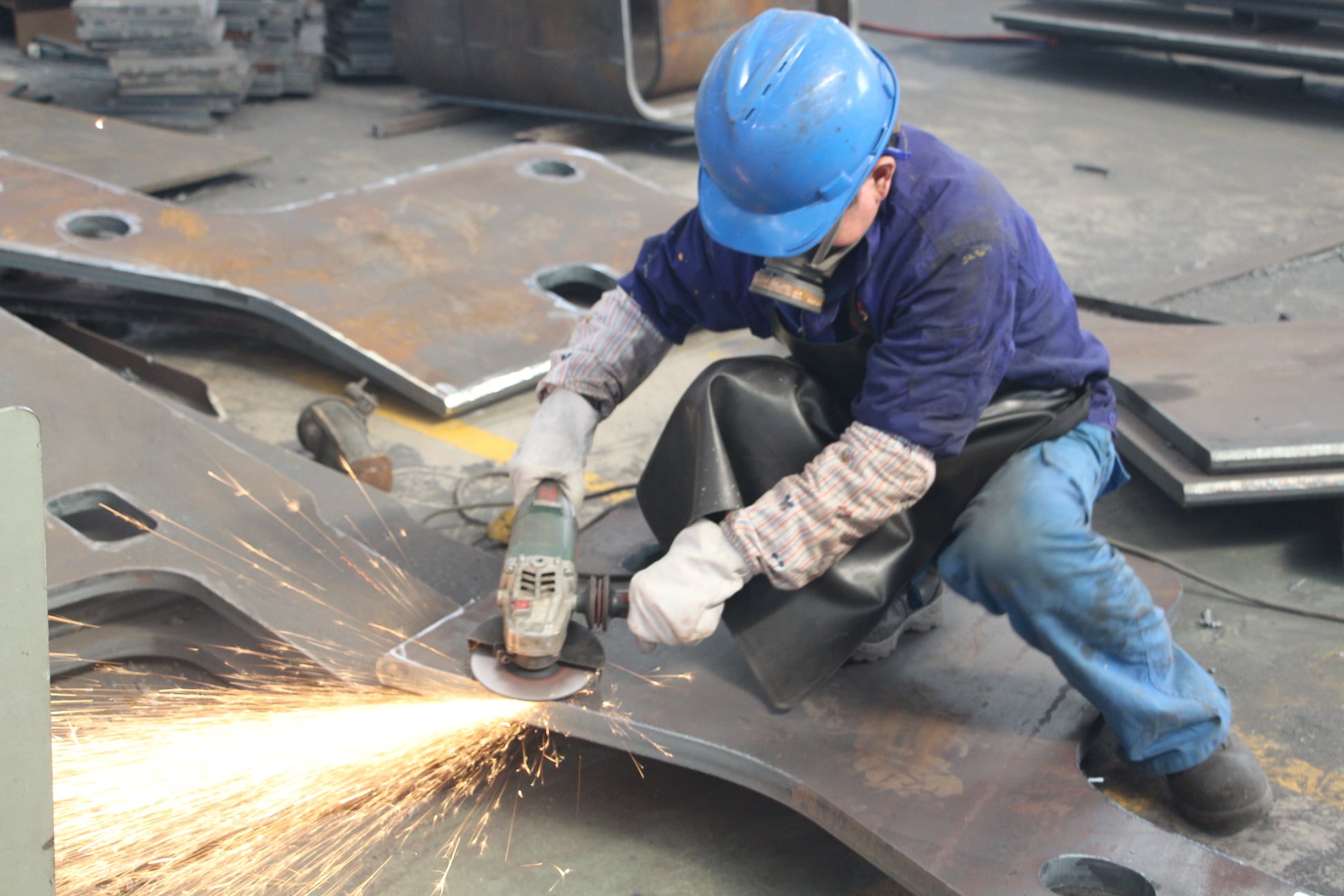
What Makes a Brushless Angle Grinder the Superior Choice?
Transitioning to a brushless angle grinder fundamentally shifts how power tools execute heavy-duty tasks. By engineering away the mechanical limitations of older designs, this technology offers a highly efficient solution tailored for metalworking professionals.
How Brushless Technology Works
Unlike its predecessors, this modern tool operates without carbon brushes or a physical commutator. Instead, it utilizes a sophisticated electronic control unit to deliver current to copper windings located on the stationary stator. The rotor itself is fitted with strong permanent magnets. Because there is absolutely no physical contact transferring electrical current, the motor operates completely friction-free. This drastically reduces heat generation and mechanical wear.
Unmatched Power-to-Weight Ratio
By moving the heavy copper windings to the outside of the motor, these tools achieve an exceptional power-to-weight ratio. For instance, advanced 5-inch models pack industrial-grade torque into a housing that weighs significantly less than traditional counterparts. This compact design makes them highly maneuverable. Metalworkers can access tight corners and complex joint geometries without enduring excessive physical strain.
Smart Electronics and Constant Speed
Perhaps the most critical advantage is the internal electronic feedback system. Smart sensors constantly monitor the load applied to the grinding wheel. When a fabricator presses down hard to grind away heavy material, the electronics instantly deliver more power to maintain a constant 10,000 RPM. This prevents the tool from bogging down, ensuring a highly uniform material removal rate regardless of the pressure applied.
Core Comparison: Brushed vs. Brushless Technology
To clearly illustrate the operational differences, let us examine the core metrics that impact daily fabrication work.
| Feature | Traditional Brushed Grinder | Advanced Brushless Grinder |
| Motor Wear | High friction from carbon brushes | Frictionless magnetic propulsion |
| Speed Under Load | RPM drops significantly when pressed | Constant RPM maintained by smart electronics |
| Maintenance | Frequent brush and commutator replacements | Virtually maintenance-free |
| Thermal Management | Prone to rapid overheating | Runs significantly cooler during long shifts |
Perfecting Weld Seam Grinding with Brushless Technology
Post-weld processing is a delicate balancing act. The operator must remove excess material while strictly preserving the structural integrity of the base metal. Advanced motor technology provides the exact control necessary to execute this flawlessly.
Removing Excess Material Without Gouging
Gouging occurs when an abrasive wheel digs too deeply into the base metal adjacent to the weld. This creates an unintended weak point that can lead to structural failure under heavy load. Because an electronically controlled motor maintains consistent torque and speed, it eliminates sudden stalling. This smooth power delivery allows the operator to glide the abrasive over the surface during tough weld seam grinding operations, removing only the intended material.
Blending Welds for Seamless Finishes
In industries such as food processing and architectural design, joints must be blended completely flat. Achieving this seamless finish requires multiple passes with varying abrasive grits. The stable RPM ensures that the abrasive cuts evenly across the surface, preventing the creation of low spots. Such precise control is absolutely essential for preparing the metal for sanitary finishing.
Tackling Heat Discoloration
When working with materials like stainless steel, the heat input from the arc often causes surface oxidation. Stripping this discoloration requires a delicate touch. Applying too much friction will simply introduce more heat and warp the panel. High-end tools often feature variable speed controls. By dialing down the RPM, an operator can use specialized conditioning discs to gently polish away the heat tint without altering the metallurgical properties of the heat-affected zone.
Achieving Flawless Edges: Brushless Grinders as Ultimate Metal Deburring Tools
When metal is cut using plasma, laser, or mechanical shearing, the resulting edges are rarely pristine. Implementing specialized metal deburring tools is a critical step in ensuring that the final product meets strict industry tolerances.
Edge Rounding and Chamfering
Sharp untreated edges pose significant risks and create structural vulnerabilities. Paint and powder coating naturally pull away from sharp corners during the curing process, leaving the edge dangerously exposed to rust. Chamfering involves grinding a transitional edge, typically at a 45-degree angle. The constant speed of an electronically commutated motor ensures that the abrasive cuts smoothly along the edge without bouncing. This produces a flawless profile ready for safe handling and coating.
Slag and Dross Removal
Thermal cutting processes on thick steel plates inevitably leave behind residual molten metal that hardens on the bottom edge. This superheated and rapidly cooled material is often significantly harder than the base metal itself. Removing it requires high torque and aggressive action. The magnetic propulsion system of modern tools delivers sustained torque. Fabricators can aggressively attack hardened dross with heavy-duty grinding wheels without the fear of triggering a thermal overload shutdown.
Weld Preparation Tools: Why Pre-Weld Cleaning Matters Just as Much
While post-weld finishing often receives the most visual attention, the structural integrity of a fabricated component is determined long before the arc is struck. Utilizing reliable weld preparation tools is not merely a recommendation. It is a strict requirement governed by international welding codes.
The Cost of Poor Weld Prep
Welding over contaminated surfaces is the leading root cause of joint defects. Impurities such as mill scale, rust, cutting oils, and moisture introduce foreign elements into the molten pool. When subjected to extreme heat, they vaporize and become trapped within the solidifying metal, causing porosity. Furthermore, hydrocarbons from oils can introduce excessive hydrogen, leading to catastrophic cracking. Thorough pre-weld cleaning using a high-torque abrasive wheel eliminates these costly risks at the source.
Beveling Edges for Deep Penetration
When joining thick metal plates, a simple surface butt joint will not allow the arc to penetrate fully. To achieve complete joint penetration, the edges must be modified to create a groove channel for the filler metal. Carving these precise grooves requires the removal of a massive amount of solid steel. The consistent power of a modern motor is critical here, ensuring a uniform bevel that meets exact engineering specifications.
Choosing the Right Industrial Grinder for Your Fabrication Shop
Transitioning a facility from traditional brushed tools to advanced technology requires careful evaluation. Decision-makers must look beyond the initial purchase price. It is vital to consider the total cost of ownership, which factors in maintenance downtime, consumable lifespan, and workplace safety.
Actionable Specifications for Heavy-Duty Environments
When evaluating an industrial grinder for your shop floor, look for specific engineering parameters that guarantee professional performance:
Constant Speed Electronics: Ensure the tool maintains its rated RPM under load. A true industrial model will not drop speed when pressed hard against steel.
Variable Speed Control: Look for adjustable settings ranging from 3,000 to 10,000 RPM. This flexibility is essential for matching the speed to heat-sensitive materials like stainless steel.
Kickback Protection: Select models with electronic sensors that detect sudden drops in RPM. If a wheel binds in a tight corner, the motor should instantly shut off to protect the operator from violent recoil.
Dust and Debris Isolation: High-quality options feature epoxy-coated stators and removable mesh intake filters. These isolate internal electronics from highly conductive metal dust.
Conclusion
Ultimately, a fabricated metal component is only as reliable and aesthetically pleasing as its final finish. The rigorous processes of deburring and joint cleaning truly define this standard of quality. Upgrading from outdated friction-based tools to advanced brushless technology is a strategic investment in superior quality control, faster production cycles, and significantly safer working conditions.
By evaluating your current tool inventory today and adopting modern surface preparation solutions, your fabrication shop can drastically reduce rework and remain highly competitive. If you are ready to eliminate motor burnouts and elevate your finishing capabilities, explore the high-performance brushless equipment available at Hoprio to find the exact industrial grinder tailored to your production needs.
FAQ
Q1: What is the best tool for weld seam cleaning?
A brushless angle grinder paired with a high-quality flap disc or wire wheel is widely considered the industry standard. It provides the sustained torque required to aggressively remove spatter and hardened slag without stalling or accidentally gouging the underlying base metal.
Q2: Why are brushless grinders better for metal deburring?
Because they do not rely on physical carbon brushes to transmit electrical current, these tools operate friction-free. This drastically reduces internal heat generation. Operators can run the tool continuously during heavy deburring tasks without the risk of thermal overload or motor burnout.
Q3: Can I use the same grinder for weld preparation and post-weld cleaning?
Absolutely. A professional-grade grinder is highly versatile. By simply swapping out the abrasive attachments, a single machine effectively serves as both a comprehensive preparation tool and a precision finishing device. You can use a hard ceramic wheel for carving bevels and a non-woven disc for final polishing.
Q4: What RPM is best for deburring and weld seam grinding?
The ideal operating speed depends entirely on the abrasive media and the specific metal being processed. Utilizing a variable-speed tool allows fabricators to lower the RPM for heat-sensitive alloys like stainless steel to prevent discoloration. Conversely, you can increase the speed for aggressive stock removal on thick carbon steel.
Q5: How does constant speed technology improve the quality of a metal finish?
Constant speed electronics monitor the load applied to the grinding wheel. When you apply pressure, the system instantly draws more power to maintain the exact RPM. This prevents the abrasive wheel from slowing down or skipping, resulting in a perfectly even, machine-like finish without low spots or chatter marks.
Q6: Are brushless grinders worth the higher initial investment for a fabrication shop?
Yes. While the upfront cost may be slightly higher, the total cost of ownership is significantly lower. You eliminate the downtime and expenses associated with replacing carbon brushes and burnt-out armatures. Furthermore, the increase in operator productivity and reduction in ruined materials quickly offset the initial purchase price.


