Walk onto any heavy-duty fabrication floor, and the sensory overload hits you immediately. Showers of sparks fly across the room. The deafening roar of grinding wheels bites into thick steel. Production deadlines loom large. In this unforgiving environment, precision and durability are not just buzzwords; they are absolute mandates. Time directly correlates to operational costs. Equipment failure? Simply not an option. Traditional brushed motors frequently struggle under this intense mechanical stress. Have you ever leaned your weight into a continuous pipe cut only to smell burning carbon? Conventional devices often overheat, lose torque, or succumb to premature armature burnout.
Looking at recent market shifts, there is a definitive transition in the metalworking sector. Facility managers face escalating raw material costs and a shrinking pool of highly skilled labor. How do you maintain profitability? The answer lies in high-efficiency brushless systems. The heavy industry market is rapidly abandoning traditional brushed motors. Instead, fabrication floors are standardizing on intelligent, sensor-driven machinery. This transition goes beyond a preference for premium upgrades. It acts as a strict operational standard to ensure compliance with tightening workplace safety regulations and to combat the exorbitant costs of unexpected downtime.
The objective solution to these modern industrial challenges lies in adopting brushless motor technology. This comprehensive guide explores the primary metal grinding and cutting applications in today's fabrication landscape. Specifically, it outlines why brushless technology represents a superior choice for harsh environments and provides a practical framework for selecting the exact machinery required for your heavy-duty projects.
Key Takeaways
Brushless Dominance: Eliminating physical carbon brushes extends continuous runtimes and sustains torque under heavy loads.
Application-Specific Selection: Aggressive weld preparation demands high torque. Precise structural steel slicing requires stable, unwavering RPMs.
Safety & Ergonomics: Electronic kickback brakes, anti-restart protection, and advanced vibration mitigation are essential for grueling daily use.
System Synergy: Matching the correct abrasive disc type to the tool's RPM and the target material is non-negotiable.
The Evolution of Fabrication Tools: Why Brushless is the New Industrial Standard
To justify capital investments in industrial-grade equipment, procurement managers must understand the mechanical advantages of brushless systems. For decades, the acrid smell of burning carbon brushes was a ubiquitous part of the shop experience. Today, upgrading your fabrication tools to modern brushless variants eliminates this inherent flaw, offering measurable returns on investment.
How Brushless Technology Works in Metal Fabrication
Traditional power tools rely on physical carbon brushes to transfer electrical current to a spinning commutator. This constant physical contact generates severe friction, rapid heat buildup, and inevitable mechanical wear. Brushless technology removes these carbon brushes entirely. An external electronic circuit board coordinates power delivery to electromagnets located in the stator. By eradicating physical friction, internal components run significantly cooler. For instance, advanced industrial models utilize specialized controllers that achieve energy conversion rates exceeding 80 percent, virtually eliminating the risk of thermal overload during continuous heavy-duty operation.
Maximum Power and Sustained Torque
Maintaining consistent rotational speed under heavy load is critical. Brushless systems utilize advanced smart microprocessors that constantly monitor the resistance applied to the abrasive wheel. When a fabricator pushes a grinder deep into a dense carbon steel I-beam, the smart chip instantly draws more current to maintain torque. This dynamic power regulation ensures the machine does not bog down, stall, or bind.
Lower Maintenance and Longer Lifespan
Maintenance downtime directly drains profitability. Because brushless motors lack consumable carbon brushes, routine brush replacements vanish. Furthermore, the absence of commutator friction means no armature burnout caused by accumulated conductive brush dust. Facilities that make the upgrade consistently report a drastically lower total cost of ownership due to decreased maintenance intervals.
Brushed vs. Brushless Motors in Heavy Industry
| Feature | Traditional Brushed Motors | Industrial Brushless Motors |
| Friction & Heat | High friction, frequent overheating | Frictionless design, excellent thermal management |
| Maintenance | High frequency brush replacements | Virtually zero maintenance |
| Torque Under Load | Drops significantly under heavy pressure | Smart microprocessors sustain constant torque |
| Lifespan | Shorter due to commutator wear | Significantly longer operational life |
Common Metal Grinding & Cutting Applications in Heavy Industry
Understanding the specific operational environment is paramount before selecting a tool. Industrial metalworking encompasses a broad spectrum of tasks, each exerting entirely different mechanical stresses on the machinery.
Weld Preparation and Seam Blending
Before joining massive pieces of structural steel, operators must properly bevel the edges for deep, structurally sound weld penetration. Following the weld, excess heavy beads require flattening to create a seamless surface. These tasks require sustained, high-torque material removal. Operators need machinery that maintains aggressive downward pressure without overheating, allowing heavy ceramic abrasives to dig efficiently into the metal.
Slicing Through Structural Steel, Pipe, and Rebar
Cutting thick-walled steel pipes, dense rebar, and heavy structural beams demands extreme stability. Any sudden drop in RPM during a deep cut can cause the abrasive wheel to catch and bind. This leads to violent kickback or shattered discs. Therefore, maintaining a constant, high-speed rotation is absolutely vital for making clean, straight cuts safely.
Rust Removal, Deburring, and Surface Finishing
Not all tasks involve brute-force material removal. Surface conditioning requires a nuanced approach. Stripping heavy oxidation, deburring razor-sharp edges, or polishing stainless steel relies on precision. Having variable speed controls on an industrial angle grinder allows operators to dial down the RPM. Lower speeds prevent scorching or altering the metallurgical properties of the base metal when utilizing wire cup brushes or fine-grit flap discs.
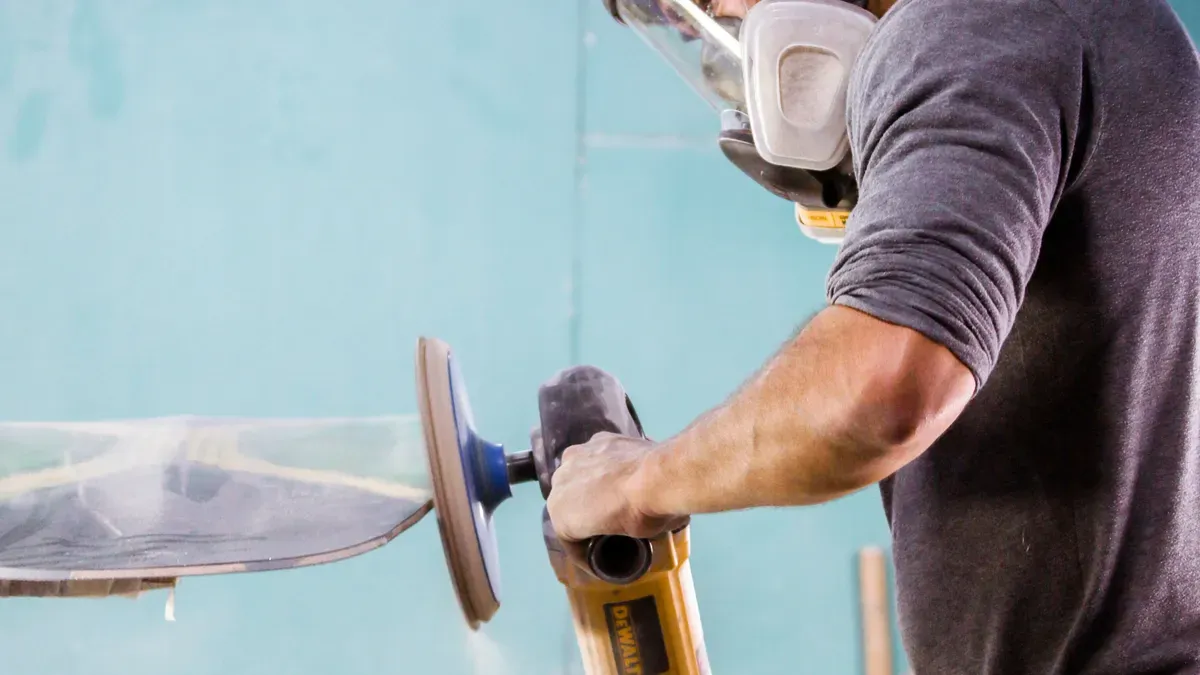
Types of Metal Cutting Tools for Heavy-Duty Fabrication
The industrial power tool market offers various form factors engineered for specific structural demands. Breaking down these categories helps decision-makers narrow down purchasing options based on actual shop floor realities.
4.5" to 6" Industrial Angle Grinders
The 4.5-inch to 6-inch category serves as the undisputed workhorse in most metal fabrication environments. These compact devices offer an exceptional balance of power, maneuverability, and weight. Specifically, 6-inch brushless models delivering up to 8500 RPM have become the sweet spot for heavy fabrication. They provide a deeper depth of cut than a 4.5-inch model while remaining lightweight enough for overhead work. Their ergonomic design significantly reduces operator fatigue during grueling ten-hour shifts.
7" to 9" Heavy Duty Grinders
When the application scales up to large shipbuilding, cross-country pipeline construction, or heavy foundry casting work, smaller tools simply lack the required material removal rates. The 7-inch to 9-inch models house massive motors capable of driving heavy abrasive wheels. Built strictly for two-handed operation, they deliver unparalleled power for deep structural cuts.
Straight Grinders and Die Grinders
While angled gear heads dominate exterior surface work, straight grinders and die grinders are indispensable for internal applications. Featuring a linear alignment between the motor and the spindle, these specialized tools excel at grinding inside pipe diameters and porting engine cylinders.
How to Choose the Right Brushless Cutting Machine for Your Shop
Procuring the correct brushless cutting machine requires analyzing technical specifications against daily workflows. Stop looking at generic wattage and start evaluating actual performance metrics.
Corded vs. Cordless Battery Platforms
The choice between corded and cordless platforms depends entirely on your physical work environment. High-voltage cordless systems offer unparalleled mobility for field construction and elevated structural work where dragging heavy extension cords poses a severe tripping hazard. Conversely, for stationary shop work involving continuous all-day grinding, corded brushless tools remain the gold standard. They provide uninterrupted power without the logistical headache of managing battery charging cycles.
RPM and Motor Power Ratings
Motor power and rotational speed must align perfectly with the intended application. Cutting tasks generally require higher RPMs to slice cleanly through metal. Heavy grinding relies heavily on torque to maintain wheel rotation under intense downward pressure. Look for tools featuring high-efficiency brushless controllers that guarantee stable output even when the abrasive wheel bites hard into the material.
Electronic Safety Features
In heavy industry, operator safety directly correlates with intelligent tool design. Prioritize tools equipped with advanced electronic safety mechanisms. Look specifically for electronic kickback brakes that stop a spinning wheel in a fraction of a second if a sudden bind-up occurs. Anti-restart protection prevents the tool from powering on automatically if a power source is reconnected while the switch remains locked on. Soft-start technology is another non-negotiable feature for modern safety compliance.
Ergonomics and Vibration Control
Prolonged exposure to intense grinding vibrations frequently leads to Hand-Arm Vibration Syndrome. High-end industrial tools combat this by featuring decoupled motor housings and specialized anti-vibration side handles. These components absorb kinetic energy before it ever reaches the operator's hands. Paddle switches utilizing dead-man mechanisms ensure the tool immediately shuts off if accidentally dropped.
Matching Your Heavy Duty Grinder to the Right Abrasives
A high-performance brushless motor represents only half of the performance equation. The machine acts merely as the power delivery system; the abrasive wheel performs the actual physical work. Your heavy duty grinder performs only as well as its abrasive accessory. Utilizing the wrong disc ruins the workpiece and creates severe safety hazards.
Grinding Discs vs. Cutting Wheels
The structural integrity of abrasive discs varies drastically. Type 27 grinding discs are thick, featuring a depressed center explicitly designed to withstand heavy lateral pressure when held at a 15 to 30-degree angle. In stark contrast, Type 1 cutting wheels are extremely thin and strictly designed for straight-on, 90-degree cuts. Applying lateral grinding pressure to a thin cutting wheel will inevitably cause the fiberglass matrix to shatter at high speeds.
Flap Discs and Wire Brushes
For surface finishing and blending, flap discs and wire brushes are industry standards. Flap discs offer highly controlled material removal and smooth blending in a single step. Wire brushes are ideal for aggressive rust and welding slag removal. Always verify that the maximum safe RPM rated on the accessory is equal to or greater than the maximum RPM of the grinder itself.
Maximizing the Lifespan of Your Metal Cutting Tools
Even the most robust industrial equipment requires proper environmental management to achieve its maximum lifecycle. Implementing strict operational protocols safeguards your initial capital investment and protects your metal cutting tools from premature failure.
Dust and Debris Management
Metalworking inherently generates highly conductive metallic dust. If drawn into a motor housing through cooling vents, this debris quickly short-circuits sensitive electronics and destroys bearings. Modern industrial brushless tools combat this harsh reality by utilizing removable, washable mesh dust filters over the air intake vents. Premium manufacturers often encapsulate internal stators and circuit boards in protective epoxy resin, effectively sealing them off from conductive metal shavings.
Routine Inspection and Best Practices
Tool longevity depends heavily on operator technique. The most common cause of premature tool failure is an operator forcibly pushing the machine beyond its limits. Train personnel to let the RPM and the abrasive do the work. Apply only enough pressure to maintain a steady, consistent cut. Routine daily inspections must include checking the spindle lock integrity, ensuring mounting flanges are clean, and verifying the safety guard is properly oriented.
Explore Advanced Metal Grinding & Cutting Solutions
Selecting the optimal equipment for heavy-duty fabrication requires a thorough evaluation of motor technology, integrated safety features, and abrasive compatibility. Brushless technology unequivocally proves its capacity to lower maintenance costs, drastically increase continuous runtimes, and provide sustained torque for the most rigorous industrial applications.
By precisely matching the specific demands of your daily operations with the correct tool specifications, fabrication shops can drastically improve production throughput. Stop settling for conventional tools that burn out under pressure. Assess your current equipment limitations and upgrade to purpose-built solutions engineered for extreme environments. For industry-leading performance, explore the comprehensive range of brushless grinders and metalworking equipment at Hoprio to find the exact configuration your fabrication floor demands.
FAQ
Can I use the same industrial angle grinder for both cutting and grinding?
Yes, you can use the same equipment for both applications. However, you must change the abrasive wheel to match the specific task. Additionally, ensure you are using the correct safety guard. Cutting requires a Type 1 enclosed guard to protect against wheel shattering, while grinding utilizes a Type 27 open-face guard for proper clearance.
Why are brushless metal cutting tools more expensive initially?
Brushless tools utilize advanced smart electronics, microprocessors, and powerful electromagnets instead of cheap physical carbon brushes. This sophisticated design results in zero internal friction, higher sustained power output, and a significantly longer operational lifespan. While the initial purchase price is higher, they ultimately save money in industrial settings by minimizing maintenance downtime and replacement costs.
What size grinder is best for heavy structural steel and pipe fabrication?
For standard steel pipe and everyday fabrication, a 5-inch to 6-inch grinder offers the best balance of cutting speed and operator maneuverability. The 6-inch models, in particular, provide an excellent depth of cut. For thick-walled, large-diameter pipeline construction, a 7-inch to 9-inch model is usually required to safely achieve the necessary depth without binding.
How do I prevent kickback when cutting metal?
First, always secure the workpiece firmly with heavy-duty clamps so it cannot shift. Let the grinder reach its full operating RPM before making contact with the metal. Avoid twisting, tilting, or forcing the tool inside the cut channel. Finally, invest in a modern grinder equipped with an electronic kickback brake, which instantly stops the wheel if a bind-up occurs.
How often should I clean the dust filters on a brushless grinder?
In heavy fabrication environments with high volumes of metallic dust, inspect and clean the mesh dust filters daily. Use compressed air to blow out accumulated debris from the outside in. Regular cleaning prevents airflow restriction, ensuring the electronic controller and motor remain perfectly cooled during continuous operation.
What is the difference between a paddle switch and a slide switch for industrial work?
A paddle switch typically incorporates a dead-man mechanism, meaning the tool immediately powers off if the operator drops it or loses their grip. This is highly preferred for safety in heavy industrial settings. A slide switch locks into the "on" position, which reduces hand fatigue during prolonged surface grinding but requires additional electronic safety features like anti-restart protection to maintain compliance.


