Metalworkers, field fabricators, and structural engineers know the daily struggle of operating in demanding environments. Modifying a rusty automotive chassis or punching through thick I-beams on a towering framework requires immense mechanical force. Traditional handheld tools simply fail under these continuous heavy workloads. Operators are left dealing with shattered bits, stalled motors, and ruined workpieces.
This is exactly where industrial-grade equipment becomes non-negotiable. An advanced brushless drill transforms modern metal fabrication. It combines the extreme holding power of an electromagnet with the high-efficiency torque of a smart motor. How much abuse can these machines actually take? Below, we break down the specific types of steel this heavy-duty tool can handle safely. We will also examine tooling selection, real-world operational metrics, and why upgrading your shop gear is the smartest financial move you can make this year.
Key Operational Takeaways
Unmatched Versatility in Steel: Field data proves these tools efficiently penetrate mild steel, structural beams, stainless steel, and specific hardened alloys when paired with the correct tooling.
Consistent Torque Delivery: Smart motors deliver sustained rotational force under extreme loads. This virtually eliminates the motor bog-down experienced when pushing through thick metal plates.
Tooling Matters: Maximizing cutting capacity on hard metals requires high-quality hollow cutters. They are significantly more effective than relying on standard twist drills.
Safety and Precision: Electromagnetic bases provide absolute stability and eliminate dangerous lateral movement. The result is a highly precise, burr-free hole and a longer lifespan for your consumables.
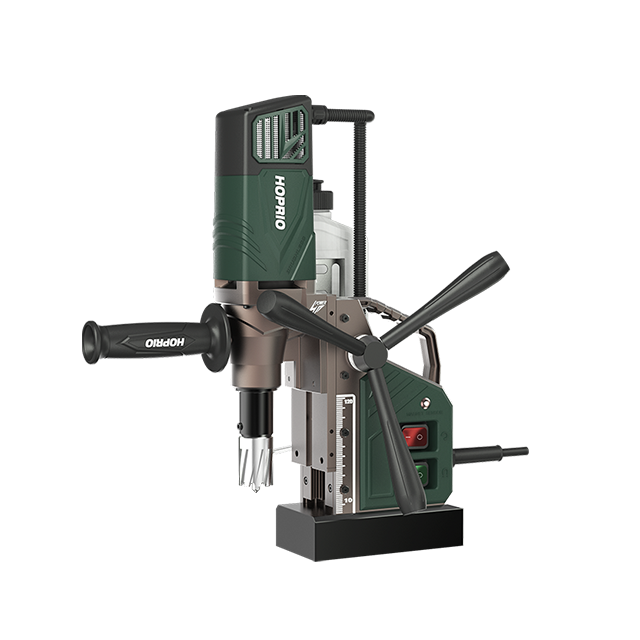
Understanding the Anatomy of Advanced Drilling Systems
To grasp the true cutting capabilities of this equipment, we must look under the hood. The tool merges two distinct technological advancements to achieve high-precision fabrication. Raw power is useless without intelligent delivery.
The Brushless Motor Advantage
Standard brushed motors rely on physical carbon blocks to transfer electricity. This archaic design creates friction, generates excess heat, and guarantees eventual component failure. Advanced systems operate entirely differently. An electronic controller switches the electrical current phase to the motor windings. Zero physical contact means drastically reduced internal friction and heat.
From a metallurgical cutting standpoint, this delivers higher sustained torque. When a bit bites into dense, high-tensile steel, mechanical resistance spikes instantly. Smart electronic sensors detect this load. They automatically adjust power output to maintain a consistent RPM. For instance, a heavy-duty 1600W motor will push through solid steel without a single stutter.
The Role of the Electromagnetic Base
Raw rotational force requires extreme control. The tool utilizes a powerful electromagnet integrated directly into its foundation. When activated on a ferrous metal workpiece, models equipped with industrial magnets generate an adhesion force reaching 15,500N. This massive stability is critical for operator safety.
Standard handheld presses suffer from micro-vibrations. Human error causes bits to chatter, wander, or shatter against hard surfaces. By anchoring directly to the workpiece, the magnetic drill ensures the bit enters the steel at a perfect 90-degree angle. This rigidity allows the motor to apply maximum downward thrust without deflecting.
Exactly What Steel Can These Drills Cut?
Machine capability depends heavily on the interaction between torque, tooling material, and the inherent hardness of the workpiece. Here is an objective engineering breakdown of performance across various steel categories.
Mild Steel and Carbon Steel
Mild carbon steel represents the baseline for modern workshops. Thanks to high machinability and lower hardness ratings, the spindle glides through this material with minimal resistance. This makes the equipment highly efficient for general fabrication and automotive frame modifications. Operators can run at maximum cutting speeds and expect prolonged tool life, provided adequate coolant is flowing.
Structural Steel Beams and Plates
Structural steel grades like A36 or A992 are engineered specifically for load-bearing strength. They are significantly denser than standard mild steel. This is where portability becomes invaluable. Instead of dragging a 500-pound I-beam to a stationary drill press, fabricators carry the tool directly to the structural framework. It effortlessly punches through thick flanges and webs of H-beams as long as the operator maintains a methodical feed rate.
Stainless Steel Challenges
Cutting stainless steel presents unique mechanical hurdles. It possesses a high work-hardening rate. As heat builds up from intense friction, the metal physically hardens at the cutting site. This will rapidly destroy standard cutting tools. Variable speed control is mandatory here. By operating at a lower, controlled RPM and applying heavy cutting fluid, the operator prevents the heat buildup that causes work-hardening.
Hardened Steel and High-Tensile Alloys
Every machine has structural limits. Penetrating hardened steel and high-tensile alloys relies entirely on the hardness of the cutting bit rather than just motor horsepower. To tackle materials with high Rockwell hardness ratings, the spindle must be equipped with Tungsten Carbide tooling. Furthermore, the operator must exercise extreme caution regarding feed pressure to prevent catastrophic bit failure.
The Secret to Hard Metal: Selecting the Right Cutter
The motor provides rotational force. The base provides stability. However, actual material removal is executed by the consumable. Selecting the correct bit is the hidden secret of veteran fabricators.
Hollow Cutters vs Standard Twist Drills
Traditional twist drills remove the entire volume of material from the hole. They turn solid steel into messy metal shavings. This requires immense horsepower, especially as hole diameters exceed one inch. A hollow annular cutter operates on a fundamentally smarter geometric principle. It cuts only the periphery of the hole. Upon completion, it ejects a solid cylindrical slug of steel.
Removing significantly less material requires a fraction of the downward thrust. This engineering advantage results in faster cutting times, minimized thermal distortion, and a burr-free finish that rarely requires secondary reaming.
Material Composition: High-Speed Steel vs Tungsten Carbide
Selecting the correct material for your tooling is vital. High-Speed Steel cutters are highly resilient and capable of flexing slightly under load without shattering. They remain the industry standard for mild steel and structural beams. Tungsten Carbide Tipped cutters are exceptionally hard and heat-resistant. They are absolutely mandatory when drilling stainless steel or cast iron. They hold a sharp edge at extreme temperatures but are inherently more brittle.
Thickness Limits and Dimensional Capacities
Understanding dimensional capacities helps determine suitability for specific engineering projects. Thickness limits depend heavily on spindle travel and motor specifications.
The thickness of the steel plate a unit can handle is dictated by the cutter attached. Standard capacities handle 1-inch to 2-inch depths. Heavy-duty 1600W models push boundaries further, accommodating cutters designed for 50mm depths and 50mm diameters. They easily penetrate massive structural blocks.
Cutting diameter correlates directly to power output. When maxing out diameter capacity, the friction surface area increases exponentially. This specific scenario causes older brushed motors to stall and overheat. The sustained power delivery of a smart motor actively pushes through maximum-capacity solid plates without bogging down.
Industry Trends: The Shift Toward Smart Metalworking
The heavy-duty metal fabrication sector is undergoing a massive technological shift. Facilities are rapidly migrating away from corded, brushed machinery toward high-efficiency brushless platforms. Why is this happening now? The primary drivers are the rising cost of operational downtime and increasingly strict industrial safety regulations.
Modern architecture demands advanced structural steel with higher tensile strengths. Fabricators require tools that offer smart electronic feedback to handle these materials safely. The integration of microprocessors to monitor thermal loads and auto-adjust RPMs is no longer a luxury. It is the new industry baseline. Fabrication shops that fail to adopt these cooler-running, intelligent tools find themselves at a severe disadvantage regarding consumable costs and daily productivity.
Core Comparison: Brushed vs Brushless Technology
For procurement managers and shop owners, deciding where to invest capital requires clear metrics. The practical advantages go far beyond simple wattage.
| Feature | Traditional Brushed Motor | Advanced Brushless Motor |
| Maintenance Needs | High. Requires frequent carbon brush replacements. | Minimal. No physical brushes to wear out. |
| Torque Delivery | Inconsistent. Drops significantly under heavy loads. | Sustained. Smart sensors maintain RPM through thick steel. |
| Thermal Management | Poor. High friction generates rapid heat buildup. | Excellent. Electronic switching keeps the stator running cool. |
| Overload Protection | Basic thermal breakers. Often too slow to save bits. | Instant electronic cutoff prevents shattered cutters. |
5 Pro-Tips for Maximum Efficiency
Achieving professional results consistently requires strict adherence to operational best practices. Keep these engineering guidelines in mind on the job site:
Mandatory Lubrication: Steel generates extreme friction. Without adequate coolant flow, intense heat destroys bit temper within seconds. Continuous lubrication is non-negotiable.
Surface Preparation: The electromagnet demands flush contact with bare metal. Heavy rust, mill scale, or thick paint compromises adhesion. Clean your work area to prevent severe safety hazards.
RPM Matching: Speed does not equal efficiency. Use slower RPM settings for hard metals like stainless steel to prevent work-hardening. Reserve faster speeds for standard mild carbon steel.
Controlled Feed Pressure: Allow cutter geometry and motor torque to do the heavy lifting. Forcing the handle down with your body weight leads directly to premature bit failure.
Pilot Pin Utilization: A pilot pin is essential. It perfectly centers the hole, acts as an internal valve for coolant delivery, and safely ejects the solid steel slug upon completion.
Equipment Selection Guide
Selecting the appropriate equipment requires matching technical specifications against your daily operational demands. First, evaluate the magnetic adhesion force. Look for units generating at least 15,000N of force to ensure absolute stability on thick plates. If you frequently work with thin sheet metal, specialized clamping accessories are required.
Next, verify diameter and depth ratings. A high-quality magnetic base drill should comfortably handle 50mm cutting depths. Ensure the tool capacity exceeds your largest routine requirements by at least fifteen percent. Finally, prioritize units offering variable speed settings and smart overload protection. These features save thousands of dollars in broken consumables over the tool's lifespan.
Conclusion
An industrial-grade drilling system is a highly capable asset that tackles almost any tough steel encountered in the field. From standard mild I-beams to incredibly tough stainless plates, success relies entirely on pairing smart motor technology with the correct tooling. By investing in modern equipment, you guarantee the sustained torque, durability, and precise control required for serious metalworking. For operators demanding ultimate reliability, selecting a 1600W heavy-duty model from Hoprio ensures you have the power needed to elevate your daily fabrication capabilities.
Frequently Asked Questions
Can this equipment cut aluminum?
Yes, it penetrates aluminum materials easily. However, aluminum is a non-ferrous metal. The electromagnet cannot adhere to it. To drill aluminum safely, you must clamp a flat piece of scrap steel over or under the aluminum workpiece. This provides a secure, ferrous surface for the base to grip.
Do I always need to use hollow cutters?
No, they are not strictly required for every single job. Most modern machines accept standard chuck adapters. This allows you to use regular twist drills for smaller holes under half an inch where precision is slightly less critical.
Why does my machine keep stopping mid-cut?
If using an older brushed motor, it is bogging down under the workload. If a modern smart machine stops, it is the electronic overload protection activating. This safety feature kicks in if you apply too much feed pressure, if the bit is completely dull, or if a lack of coolant causes extreme friction spikes.
How thick must the steel be for secure holding?
The steel surface requires sufficient mass for magnetic flux lines to engage. Base metal should be at least 10mm thick to achieve full holding capacity. Working on thinner metals compromises adhesion and creates a severe drop hazard.
What RPM should I use for cutting steel?
RPM depends entirely on cutter diameter and material hardness. Small diameters in mild steel can run at 500 RPM or higher. Large 50mm cutters in tough structural steel should be slowed down to 200-300 RPM. Always consult the tooling manufacturer's specific speed chart.
How do you maintain the magnetic base?
Maintenance is straightforward but critical. Always wipe the brass coils and bottom plate clean of metal shavings after use. Never leave the magnet turned on while the machine is unplugged or sitting idle, as this degrades the magnetic coils over time. Store the unit in a dry environment to prevent surface rust on the contact plate.


