Introduction
You just unboxed a state-of-the-art, high-torque cordless tool. You are ready to tackle a mountain of heavy metalwork. But as you stand before a massive hardware store display, a wall of abrasive accessories stares back at you. Which specific size will actually maximize your new equipment's performance? How do you ensure jobsite safety is never compromised?
Slapping the wrong angle grinder disc onto a modern electronic motor is a serious operational error. It frequently leads to rapid battery drain and agonizingly slow material removal. In the worst-case scenario, it triggers violent kickbacks that shatter the wheel instantly.
Consider this comprehensive breakdown your ultimate field manual. By the time you finish reading, you will understand the exact mechanical differences between various diameters. You will know precisely whether your fabrication project demands a standard 115mm setup, a larger 125mm configuration, or a highly specialized abrasive wheel.
Key Takeaways
Electronic Efficiency: Modern smart motors deliver highly consistent torque under heavy loads. Pairing them with the correct wheel size prevents thermal strain and maximizes cordless runtime.
The Sweet Spot: The 115mm and 125mm profiles remain the most versatile sizes for everyday metalworking, masonry cutting, and surface preparation.
Task Matching: Smaller diameters offer superior precision in confined spaces. Larger wheels provide a significantly deeper depth of cut and faster material removal rates.
Safety First: Never remove a factory safety guard to force a larger accessory onto a smaller tool frame. Always verify the maximum RPM rating.
Why Upgrading to a Brushless Motor Changes How You Choose Discs
Transitioning from traditional carbon-brushed motors to modern electronic equivalents requires a fundamental shift in how you evaluate consumables. Older tools rely on physical friction via carbon brushes. This naturally causes the motor to bog down under heavy pressure. Brushless architecture eliminates this physical contact, changing the performance dynamics entirely.
Constant Speed Under Heavy Load
Modern electronic management allows the tool to monitor resistance and dynamically adjust power delivery in milliseconds. Take industrial-grade units, for example. Advanced models delivering up to 1250W of equivalent power maintain remarkably stable RPM even when you bear down hard on a thick steel plate. This unwavering torque means operators can confidently run slightly larger, more aggressive accessories. Operating a 5 inch grinder setup on these platforms works flawlessly without stalling the wheel or burning out the internal components.
Battery Life and Rotational Mass
For cordless platforms, physics dictates operational efficiency. The physical weight and overall diameter of your chosen accessory directly control the amperage draw from the battery pack. A heavier disc demands a massive initial surge of energy to overcome rotational inertia. It then requires sustained power to keep spinning through dense material. Spinning an oversized, heavy grinding wheel for light surface deburring will bleed your battery dry unnecessarily. Selecting the minimum effective size ensures maximum cuts per charge.
Industry Shift: The Move Toward Larger Capacities
Analyzing recent industrial tooling trends reveals a definitive migration in professional trades. Market data indicates that fabrication facilities and construction crews are rapidly abandoning the traditional 115mm standard. Why is this happening? Advanced high-output battery cells and intelligent motor controllers have finally solved the thermal overload issues of the past.
Professionals are now standardizing on 125mm and even 150mm ecosystems. This transition is purely driven by productivity demands. The larger abrasive surface area drastically reduces the downtime spent swapping out depleted wheels. Furthermore, the modern electronic motor handles the increased gyroscopic mass effortlessly, making larger discs the new industry baseline.
Standard Dimension Classifications Explained
The industrial and consumer markets have standardized several dimensions based on typical application demands. Understanding these classifications is your first step in making an informed operational decision.
115mm, or 4.5-Inch Profiles
This size is widely recognized as the undisputed global standard for automotive technicians and light commercial fabricators. Its compact footprint excels in restricted spaces. Think about reaching under a rusted vehicle chassis or grinding inside cramped metal cabinetry. The lower rotational mass makes the tool highly responsive and significantly less fatiguing during prolonged overhead work.
125mm, or 5-Inch Profiles
This dimension is the preferred baseline in professional metal fabrication shops. It provides approximately 20 percent more abrasive surface area than its smaller sibling. Consequently, it delivers a deeper maximum cut and a considerably longer consumable lifespan before the wheel degrades. It strikes the perfect balance between agility and industrial-grade material removal.
Heavy-Duty 180mm and 230mm Wheels
These massive behemoths operate in an entirely different weight class. Reserved strictly for large-frame equipment, they are engineered for aggressive industrial tasks like scoring thick concrete slabs or beveling heavy pipeline. They demand two-handed operation at all times. They are completely inappropriate for detailed metalwork.
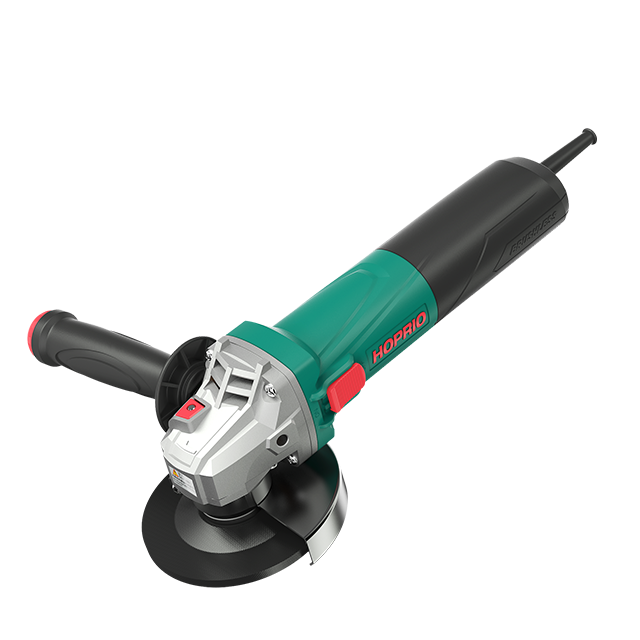
The Big Debate: 115mm vs. 125mm Setup
When outfitting a new tool cart, professionals frequently agonize over standardizing their workflow. Both sizes have distinct mechanical advantages depending on the jobsite environment. Let us break down the exact performance metrics.
| Specification | 115mm System | 125mm System |
| Max Usable Cutting Depth | Approx. 28mm to 30mm | Approx. 35mm to 38mm |
| Maneuverability | Excellent in tight spaces; low gyroscopic resistance | Good, but noticeable resistance during rapid directional changes |
| Ideal Application | Auto body repair, tight corner welds, overhead work | Pipe cutting, heavy surface blending, masonry scoring |
| Battery Drain Rate | Low (Ideal for smaller Ah battery packs) | Moderate to High (Requires high-output battery cells) |
Depth of Cut Differences
The mathematical difference seems trivial at first glance. Yet, the central gearbox housing limits how deep the wheel can penetrate the workpiece. That extra half-inch of radius is monumental in the field. Specifically, a 125mm accessory yields roughly one-third of an inch more usable cutting depth. When you slice through standard 2-inch steel tubing, this extra reach allows you to sever the material in a single, clean pass. You avoid awkwardly rotating the piece and risking a jagged joint.
Tool Maneuverability and Ergonomics
Ergonomics dictate jobsite safety and long-term joint health. A tool equipped with a 115mm disc feels noticeably lighter in the hand. The gyroscopic effect—the invisible force making the spinning tool resist changes in direction—is significantly lower. This makes the smaller setup far superior for intricate, curving motions or extended vertical surface prep where arm fatigue is a major factor.
Matching Your Abrasive to the Material and Project
Selecting the perfect diameter is entirely futile if it does not align with the specific material. The right combination guarantees a clean finish and extends the life of your equipment.
Metal Fabrication and Welding Prep
For heavy surface leveling and blending thick weld seams, a 125mm flap disc is the weapon of choice. The broader face covers more surface area, creating a remarkably flat finish without gouging the base metal. In contrast, if you are surgically removing a tiny tack weld tucked deep inside an inside corner, a smaller wheel provides the critical clearance needed to avoid scarring adjacent panels.
Cutting Concrete, Tile, and Masonry
Masonry materials are incredibly dense and generate brutal friction. When slicing concrete blocks, larger diamond blades are practically mandatory. The expanded diameter provides the depth necessary to sever standard bricks cleanly. Furthermore, it acts as a larger heat sink, dissipating thermal buildup before the diamond matrix glazes over from excessive heat.
Types of Discs for High-Efficiency Motors
The physical size of your tool dictates the category of accessories you can safely mount. However, the electronic efficiency of the motor means it can drive premium, heavy-duty variations without breaking a sweat.
Abrasive Cutting Wheels
These ultra-thin profiles, often just 1.0mm to 1.6mm thick, are engineered strictly for lateral slicing. You must never use them for face grinding. Because they are structurally fragile, ensuring a perfectly flat, warp-free profile is paramount. Let the high RPM do the work. Forcing a thin wheel downward through dense steel will cause it to flex and violently shatter.
Grinding Wheels and Flap Discs
Traditional grinding wheels are thick, rigid, and built for aggressive stock removal. Flap discs feature overlapping layers of abrasive cloth and are the go-to for blending and polishing. A 125mm platform truly shines with flap discs because the outermost edge performs the vast majority of the work. Expanding the diameter gives you exponentially more usable abrasive material operating at peak peripheral speed.
Wire Brushes and Cup Wheels
When stripping heavy rust or marine paint with knotted wire wheels, diameter is not your only concern. You must meticulously check that the vertical height of the cup wheel clears the inside of your factory safety guard. Always ensure the threaded arbor perfectly matches the tool's spindle pitch before ever pulling the trigger.
Crucial Safety Specs: RPM, Arbor Size, and Guards
Regardless of your project deadline, operational safety hinges on strictly adhering to mechanical specifications. High-speed abrasives demand absolute respect on the jobsite.
Matching RPM Ratings
This is the absolute golden rule of abrasive safety. The maximum safe RPM rating printed on the accessory must always exceed the maximum no-load RPM of your brushless grinder. For instance, if your tool peaks at 11,000 RPM, mounting a specialty wheel rated for only 8,500 RPM is a recipe for disaster. The excessive centrifugal force will literally tear the binding matrix apart, sending lethal shrapnel across the shop.
Understanding Arbor Fitment
The arbor is the central mounting hole of the disc. In most global markets, standard 115mm and 125mm profiles share a universal 22.23mm arbor hole. Nevertheless, you must verify this fitment every single time you change a wheel. Forcing a mismatched arbor onto a spindle guarantees severe vibration. This immediately destroys the motor's precision bearings and risks catastrophic wheel failure.
The Golden Rule of Safety Guards
An incredibly dangerous jobsite hack involves stripping the safety guard off a smaller tool just to squeeze a larger wheel onto the spindle. This is strictly prohibited by every occupational safety standard worldwide. The guard is engineered to deflect high-speed debris during a wheel explosion. If your workflow demands the reach of a larger wheel, the only professional solution is to invest in a dedicated tool engineered to handle those physical dimensions safely.
How to Optimize Your Work with the Right Setup
To truly maximize the return on your hardware investment, you need to understand how advanced electronic features interact with your consumable choices.
Variable Speed Integration
Premium models increasingly feature variable speed dials. This technology unlocks the true potential of different accessory types. While thin cut-off wheels thrive at maximum velocity, running a wire cup brush at 11,000 RPM will instantly scorch the workpiece or dangerously shed wire bristles. Throttling the RPM down gives you surgical control over sensitive finishes.
Vibration and Tool Maintenance
Consistently using correctly sized, perfectly balanced accessories is the best preventative maintenance you can perform. Cheap, unbalanced wheels send microscopic vibrations straight down the spindle. Over time, these tremors micro-weld and destroy the internal bearings, transforming a high-end tool into a rattling paperweight. Always inspect your discs for chips or warping before use.
Conclusion
Choosing the correct disc size ultimately comes down to balancing the depth of cut you require with the maneuverability you desire. While the 115mm size remains a fantastic, agile option for tight spaces and intricate detail work, the industry is clearly shifting toward larger capacities to maximize efficiency.
For maximum versatility, a 125mm setup is highly recommended for modern professionals. It bridges the gap between lightweight agility and aggressive material removal. Always match your accessory to the specific material, strictly adhere to RPM ratings, and never compromise on safety guards.
Ready to upgrade your fabrication workflow and eliminate motor burnout? By pairing premium abrasive consumables with high-quality, professional-grade equipment, you can tackle the most demanding projects with unmatched confidence. Visit Hoprio today to explore industry-leading 1250W equivalent brushless grinders engineered specifically for heavy-duty industrial environments.
FAQ
What happens if I put a 125mm disc on a 115mm grinder?
Doing so usually requires removing the safety guard, which is an incredibly dangerous practice. Furthermore, the internal gearing and motor of the smaller tool are not rated for the extra rotational mass. This leads to rapid overheating, severe vibration, and premature burnout of the stator.
Do electronic motors require specific types of cutting discs?
No, they use the exact same standard abrasive discs as traditional brushed models. However, because smart motors operate with higher efficiency and maintain torque better under load, they can drive premium, heavier discs much more effectively without stalling in the cut.
What is the best disc size for a beginner learning metal fabrication?
A 115mm profile is generally considered the best starting point for beginners. It is lightweight, easier to control, generates less gyroscopic force, and is far less intimidating while still being highly capable for most light automotive and household tasks.
Are 115mm and 125mm arbor holes the exact same size?
Yes, in the majority of global markets, both sizes share a standard 22.23mm arbor hole. This makes them universally compatible with standard spindles, provided the tool's factory safety guard is designed to safely accommodate the outer diameter of the disc.
How long does a 125mm flap disc typically last on a brushless tool?
Lifespan depends heavily on the material being ground and the operator's pressure. However, because a brushless motor maintains consistent RPM without bogging down, it prevents the abrasive grains from glazing over prematurely. This generally extends the usable life of a high-quality flap disc by 20 to 30 percent compared to using it on a brushed tool.
What is the optimal disc thickness for cutting thick steel tubing?
For fast, clean cuts through carbon steel or stainless tubing, a 1.0mm to 1.6mm ultra-thin cut-off wheel is optimal. The thin profile removes less material, which dramatically reduces friction, heat buildup, and battery drain on cordless platforms.


