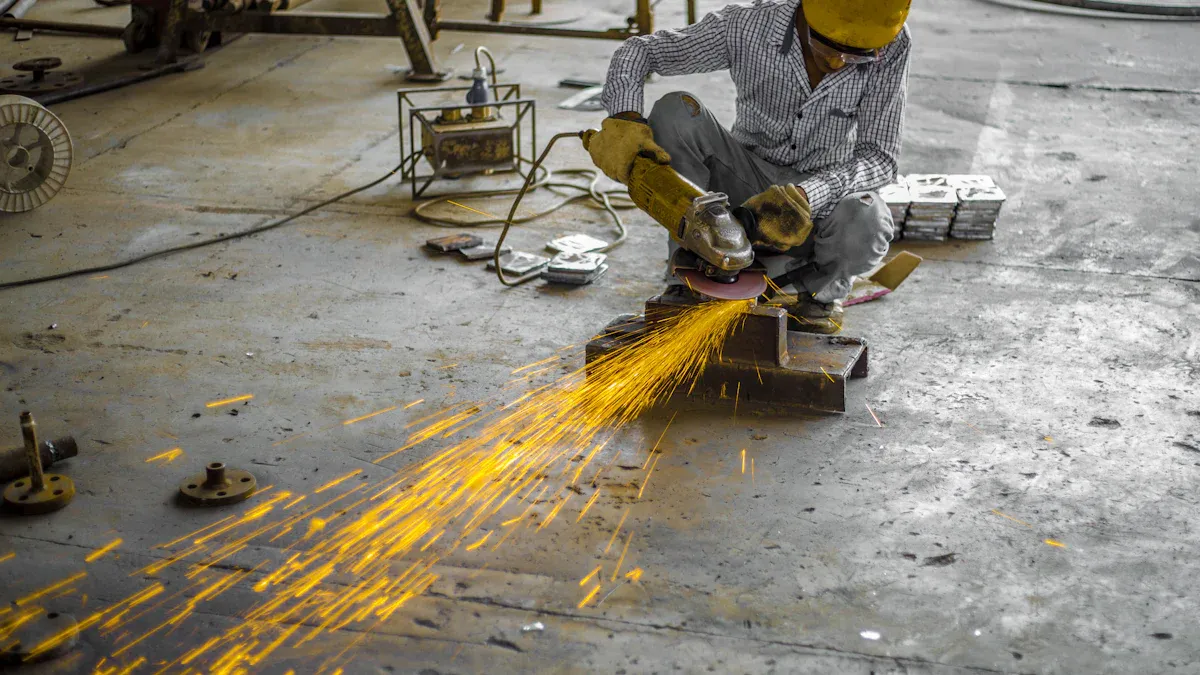
You can use an angle grinder on many materials, including metal, wood, concrete, stone, and tile. This power tool handles a wide range of tasks, such as:
Cutting through metal pipes, bolts, or rebar
Grinding rough welds or edges
Sanding and shaping wood surfaces
Polishing metal or stone for a smooth finish
Removing rust from automotive parts
Many people choose an angle grinder for its versatility. Whether you work on construction sites, fix cars, or tackle home improvement projects, you find this tool essential. A cordless angle grinder gives you freedom to move, especially when you need to cut or do grinding in tight spaces. You can rely on a cordless angle grinder for sanding, grinding, and polishing jobs anywhere. With a cordless angle grinder, you work without worrying about power cords.
Key Takeaways
Angle grinders work on many materials like metal, wood, stone, and tile, making them very versatile for cutting, grinding, sanding, and polishing tasks.
Always use the right disc for your material and task to get the best results and stay safe; for example, use diamond blades for stone and carbide discs for wood.
Wear proper safety gear every time, including goggles, gloves, hearing protection, and a dust mask when needed, to protect yourself from flying debris and dust.
Secure your workpiece firmly and hold the grinder with both hands to maintain control and reduce the risk of accidents like kickback or disc breakage.
Cordless angle grinders offer freedom to work in tight or remote spaces, but always match the tool’s power and disc size to your project for efficient and safe use.
Angle Grinder Uses
Angle grinders are some of the most versatile tools you can own. You can use them for cutting, grinding, polishing, and sanding a wide range of materials. Whether you want to cut through metal, grind and shape stone, or handle delicate tasks like cutting tiles, the right disc and technique make all the difference. The following table shows common tasks and recommended discs for each material:
Task | Materials | Recommended Discs/Tools | Notes/Techniques |
Cutting | Metal, stone, tile, wood, plastic | Cutting wheels, diamond discs, carbide discs | Match disc to material; secure workpiece |
Grinding | Metal, stone, concrete | Grinding discs, diamond grinding wheels | Use steady pressure; avoid overheating |
Polishing | Metal, stone | Flap discs, polishing pads | Use fine abrasives; keep surface cool |
Sanding | Wood, metal | Sanding pads, flap discs | Progress from coarse to fine grit for smooth finish |
Sharpening | Metal tools | Grinding wheels | Maintain correct angle for tool edges |
You can see how angle grinders fit into many trades and DIY projects.
Metal
You can rely on an angle grinder for almost every metalworking task. Here are the main ways you use it:
Cut through metal pipes, rods, rebar, and sheet metal with cutting discs.
Smooth welds, remove burrs, and refine edges by grinding.
Prepare surfaces by cleaning metal, removing rust, mill scale, or old paint.
Polish metal to a high shine with the right attachment.
Sharpening tools like axes, chisels, and mower blades.
A cordless angle grinder gives you freedom to move around large metal objects or work in tight spaces. You can use it for automotive repairs, construction, or home improvement. Always match the disc to the job. Never use a grinding disc for cutting or vice versa.
Tip: Secure your workpiece in a bench vice and use both hands for better control.
Caution: High-speed metal particles can cause serious injuries. Always wear safety goggles, a face shield, gloves, and hearing protection. Discs can shatter if damaged or used incorrectly. Discard any cracked or dropped discs.
Prolonged use can cause hand-arm vibration syndrome. Take breaks and monitor your exposure. Dust and noise are also hazards, so use a dust mask and ear protection.
Masonry
You can use an angle grinder to cut and grind masonry materials like concrete, brick, stone, and pavers. Typical tasks include:
Cutting concrete blocks, bricks, and pavers for landscaping or construction.
Shaping and trimming stones such as granite, marble, slate, and sandstone.
Removing old mortar between bricks (tuckpointing).
Cutting concrete for small repair jobs or to fit pipes and cables.
To cut other materials like stone or concrete, always use a diamond blade or masonry disc. Ordinary discs will not work and may damage your tool. For softer stones, use light pressure and slow cutting to avoid chipping. Wet cutting helps cool the blade and reduce dust.
Note: Angle grinders are best for small to medium masonry jobs. For deep or large concrete cuts, use a larger saw.
Risks include flying debris, kickback, dust inhalation, and disc breakage. Always wear a dust mask or respirator, safety goggles, and gloves. Inspect your tool and discs before each use. Keep your workspace clear of flammable materials, as sparks can cause fires.
Tile and Ceramic
Cutting tiles and ceramics is easy with an angle grinder, especially for custom shapes or fitting tiles around obstacles. You can use it for:
Cutting tiles for bathrooms, kitchens, or flooring projects.
Shaping ceramic or porcelain tiles for detailed work.
Smoothing rough edges after cutting.
For cutting tiles, choose a diamond blade designed for tile and ceramic. Score the tile before making a full cut to reduce chipping. Use gentle, steady pressure and let the blade do the work. Wet cutting helps keep the blade cool and reduces dust.
Tip: Secure the tile with clamps and work on a stable surface.
Caution: Dull or bent blades can cause binding and kickback. Replace them as needed.
Always wear safety goggles, gloves, a dust mask, and ear protection. Keep your workspace clean and well-lit. After cutting tiles, use a grinding stone attachment to smooth the edges for a professional finish.
Wood and Plastic
You can use an angle grinder for sanding, shaping, and even cutting wood and some plastics. Common uses include:
Sanding rough wood surfaces with flap discs or sanding pads.
Shaping wood for furniture or crafts.
Cutting wood with special carbide-tipped discs.
Smoothing or trimming plastic pipes and panels.
A cordless angle grinder makes it easy to work outdoors or in areas without power outlets. Always use the correct disc for wood or plastic. For wood, use carbide-tipped or chainsaw discs. For plastics, test a small area first, as some plastics may melt or warp from heat.
Note: Angle grinders run at high speeds, which can cause kickback, burns, or rough cuts on wood. For plastics, excessive heat can melt the material or release fumes. Always clamp your workpiece and wear full protective gear, including goggles, gloves, and a dust mask.
Avoid using standard abrasive discs on wood or plastic. Inspect your discs for cracks or wear before each use. Keep your workspace clear of flammable materials, as sparks can ignite them.
How Does an Angle Grinder Work
Power and Mechanism
When you pick up an angle grinder, you hold a powerful tool designed for tough jobs. The basic operation starts with the motor inside the tool. Here’s how it works:
The motor contains a rotor and windings. You connect the grinder to a power supply, which can be either AC or DC.
When you turn on the grinder, the power supply energizes the windings. This creates a magnetic field that spins the rotor.
The spinning rotor drives an output shaft. You attach the grinding or cutting disc to this shaft.
As the shaft turns, the disc spins at high speed. This spinning disc does the actual cutting, grinding, or sanding.
The power supply keeps the motor running, so the disc maintains its speed and power.
Some grinders include safety features like rotor brakes to stop the disc quickly when you switch off the tool.
You control the angle grinder with both hands for stability. Variable speed settings let you adjust the RPM for different materials. Higher speeds work best for cutting or grinding metal and stone. Lower speeds help you polish or sand delicate surfaces without burning them. The power output, measured in watts or amps, tells you how much work the grinder can handle. Larger, more powerful grinders cut through thick materials faster and last longer during heavy use.
Tip: Always match the speed and disc type to your material for the best results and safety.
Disc Types
The angle grinder’s versatility comes from its replaceable discs. You can swap out discs quickly using the spindle lock, so you move from cutting to grinding or polishing in seconds. This adaptability makes the angle grinder a favorite power tool for many jobs.
The most common discs include grinding wheels, cutting discs, flap discs, and sanding pads. Each type handles a specific task:
Grinding wheels: Remove material and smooth rough edges.
Cutting discs: Slice through metal, stone, or tile.
Flap discs: Combine grinding and finishing in one step.
Sanding pads: Smooth wood or metal surfaces.
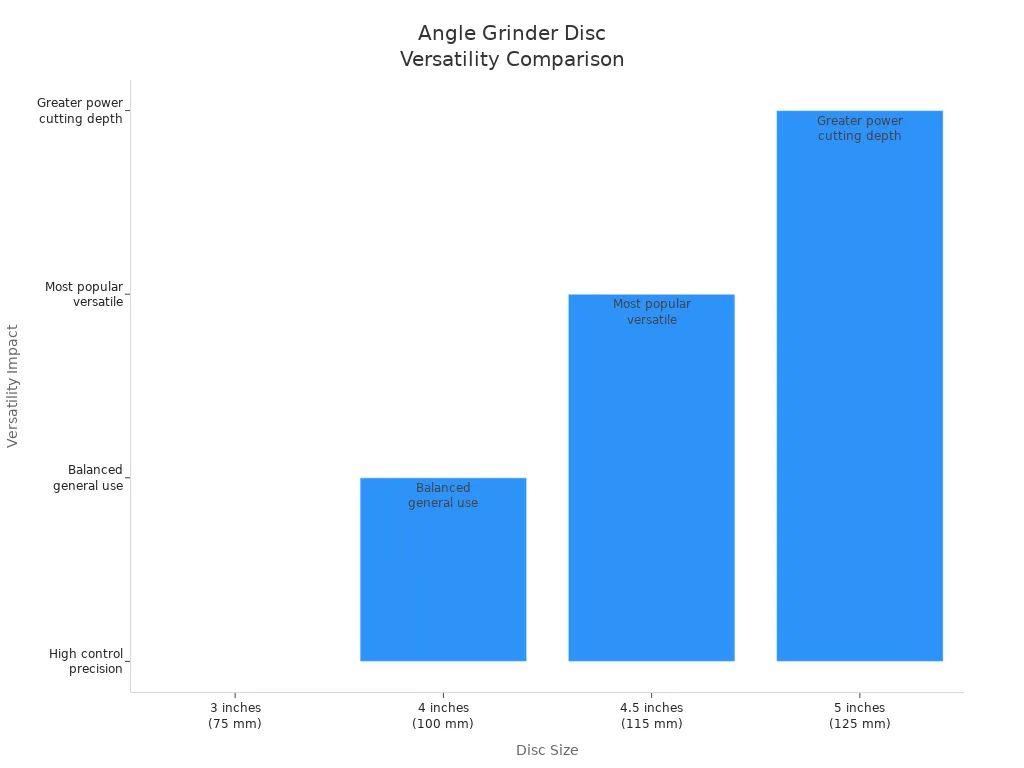
Disc size also matters. Smaller discs (3-4 inches) give you more control for detailed work. Medium discs (4.5-5 inches) balance power and versatility. Larger discs handle heavy-duty tasks and deeper cuts.
Disc Size | Typical Power Range | Common Applications | Impact on Versatility |
3 inches (75 mm) | 500-750 W | Precision work, jewelry, small repairs | High control for delicate tasks |
4 inches (100 mm) | 700-900 W | Home DIY, light professional tasks | Good balance for general use |
4.5 inches (115 mm) | 850-1200 W | Construction, medium-duty tasks | Most popular, wide accessory range |
5 inches (125 mm) | 1200-1500 W | Heavy industrial, fabrication, construction | Greater power and depth for demanding jobs |
You can choose from many disc types and sizes, making the angle grinder adaptable for almost any project. The components and design of the tool allow you to switch discs easily, so you always have the right tool for the job.
Safety Tips
Protective Gear
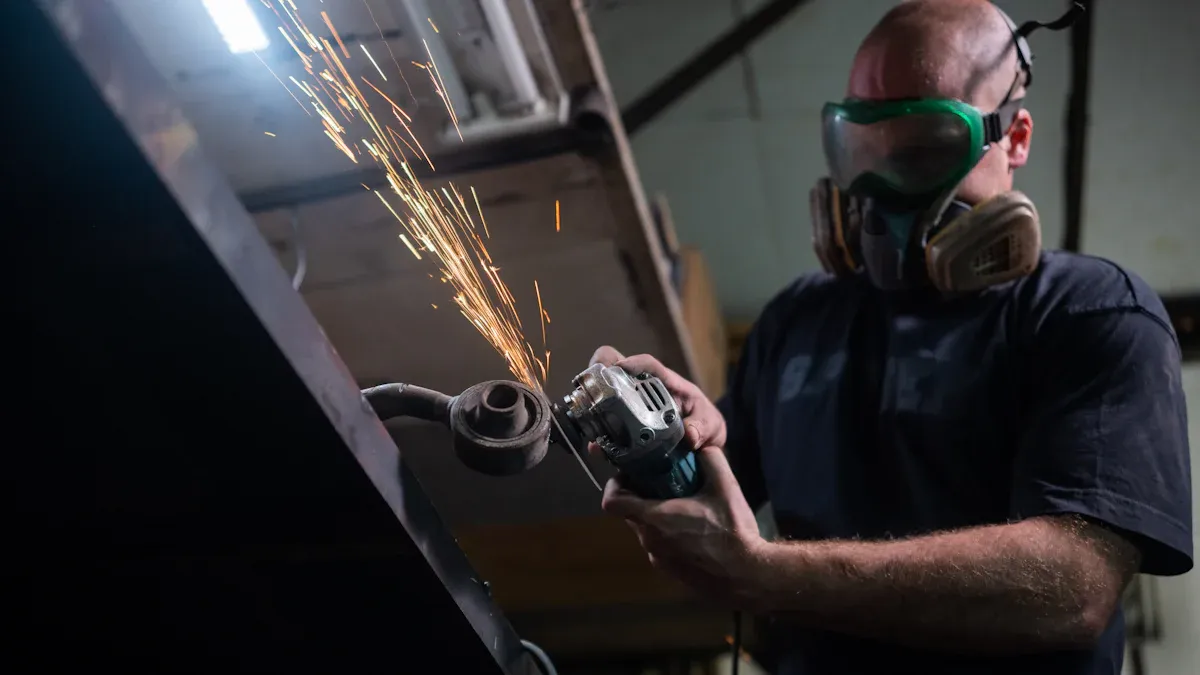
You protect yourself best by wearing the right gear every time you use an angle grinder. Always put on safety glasses or a face shield to guard your eyes from flying debris. Gloves shield your hands from sparks and sharp edges. Hearing protection helps prevent hearing loss from the loud noise. Wear long sleeves and sturdy clothing to cover your skin. Never skip personal protective equipment, even for quick jobs. OSHA reports show that using proper PPE, including goggles, gloves, and hearing protection, greatly reduces injuries from kickbacks and flying debris.
Tip: Always check your gear before starting. Replace damaged gloves or cracked face shields right away.
Safe Operation
You lower your risk of accidents by following safe work habits. Start by inspecting your angle grinder and disc for cracks or damage. Secure your workpiece with a vice or clamps so it cannot move. Hold the grinder with both hands—one on the main handle and one on the side handle—for better control. Let the grinder reach full speed before touching the material. Use the correct disc for the job and never remove the safety guard. Avoid excessive pressure; let the tool do the work. Regularly check your workspace for flammable materials and keep it clean and well-lit.
Common causes of accidents include:
Wheel contact injuries from improper guarding or inattentiveness.
Wheel failure due to using damaged or incorrect discs.
Kickback from using the wrong disc or too much pressure.
Electric shock from faulty cords or wet conditions.
Alert: Angle grinders cause thousands of injuries each year. Most result from ignoring basic safety concerns.
Material Precautions
Different materials require special care. Use metal cutting discs for metal, masonry discs for concrete or brick, and diamond discs for tile. Always clamp metal securely and apply moderate pressure. When working with masonry or tile, use water cooling to reduce dust and prevent overheating. Avoid using standard abrasive discs on plastics, as they can melt or release toxic fumes. Never use discs beyond their rated speed or size. Always keep the safety guard in place to protect yourself from disc breakage and flying debris.
Material | Disc Type | Precautions |
Metal | Metal cutting/grinding | Secure workpiece, moderate pressure, guard on |
Masonry | Masonry/diamond | Water cooling, shallow cuts, dust mask |
Tile/Ceramic | Diamond | Water cooling, slow speed, respiratory protection |
Note: Never use an angle grinder on materials not recommended by the manufacturer. This can lead to poor results and serious injuries.
You can count on an angle grinder for almost any project. This tool handles cutting, grinding, sanding, and polishing across metal, stone, wood, and more. Compared to other power tools, you get more power and versatility. A cordless angle grinder gives you freedom to work anywhere. Always choose the right disc and follow safety steps, such as wearing protective gear and securing your workpiece.
Remember: Using your angle grinder with care and the correct accessories helps you finish jobs safely and efficiently.
FAQ
Can you use an angle grinder to cut wood?
You can use an angle grinder to cut wood if you attach a carbide-tipped disc. Always clamp the wood securely. Use protective gear. Avoid standard abrasive discs, as they may burn or splinter the wood.
What disc should you use for grinding concrete?
You should use a diamond grinding wheel or a masonry disc for concrete. These discs handle tough surfaces and last longer. Always wear a dust mask and goggles to protect yourself from concrete dust.
How do you choose the right angle grinder size?
Select the angle grinder size based on your project. Small grinders (4-4.5 inches) work well for detail tasks. Larger grinders (5-7 inches) suit heavy-duty jobs. Check the disc size and power rating before you buy.
Is a cordless angle grinder powerful enough for metalwork?
A cordless angle grinder handles most metalwork tasks, such as cutting pipes or grinding welds. Choose a model with a high amp-hour battery for longer run time. Always use metal cutting or grinding discs.
What safety gear do you need when using an angle grinder?
You need safety goggles, gloves, and hearing protection. Wear a dust mask for masonry or tile work. Use sturdy clothing and closed-toe shoes. Always check your gear before you start any angle grinder project.