Magnetic drills are quickly becoming essential in industries like metalworking, construction, and fabrication. Their ability to provide precision and portability sets them apart from traditional drills. In this post, we'll explore why magnetic drills are in high demand and their key benefits in enhancing performance.
What Are Magnetic Drills?
Magnetic drills are powerful tools used to drill holes in ferrous metals like steel. They feature a strong electromagnetic base that attaches to the surface, providing stability during drilling. This design eliminates the need for a traditional drill press, allowing for increased mobility and efficiency on the job site.
Understanding Magnetic Drills: A Powerful Tool for Precision
A magnetic drill is made up of several key components:
Magnetic Base: The heart of the tool, it uses electromagnetic forces to attach to metal surfaces securely.
Motor: Powers the drill bit, driving the rotation required for drilling.
Drill Bit: The cutting tool that creates the hole, typically using annular cutters, twist drills, or reamers.
Magnetic drills work by utilizing the magnetic base to keep the tool firmly attached to ferrous metals while the motor drives the cutting tool to create precise holes. This feature allows operators to work in various positions, including vertical, horizontal, or even overhead, ensuring flexibility across different work environments.
Key Features of Magnetic Drills
Magnetic drills stand out for their:
Portable and Compact Design: Easily moved from one location to another, offering convenience in tight spaces or challenging job sites.
Versatile Operation: Capable of drilling in any orientation, including vertical, horizontal, or overhead, making them ideal for construction and metalworking.
High Accuracy and Stability: The magnetic base ensures the drill remains stable, delivering precise and accurate holes.
Ability to Use Multiple Tools: Magnetic drills can be paired with various cutting tools, such as annular cutters, twist drills, and reamers, to handle different material types and hole sizes.
These features make magnetic drills indispensable tools, increasing efficiency and versatility while ensuring high-quality results.
Why Are Magnetic Drills Becoming Essential?
Magnetic drills are increasingly becoming essential tools in industries like construction, fabrication, and metalworking. Their growing importance is tied to their ability to provide precision, efficiency, and versatility in demanding environments.
Increased Precision and Efficiency
Magnetic drills offer greater precision compared to traditional drilling methods. Their electromagnetic base ensures stability during drilling, leading to more accurate holes. The speed at which they operate also boosts productivity. Magnetic drills can complete tasks faster, using less energy, compared to regular drill presses or handheld drills.
Faster Hole Drilling: Magnetic drills can achieve high drilling speeds, reducing work time significantly.
Energy Efficiency: These tools require less power, making them more cost-effective and eco-friendly in the long run.
Versatility Across Applications
One of the biggest advantages of magnetic drills is their versatility. They are used in various applications, from steel fabrication and bridge rebuilding to shipbuilding and pipeline construction.
Industries such as oil and gas, power utilities, railroads, and welding shops all benefit from their precise and portable nature. Magnetic drills can handle different materials and drilling angles, making them ideal for projects that require flexibility.
Steel Fabrication: Precision drilling on large metal structures.
Bridge Rebuilding: Drilling holes in steel beams and columns for reinforcement.
Shipbuilding: Used in tight spaces for accurate hole placement.
Pipeline Construction: Enables drilling for pipe joints and fittings.
Portability and Ease of Use
Magnetic drills are known for their portability. Workers can bring the drill directly to the workpiece instead of moving heavy materials to a stationary drill press. This makes them ideal for on-site work, especially in tight or difficult-to-reach areas.
Portable Design: Allows workers to move the drill between locations easily.
On-Site Efficiency: Saves time and effort by eliminating the need for heavy equipment relocation.
Easy to Operate: Magnetic drills are simple to set up and use, ensuring less downtime on projects.
The Benefits of Using Magnetic Drills
Magnetic drills offer a range of benefits that make them stand out compared to traditional drills. These advantages are especially noticeable in terms of stability, time savings, and operational efficiency.
Why Choose Magnetic Drills Over Traditional Drills?
Magnetic drills are designed to deliver better performance, stability, and precision than handheld drills or conventional drill presses. Their ability to attach securely to the workpiece using a strong magnetic base makes them highly efficient for various industrial applications.
Stability and Safety
The magnetic base of a magnetic drill ensures it remains firmly attached to the material, reducing the risk of accidents. This feature is particularly important when working with large or heavy materials that might otherwise shift during drilling.
Secure Attachment: The magnet keeps the drill in place, preventing movement during operation.
Safety Mechanisms: Features like lift detectors and safety circuits automatically stop the motor if the drill lifts off the material, ensuring safety for the operator.
Time and Cost Efficiency
Magnetic drills are designed for faster operation, which translates into time and cost savings. They can quickly drill multiple holes of varying sizes and depths without the need to change tools frequently.
Faster Drilling Speeds: They reduce drilling time, allowing workers to complete tasks quicker.
Reduced Tool Change Times: Magnetic drills can accommodate different hole sizes, minimizing downtime spent on switching tools and increasing overall productivity.
Lower Power Consumption and Less Wear
Magnetic drills are more energy-efficient than traditional drills, particularly when using annular cutters. These cutters require less force and power to create holes, which reduces the wear and tear on the tool.
Less Power Needed: Magnetic drills use less energy to achieve the same results as traditional drills.
Reduced Wear: Annular cutters produce less friction, resulting in longer tool life and less maintenance.
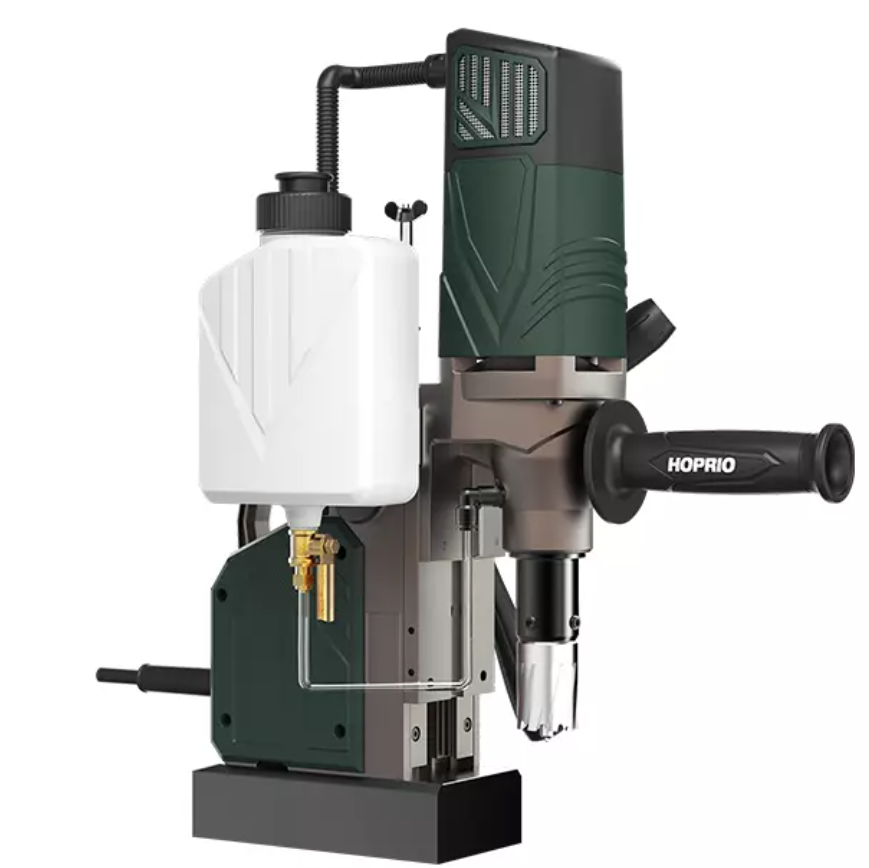
Types of Magnetic Drills and Their Applications
Magnetic drills come in various models, each designed to handle different tasks. Depending on the work environment and the type of drilling required, choosing the right magnetic drill can improve efficiency and precision.
Single-Speed vs. Variable-Speed Magnetic Drills
Magnetic drills come in single-speed and variable-speed models, each suited for different applications.
Single-Speed Magnetic Drills: These drills are more basic and are ideal for tasks where one drilling speed is sufficient. They are often simpler to use and cost-effective for standard applications.
Variable-Speed Magnetic Drills: These offer greater control over the cutting process. The ability to adjust speed helps when working with different materials or drilling at various depths. It also improves the lifespan of the tool by reducing wear.
Variable-speed drills are more versatile and are preferred for tasks requiring precision or when working with multiple material types.
Low Profile Magnetic Drills for Tight Spaces
Low-profile magnetic drills are designed for situations where space is limited. These drills are smaller, lighter, and have an angular gear that allows them to fit in tight spots where regular magnetic drills can't.
Ideal for Confined Spaces: Perfect for drilling in narrow, hard-to-reach areas, such as pipes or small structural elements.
Compact Design: These drills take up less room, making them ideal for use in crowded job sites or when the material is large but space is limited.
Pneumatic and Hydraulic Mag Drills for Specialized Conditions
In certain environments, magnetic drills need to meet specific operational conditions, such as in wet, hazardous, or underwater settings.
Pneumatic Magnetic Drills: Powered by compressed air, these drills are suited for environments where electric power is unsafe, such as offshore drilling or in explosive conditions. They are commonly used in industries like mining or chemical processing.
Hydraulic Magnetic Drills: These are used for underwater drilling or in high-pressure environments. Their closed-loop power systems make them ideal for marine operations or other industrial tasks that require drilling under extreme conditions.
Each type of drill is tailored for a specific application, ensuring optimal performance and safety in demanding conditions.
Applications of Magnetic Drills in Different Industries
Magnetic drills have become essential tools in various industries due to their portability, precision, and ability to drill in challenging environments. Here’s how they are used across different sectors.
Steel Fabrication and Construction
In steel fabrication and construction, magnetic drills are indispensable for drilling precise holes in structural steel, beams, and columns. These drills ensure stability and accuracy, especially when dealing with heavy, large materials.
Bridge Rebuilding: Magnetic drills play a crucial role in the reconstruction of bridges, where precision drilling is required for securing steel reinforcements.
High-Rise Construction: In skyscraper construction, magnetic drills are used to drill holes in large steel beams, allowing for efficient and accurate installation of bolts and fasteners.
These drills allow workers to perform tasks more quickly and safely in both new constructions and refurbishments.
Shipbuilding and Offshore Industries
Shipbuilding and offshore industries require drilling in complex and hard-to-reach areas. Magnetic drills, especially pneumatic models, are used to ensure drilling accuracy in these demanding environments.
Hull and Structural Metal Work: Magnetic drills are used to drill holes in steel plates for ship hulls, ensuring precise cuts in tight spaces.
Pneumatic Drills in Offshore Environments: In offshore drilling, pneumatic magnetic drills are preferred due to their safety and reliability in explosive and wet environments.
These drills offer versatility for drilling horizontally, vertically, or overhead, making them perfect for the confined spaces often found in shipbuilding.
Mining and Oilfields
In mining operations and oilfields, magnetic drills provide a unique combination of precision and portability. These environments are typically harsh, requiring equipment that can withstand tough conditions while delivering accurate results.
Mining: Magnetic drills are used in mining to drill into thick rock or metal, providing precise holes for blasting or anchor installations.
Oilfields: In oil and gas industries, magnetic drills are ideal for offshore and onshore drilling, where portability and reliability are crucial.
They allow workers to drill efficiently, even in remote locations where larger, more stationary equipment would be impractical.
Welding and Maintenance
Magnetic drills are commonly used in welding shops for tasks that require precise hole drilling in metal surfaces. Their portability allows for quick adjustments and ease of use, even in tight spots.
Welding Shops: Magnetic drills help create precise holes in metal workpieces, ensuring perfect alignment for welding and other joining methods.
Maintenance Tasks: These drills are also valuable in the maintenance of industrial equipment, power utilities, and machinery. Their ability to drill directly on-site reduces downtime and enhances efficiency.
Magnetic drills offer reliable solutions for both new projects and ongoing maintenance, making them valuable tools across various sectors.
Tips for Maintaining Magnetic Drills
Proper maintenance of magnetic drills is crucial for ensuring their longevity, performance, and reliability. Here are some tips to keep your tool in top condition.
Regular Cleaning and Lubrication
To maintain optimal adhesion, always keep the magnetic base clean. Dirt, grease, or metal shavings can reduce the strength of the magnetic attachment, affecting stability during drilling.
Clean the Magnetic Base: Regularly wipe down the base to remove debris and ensure a strong magnetic connection.
Use the Right Coolant: Applying the correct coolant reduces friction, prevents overheating, and extends the life of your drill bits and the drill itself. Ensure the coolant is compatible with your materials and working conditions.
Troubleshooting Common Issues
Magnetic drills, like any tools, can experience wear and tear. Here are some common issues and how to address them:
Dull Cutters: Over time, cutters may lose their sharpness. Regularly check the condition of the cutter and sharpen or replace it when necessary to maintain cutting efficiency.
Slipping Magnets: If the magnetic base starts slipping, it’s usually due to debris on the work surface or the magnet. Clean both the base and the material you're drilling to restore a strong grip.
Cooling Problems: If the coolant is not flowing properly, check for blockages in the coolant system. A clogged system can cause overheating and shorten tool life. Clean or replace any filters as needed.
Conclusion
Magnetic drills have become essential tools in industries like construction, fabrication, and metalworking. Their precision, versatility, and portability are key factors driving their demand. As technology advances, improvements in cutter design and drill features will make magnetic drills even more valuable, further securing their place in modern industrial applications.
FAQ
Q: Why are magnetic drills becoming essential tools?
A: Magnetic drills offer precision, portability, and efficiency, making them ideal for various industries like construction, shipbuilding, and metalworking.
Q: What is the benefit of variable-speed magnetic drills?
A: Variable-speed drills provide better control, improving cutting accuracy and extending tool life.
Q: Can magnetic drills be used in confined spaces?
A: Yes, low-profile magnetic drills are designed specifically for use in tight, hard-to-reach areas.
Q: What maintenance do magnetic drills require?
A: Regular cleaning, lubrication, and troubleshooting common issues like dull cutters or slipping magnets will ensure optimal performance.


