Brushless vs Brushed Angle Grinders: Which Is Better?
Brushless angle grinders generally offer higher motor efficiency, lower maintenance requirements, and better speed control than traditional brushed models. Brushed angle grinders remain a practical, lower-cost option for occasional work. The better choice depends on your workload, operating conditions, and long-term costs.
For industrial users, a corded brushless angle grinder can provide reliable performance during extended cutting and grinding operations. HOPRIO specializes in AC brushless power tools, combining motor technology with intelligent electronic control for demanding professional applications.
This guide compares brushless vs brushed angle grinders in performance, operating costs, lifespan, and industrial suitability.
Key Takeaways
Performance: Brushless motors generally provide better efficiency, while electronic controllers can improve speed stability under load.
Purchase cost: Brushed angle grinders typically cost less initially.
Maintenance: Brushless motors eliminate carbon brush replacement but still require routine tool maintenance.
Durability: Removing the brush-and-commutator system reduces motor wear, although lifespan depends on operating conditions.
Best applications: Brushless grinders are often more suitable for frequent industrial work, while brushed grinders remain economical for occasional use.
What Is the Difference Between Brushless and Brushed Angle Grinders?
The primary difference between a brushless and a brushed angle grinder lies in how the motor transfers electrical power and controls rotation.
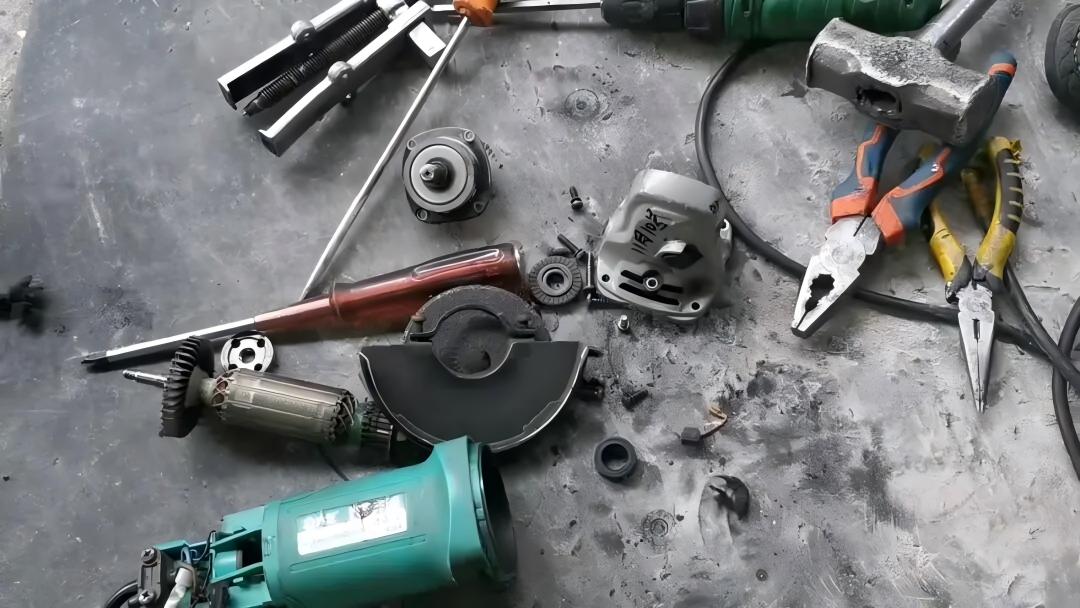
A brushed angle grinder uses carbon brushes and a commutator to deliver current to the rotating armature. This mechanical contact gradually wears the brushes and generates friction and heat.
A brushless angle grinder uses an electronic controller to manage motor commutation without carbon brushes. Eliminating these contact components reduces wear and can improve efficiency.
Both motor types can be found in corded power tools. Brushless technology does not automatically mean a grinder is cordless.
Brushless vs Brushed Angle Grinder Comparison
| Feature | Brushed Angle Grinder | Brushless Angle Grinder |
| Motor technology | Carbon brushes and commutator | Electronic commutation |
| Motor efficiency | Generally lower | Generally higher |
| Speed stability | Depends on motor design and controls | Can offer stronger regulation under load |
| Initial cost | Usually lower | Usually higher |
| Carbon brush maintenance | Periodic replacement required | Not required |
| Motor heat | Additional brush-contact losses | Reduced brush-contact losses |
| Service life | Influenced by brush and commutator wear | Reduced wear from motor commutation |
| Best suited for | Occasional and light-duty work | Frequent and demanding applications |
The practical difference: Brushless technology offers its greatest value when operators need consistent performance, reduced maintenance downtime, and reliable daily operation.

How Do Brushless and Brushed Angle Grinders Compare in Performance?
Motor Efficiency and Grinding Power
Brushless angle grinders can convert electrical input into mechanical output more efficiently because they eliminate losses associated with carbon brush contact.
This advantage becomes valuable in metal fabrication, weld preparation, and repetitive grinding operations.
According to HOPRIO's published performance information, its brushless tools can provide 20–35% higher work efficiency and 30–40% lower grinding disc consumption in its comparisons with conventional tools.
These are manufacturer-reported performance figures rather than guaranteed results for every application. Actual improvements depend on the workpiece material, abrasive disc, tool model, load, and operating technique.
Speed Stability Under Heavy Loads
Speed stability is particularly important when removing material from thick steel or preparing welded joints.
When resistance increases, some conventional brushed grinders experience noticeable speed reduction.
A brushless grinder equipped with an appropriate electronic controller can adjust motor output to help maintain the required operating speed.
HOPRIO develops its brushless motors and controllers together, supporting coordinated motor control for professional grinding applications.
For a closer explanation of electronic commutation, see Sensorless vs Sensored Brushless Motors in Power Tools.
Heat, Noise, and Operator Comfort
Removing carbon brushes reduces one source of friction and electrical losses inside the motor.
However, brushless angle grinders still produce heat through their windings, bearings, gearing, and electronic components.
Noise and vibration also depend on the gear system, abrasive disc, cutting conditions, and overall tool construction.
A brushless design can support a more compact motor without necessarily making every brushless grinder lighter or quieter than every brushed alternative.
For professional users, tool balance, grip design, and suitable weight matter alongside motor efficiency.

Are Brushless Angle Grinders More Expensive?
Brushless angle grinders generally have higher initial purchase costs because they require electronic motor control and more sophisticated electrical components.
However, purchase price alone does not determine the total cost of ownership.
For workshops using angle grinders every day, maintenance labor, replacement parts, abrasive consumption, and downtime can significantly affect operating expenses.
Initial Purchase Cost
Brushed angle grinders are often the more economical choice for occasional maintenance, home improvement, and backup use.
Brushless models may require a larger initial investment. In return, buyers gain advantages such as reduced brush-related maintenance and potentially higher productivity.
Price differences vary by brand, disc size, rated power, protection functions, and regional market. Comparing equivalent specifications is more useful than relying on a universal price premium.
Long-Term Maintenance and Consumable Costs
For industrial buyers, operating costs should be evaluated throughout the grinder's expected service life.
| Cost Factor | Brushed Grinder | Brushless Grinder |
| Initial purchase | Generally lower | Generally higher |
| Carbon brush replacement | Required as brushes wear | Not required |
| Controller maintenance | Depends on tool design | Electronic controller may require specialist service |
| Grinding discs | Depends on application and operating conditions | More stable operation may reduce disc consumption |
| Maintenance downtime | Includes brush-related servicing | Avoids brush-related servicing |
| Long-term value | Strong for occasional use | Often favorable for high-utilization work |
HOPRIO reports reduced abrasive disc consumption with its brushless technology. For a fabrication facility performing repetitive grinding, such improvements may reduce recurring consumable costs.
However, the financial benefit should be calculated using actual workshop conditions.
A practical calculation is:
Total Cost of Ownership = Purchase Cost + Maintenance Cost + Consumables + Energy Cost + Downtime Cost
This approach allows procurement teams to compare operating expenses rather than focusing only on the initial equipment price.
Do Brushless Angle Grinders Last Longer?
Brushless motors can offer longer service life because they remove the carbon brushes and commutator found in conventional brushed motor designs.
However, eliminating brushes does not make the complete angle grinder maintenance-free.
Carbon Brush Wear vs Brushless Motor Design
In brushed motors, carbon brushes wear gradually during operation.
Depending on workload and motor design, operators eventually need to inspect and replace them.
If worn brushes are neglected, excessive sparking and commutator damage can lead to more extensive repairs.
Brushless motors eliminate this specific maintenance requirement through electronic commutation.
The benefit is particularly important in industrial facilities where tools operate frequently and unexpected downtime interrupts production.
Bearings, Gears, and Electronic Protection
Both brushed and brushless angle grinders contain mechanical components that require appropriate maintenance.
Bearings, gears, switches, electrical cables, and ventilation passages remain important throughout the tool's life.
HOPRIO's brushless platform incorporates motor and controller technologies designed for professional operating conditions.
Depending on the model, available protection functions include:
These functions help manage operating risks, but they do not replace correct disc selection, protective guards, suitable operating techniques, or routine inspections.
For additional information on intensive applications, read Corded Brushless Angle Grinders: Ideal Tools for Heavy-Duty Tasks.
Which Angle Grinder Is Better for Industrial Applications?
The appropriate grinder depends on the working environment, application intensity, disc diameter, and available electrical supply.
Metal Fabrication and Weld Grinding
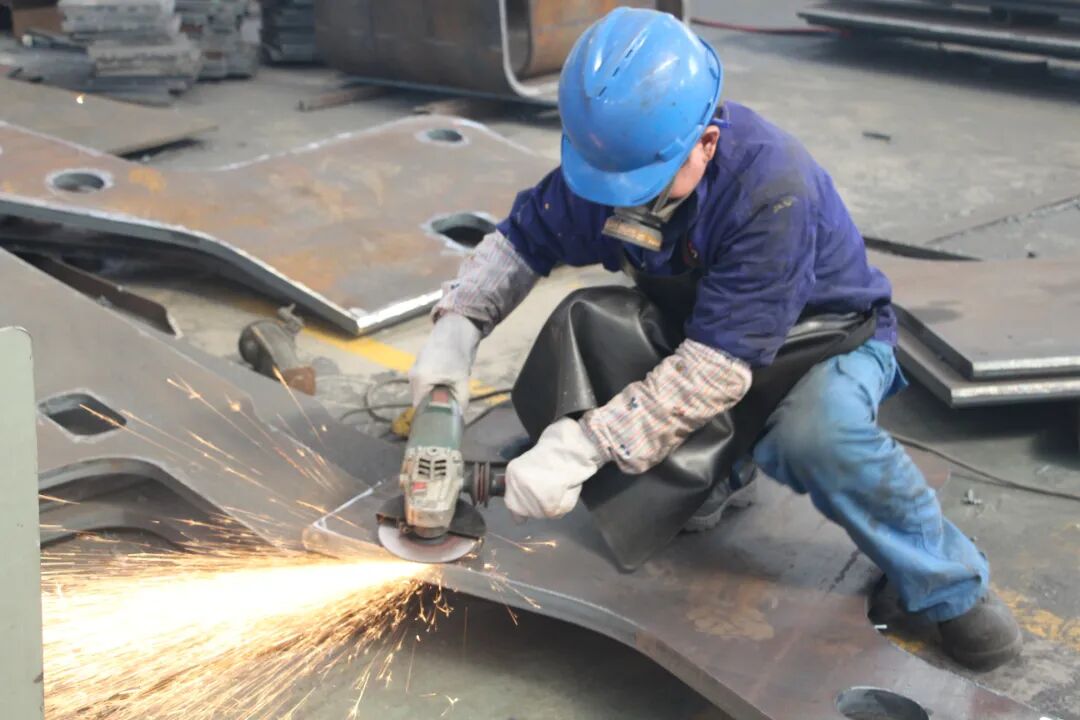
Metal fabrication workshops often require repetitive grinding, deburring, and weld seam preparation.
A corded brushless angle grinder is a strong candidate for these operations because electronic speed regulation can help maintain consistent performance during demanding work.
For example, the HOPRIO S1M-125YE1 5-Inch Brushless Angle Grinder provides 1,250W rated power, a 125mm disc diameter, and a rated speed of 10,000 RPM.
Its compact design makes it suitable for professional grinding and cutting tasks where maneuverability matters.
Heavy-Duty Grinding and Steel Processing
Larger steel components and intensive material removal may require a higher-powered grinder with a larger disc.
The HOPRIO S1M-150YE3 6-Inch Brushless Angle Grinder features 2,000W rated power, a 150mm disc, and a rated speed of 9,500 RPM.
Its brushless motor and intelligent controller are designed for demanding cutting and grinding applications.
Shipbuilding and Large-Scale Industrial Work
Shipyards, structural steel manufacturers, and heavy equipment workshops often use larger angle grinders for extensive cutting and surface preparation.
The HOPRIO S1M-230YE1 9-Inch Brushless Angle Grinder offers 2,600W rated power and a 230mm disc diameter.
Its larger cutting capacity supports appropriately specified heavy-duty work where smaller grinders may be less practical.
Across these applications, selecting the correct wheel and grinder configuration is just as important as choosing the motor technology.
How to Choose Between Brushless and Brushed Angle Grinders
The following factors can help buyers evaluate which grinder delivers better value for their work.
1. Evaluate Daily Operating Hours
For occasional grinding or household projects, a conventional brushed grinder may provide sufficient performance at a lower purchase price.
For frequently used industrial equipment, a brushless model may offer greater long-term value through reduced brush maintenance and improved operating efficiency.
2. Match Rated Power and Disc Size
Select the grinder according to the workpiece, intended material removal, and required accessibility.
Smaller discs offer maneuverability, while larger discs can provide greater cutting reach.
Compare rated power rather than relying solely on maximum or peak power claims. The grinder's permissible wheel diameter and speed rating must also match the accessory.
3. Check Motor Control and Protection Features
For demanding applications, investigate speed regulation, overload management, thermal protection, and restart protection.
A brushless motor alone does not guarantee that every protection feature is included.
Always verify the specifications of the actual model before purchasing.
4. Compare Total Ownership Costs
Industrial buyers should consider consumables, replacement parts, maintenance labor, service availability, and production downtime.
When equipment is used continuously, savings over the operating life may justify a higher initial investment.
For occasional users, the additional purchase cost may be harder to recover.
5. Evaluate the Manufacturer's Technical Support
For distributors and industrial procurement teams, manufacturing capabilities and after-sales support are also important.
HOPRIO develops brushless motors, controllers, and finished power tools, offering an integrated approach to product engineering.
Buyers can review its brushless angle grinder product range and discuss application requirements, product specifications, and OEM/ODM options directly with the manufacturer.
Why Consider HOPRIO Corded Brushless Angle Grinders?
HOPRIO specializes in AC brushless technology for professional power tools.
The company develops and manufactures brushless motors, electronic controllers, and finished tools, providing control over key components throughout product development.
Its professional product range covers compact angle grinders and larger industrial models designed for cutting and grinding applications.
Key advantages include:
Integrated engineering: Motor, controller, and power tool development within the HOPRIO group.
Industrial applications: Products designed for metal fabrication, construction, equipment manufacturing, and other demanding environments.
Reduced brush-related maintenance: Brushless motors eliminate periodic carbon brush replacement.
Electronic control: Sensorless motor control technology and model-dependent intelligent protection functions.
Product selection: Multiple disc diameters and power ratings for different professional requirements.
OEM/ODM support: Product development and manufacturing options for distributors and commercial buyers.
For businesses comparing brushless angle grinder suppliers, these capabilities provide practical criteria beyond initial pricing.
Conclusion: Brushless or Brushed Angle Grinder?
Brushless angle grinders are generally the better long-term choice for frequent industrial use, while brushed angle grinders remain economical for occasional and light-duty applications.
Brushless technology reduces motor wear associated with carbon brushes and can improve efficiency and speed regulation. Brushed technology remains useful when initial cost is the primary consideration.
The best purchase decision depends on operating hours, application demands, service requirements, and total ownership costs.
For professional users, HOPRIO offers a range of corded brushless angle grinders developed for reliable cutting and grinding operations.
Explore HOPRIO's angle grinder range or contact HOPRIO to discuss suitable configurations, application requirements, and OEM/ODM cooperation.
Frequently Asked Questions
Are brushless angle grinders better than brushed models?
Brushless angle grinders generally offer higher motor efficiency and reduced brush-related maintenance. They are often better for frequent professional use, while brushed models remain suitable for occasional work and lower budgets.
Do brushless angle grinders need maintenance?
Yes. Brushless angle grinders eliminate carbon brush replacement, but bearings, gears, cables, switches, and ventilation passages still require inspection and appropriate maintenance.
Do brushless angle grinders use less electricity?
Brushless motors can convert electrical energy more efficiently than brushed motors. However, actual electricity consumption depends on rated power, workload, motor control, and operating conditions.
Are corded brushless angle grinders good for heavy-duty work?
Yes, properly rated corded brushless angle grinders are suitable for demanding industrial work. Their mains-powered design avoids battery runtime limitations, while suitable motor control can support consistent performance under varying loads.
Can brushless angle grinders reduce grinding disc costs?
They can, but results depend on the equipment and application. HOPRIO reports 30–40% savings in disc consumption in its comparisons. Actual savings vary with abrasive quality, workpiece material, and operating technique.
Is a brushless angle grinder worth the higher price?
A brushless angle grinder is often worth considering when frequent operation, maintenance downtime, or consumable costs are significant. Occasional users may find a lower-cost brushed model more economical.
What should industrial buyers check before purchasing?
Industrial buyers should compare rated power, disc size, working voltage, motor control, safety functions, service support, and total ownership costs. Supplier engineering capabilities and OEM/ODM options may also influence the final choice.


