The transition from traditional brushed motors to brushless technology represents a significant capital investment for professional woodworkers, auto-body technicians, and high-volume fabrication shops. Shop managers and independent professionals must balance the upfront cost of advanced sanding equipment against the hidden costs of operator fatigue, inconsistent surface finishes, and tool maintenance downtime. Understanding the mechanical advantages of brushless motors, combined with continuous corded power, provides a clear framework for determining if this tool class is a necessary upgrade for your production environment. You need reliable tools that perform consistently under demanding conditions without overheating or bogging down under heavy pressure. We evaluate the specific mechanical benefits, ergonomic advantages, and operational efficiencies these advanced tools offer on the shop floor, helping you make an informed decision about upgrading your surface preparation equipment.
Continuous Power Delivery: Corded configurations eliminate the voltage drop and battery swapping associated with cordless models, ensuring consistent RPMs under heavy loads.
Ergonomic Superiority: The absence of carbon brushes and commutators allows for a significantly lower profile and lighter weight, directly reducing Hand-Arm Vibration Syndrome (HAVS) risks.
Maintenance Reduction: Brushless motors operate with fewer friction-generating wearable parts and feature sealed electronics, drastically extending the tool's lifecycle.
Finish Consistency: Advanced electronic speed control maintains exact orbit speeds, which is critical for flawless wood furniture finishing and preventing surface gouging.
Defining the Technology: What Exactly is a Corded Brushless Random Orbital Sander?
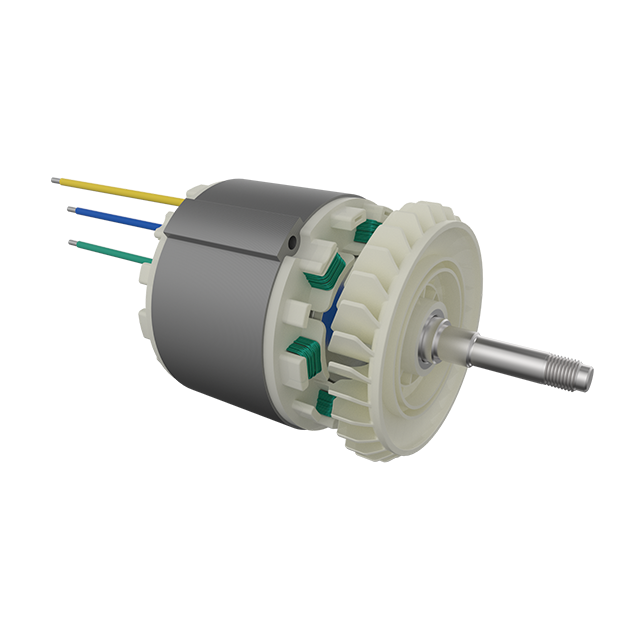
A Corded Brushless Random Orbital Sander represents a major shift in surface preparation hardware. The motor architecture defines the tool's capabilities. It utilizes a brushless DC (BLDC) motor design, which replaces physical carbon brushes and commutators with a digital microprocessor. This microprocessor controls a series of electromagnets arranged in a stator. These electromagnets fire in a precise sequence to drive the permanent magnets on the rotor. Because there is no physical contact between the stator and the rotor, internal friction and mechanical wear are virtually eliminated. The tool converts incoming AC wall power into DC power internally to drive this highly efficient system.
The motion of the tool dictates the quality of the final surface. It employs dual-action kinematics. The backing pad spins on a central spindle while simultaneously oscillating in an offset elliptical pattern. This complex, overlapping movement defines the random orbital pattern. The dual motion prevents the abrasive grains from traveling the same path twice. This effectively eliminates directional scratch patterns and unsightly swirl marks on the workpiece. The resulting finish is uniform, flat, and ready for stain, paint, or clear coat application.
The power source determines the tool's viability in an industrial setting. Continuous mains power separates this class of equipment from battery-operated counterparts. Wall power ensures zero torque degradation over a full eight-hour shift. The motor receives a constant, unvarying supply of electricity, allowing the internal electronics to maintain exact speeds regardless of the application. Heavy downward pressure on dense materials will not stall the pad. The tool delivers identical performance at the beginning of the morning shift and the end of the workday.
Problem Framing: The Limitations of Traditional Sanding Technology
High-volume sanding operations require strict success criteria to remain profitable. A successful tool investment must maximize the material removal rate, measured in grams per minute. It must also achieve zero-defect finishes consistently to prevent costly rework. Minimizing operator strain is another critical metric, as fatigue directly leads to poor technique and uneven surfaces. Traditional tools often fail to meet all three criteria simultaneously. Shop environments demand tools that can run continuously without failure. Interruptions for maintenance, cooling periods, or battery changes destroy production efficiency and inflate labor costs.
Traditional brushed motors create significant operational bottlenecks on the shop floor. Carbon brushes physically rub against a spinning commutator to transfer electrical current. This constant friction generates excess heat during prolonged use. The heat limits continuous runtime and requires large internal cooling fans to prevent the motor from burning out. Brushed motors also require bulkier tool housings to accommodate the brush assemblies and cooling channels. This added height raises the tool's center of gravity. A high center of gravity increases wrist strain during operation and makes the tool harder to control, especially when sanding narrow edges or vertical surfaces.
Cordless sanders present a different set of compromises that hinder high-volume production. Battery-powered units offer excellent mobility for punch-list work or job site installations. However, they suffer from uneven weight distribution. A heavy lithium-ion battery pack attached to the rear of the tool alters its balance. Operators must actively fight this imbalance during fine finishing work to keep the pad flat. Furthermore, cordless tools experience torque drop-off. As the battery charge depletes, the voltage sags, and the motor loses pushing power. This leads to inconsistent scratch patterns and slower material removal during extended surface preparation tasks.
Core Evaluation Dimensions: Why a Corded Brushless Random Orbital Sander Excels
The Mechanics of Brushless DC (BLDC) Motors and Durability
Brushless technology relies entirely on magnetic propulsion rather than physical contact. Electronic controllers dictate the firing sequence of the internal electromagnets. These magnets attract and repel the permanent magnets mounted on the rotor shaft. The rotor spins freely without ever touching the stator. This completely eliminates the physical friction of commutators and the need for replacement carbon brushes. The motor operates with exceptional mechanical efficiency, converting more electrical energy into rotational force rather than wasting it as heat.
Thermal management is vastly improved in brushless designs, directly impacting tool longevity. The lack of internal friction drastically reduces heat buildup within the housing. Operators can run these tools for hours on end without triggering thermal overload protection switches. Furthermore, the internal circuit boards are fully encapsulated. This potting process seals the sensitive microprocessors and electronics in a hard, protective resin. It protects the components from fine particulate ingress. Wood flour, fiberglass dust, and metal shavings cannot short out the motor. The tool survives and thrives in highly abrasive industrial environments where traditional motors quickly fail.
Uninterrupted Power and Torque Consistency
Mains power provides a distinct, measurable advantage over battery systems in continuous production environments. Corded power supplies eliminate battery sag entirely. Battery sag occurs when a lithium-ion cell cannot deliver sufficient current under heavy load, causing the motor to slow down. Corded tools draw continuous amperage directly from the wall receptacle. This is mandatory for maintaining consistent torque. Applying heavy downward pressure on dense hardwoods like hickory or white oak requires massive torque to keep the abrasive cutting. Solid surface materials and epoxy resins also demand unrelenting motor power. Corded brushless tools never bog down under these demanding conditions.
Electronic speed control further enhances this power delivery system. Internal microprocessors constantly monitor load resistance via Hall effect sensors. If the operator presses down harder, the processor detects the drag on the rotor. It instantly routes more current to the electromagnets to compensate. This maintains a constant RPM regardless of the applied pressure. The pad will not stall or slow down under heavy load. This consistency prevents uneven sanding, gouging, and inconsistent scratch patterns. It ensures a perfectly flat, uniform surface across the entire workpiece, reducing the time spent on subsequent finishing steps.
Ergonomics, Form Factor, and Operator Health
The compact nature of brushless motors revolutionizes tool ergonomics and handling. Without the need for bulky brush assemblies, engineers can design elongated, low-profile paddle switches. The motor sits much closer to the backing pad, lowering the tool's center of gravity significantly. The operator's palm rests directly over the spindle, aligning the downward force with the abrasive pad. This proximity provides superior tactile feedback. Operators can feel the surface contours, grain transitions, and high spots through the tool. It allows for precise control over delicate profiles, face frames, and narrow edges without tipping the pad.
Vibration mitigation is a critical occupational health factor for professional shops. Prolonged exposure to tool vibration causes Hand-Arm Vibration Syndrome (HAVS), leading to nerve damage and reduced grip strength. Brushless motors have significantly less internal rotational mass than brushed counterparts. They operate with incredible smoothness and precision balance. This directly lowers the vibration output transmitted to the operator's hands and arms. Reduced vibration allows for longer safe working periods, keeping shops compliant with occupational health exposure limits. It protects workers from long-term injury and reduces fatigue-related errors.
Acoustic comfort also improves dramatically with the implementation of brushless technology. Traditional brushed motors produce a high-pitched mechanical whine caused by the brushes dragging across the commutator. This noise causes auditory fatigue and stress over a long shift. Brushless sanders operate with a significant reduction in decibel output. The sound is smoother, lower in pitch, and far less intrusive. This creates a safer and more comfortable shop environment. Operators experience less fatigue, improved focus, and better communication on the shop floor.
Weight reduction is another major ergonomic benefit that impacts daily production. Removing heavy battery packs lightens the overall tool significantly. Eliminating bulky brushed motor housings and large cooling fans further reduces the weight. A lighter tool reduces shoulder, elbow, and wrist fatigue. This is especially noticeable during vertical or overhead sanding tasks, such as prepping boat hulls, large architectural panels, or assembled cabinetry. Operators can maintain proper technique and flat pad orientation for longer durations. Consistent technique directly leads to better surface finishes and less rework.
Sanding Technology Performance Metrics
| Operational Metric | Traditional Brushed Corded | Modern Cordless Brushless | Corded Brushless |
| Power Consistency | Moderate (Prone to bogging) | Variable (Battery sag) | Excellent (Constant RPM) |
| Weight Distribution | Top-heavy | Rear-heavy | Low-profile / Balanced |
| Maintenance Needs | High (Brush replacement) | Low (Battery management) | Minimal (Sealed motor) |
| Thermal Management | Poor (High friction) | Good | Excellent (Low friction) |
| Vibration Output | High | Moderate | Very Low |
Features-to-Outcomes: Impact on Wood Furniture Finishing
Precision Control with a Variable Speed Sanding Tool
Matching the tool's RPM to the specific abrasive and material substrate is critical for professional results. Different materials react differently to friction and heat. Utilizing a high-quality Variable Speed Sanding Tool provides this necessary control. Operators use variable speed dials or digital paddle switches to adjust the oscillation speed on the fly. They dial down the RPMs for heat-sensitive finishes. Materials like nitrocellulose lacquer, thin wood veneers, or poured epoxy resins will melt, burn, or load up the abrasive at high speeds. Conversely, operators dial up the RPMs for aggressive stock removal on raw lumber or when stripping old finishes.
Soft-start capabilities protect delicate workpieces from accidental damage during initial contact. Traditional sanders jolt to full speed instantly when powered on. If the pad is not perfectly flat, this aggressive initial bite can leave deep, crescent-shaped gouges in the wood. Electronic motor control ramps up the speed gradually. The pad starts spinning softly when it contacts the workpiece, allowing the operator to establish proper tool control and pad orientation. This preserves delicate profiles, prevents accidental edge round-overs, and ensures a smooth start to the sanding sequence.
Dust Extraction Integration and Pad Braking
Effective dust extraction is mandatory for high-quality finishing and abrasive longevity. Premium brushless sanders feature optimized internal geometry designed specifically for high-CFM vacuum extraction. The backing pads feature symmetrical airflow channels that pull dust away from the work surface instantly. This is particularly effective when paired with modern net or mesh abrasives. Mesh abrasives allow dust to pass through the entire pad surface rather than relying on specific hole alignments. This prevents dust from piling up under the pad, extending abrasive life by up to three times and maintaining a clean, breathable shop environment.
Electronic pad brakes improve both safety and workflow efficiency on the bench. Traditional sanders continue spinning due to momentum long after the power is cut. Operators must wait for the pad to stop completely before setting the tool down. If they set it down too early, the spinning pad damages the workpiece or grabs the workbench. Brushless models feature electronic braking systems. The microprocessor reverses polarity slightly to stop the pad instantly when the paddle is released. The operator can set the tool down immediately. This saves valuable seconds during complex finishing routines and prevents accidental surface damage.
This level of control and cleanliness is absolutely essential for flawless Wood Furniture Finishing. Dust trapped between the pad and the wood acts as a secondary, uncontrolled abrasive. It causes pigtail scratches—deep, spiral gouges that ruin the final stain or clear coat and only become visible after the finish is applied. Superior dust extraction eliminates these abrasive particles before they cause damage. The variable speed control prevents heat buildup that can alter the wood's surface tension and affect stain absorption. The combination of these features guarantees a pristine surface ready for final coating.
Overall Value Influencing Factors: Long-Term Investment Analysis
Upfront Investment vs. Long-Term Lifespan
Upgrading to industrial brushless technology requires a premium initial capital outlay compared to consumer-grade alternatives. Shop owners must view this as a long-term capital investment rather than a disposable expense. The return on investment becomes apparent when calculating the reduction in consumable costs and downtime. The complete elimination of replacement brushes and commutator servicing keeps the tool on the bench rather than in the repair bin. Furthermore, the superior dust extraction capabilities drastically reduce abrasive consumption. When sandpaper does not load up with dust, it cuts longer and faster, lowering the monthly abrasive budget significantly.
Increased daily throughput also factors heavily into the investment analysis. Because the tool maintains constant RPM under load, operators complete sanding sequences faster. The ergonomic benefits mean operators take fewer breaks for hand fatigue. The electronic pad brake saves seconds every time the tool is set down. Over a year of daily production, these minor time savings compound into hundreds of hours of recovered labor, easily offsetting the initial purchase premium.
Scalability and Ecosystem Compatibility
Integrating a new tool class requires evaluating hose and cable management. High-end brushless sanders perform best when paired with a compatible HEPA dust extractor. Shops must consider the logistics of managing the power cord and the vacuum hose simultaneously. Utilizing integrated coaxial hoses, where the power cord is sleeved inside or alongside the vacuum hose, prevents snagging on the edges of the workpiece. This seamless integration improves maneuverability and keeps the workspace organized.
Orbit stroke selection is another critical factor for scalability. Brushless models are often application-specific. A 2.5mm stroke provides a tight orbit for ultra-fine finishing and polishing between coats of finish. A 5.0mm stroke serves as the versatile standard for general surface preparation and intermediate sanding. An 8.0mm stroke delivers aggressive stock removal for shaping or stripping. Shops must select the correct stroke diameter to match their primary applications, or invest in multiple units to cover the entire finishing process from rough milling to final polish.
Implementation Risks and Mitigation Strategies
Proprietary Ecosystem Lock-In
Upgrading to advanced sanding technology carries specific implementation risks regarding consumables. High-end brushless sanders often utilize proprietary designs to maximize performance. They may require specific backing pads with unique mounting threads or bolt patterns. They frequently use proprietary abrasive hole patterns to align with their internal dust extraction channels. Furthermore, they might require specialized vacuum hose adapters that do not fit standard shop vacuums. This ecosystem lock-in can complicate shop logistics and force reliance on a single manufacturer for all replacement parts and abrasives.
Mitigating this risk requires careful supply auditing before purchase. Shop managers must audit their current abrasive inventory and evaluate the availability of compatible abrasives from third-party vendors. Transitioning to a new abrasive ecosystem, like mesh networks, requires planning and budget adjustments. Evaluate the long-term availability of these specific consumables in your region. Ensure that vacuum adapters are compatible with your existing dust extractors, or source aftermarket adapters. Proper planning prevents unexpected operational bottlenecks and keeps consumable costs manageable.
Over-Specifying for Low-Volume Applications
Investing in continuous-duty equipment is not always necessary for every operation. There is a distinct risk of over-specifying tools for low-volume applications. Occasional, light-duty work does not require the durability of industrial-grade brushless motors. Hobbyists, weekend warriors, or low-volume shops may not utilize the tool enough to justify the premium upgrade. The advanced thermal management, continuous power delivery, and ergonomic refinements are wasted on intermittent tasks that only last a few minutes at a time.
Mitigation involves analyzing specific operational volumes objectively. Utilize a strict hours-of-use framework to evaluate the need for the upgrade. Track how many continuous hours the sander runs daily in your shop. If the tool runs for less than an hour a day, standard brushed models or cordless units will suffice. If the tool runs continuously for multi-hour shifts, the brushless upgrade is mandatory for efficiency and operator health. Base the equipment decision on actual production data rather than perceived needs or marketing claims.
Conclusion
A corded brushless random orbital sander represents a calculated industrial upgrade designed to solve specific production bottlenecks. It directly addresses problems related to operator fatigue, thermal overload, and finish inconsistency. The technology guarantees reliable performance across demanding production shifts. The continuous power delivery, combined with ergonomic superiority and advanced dust extraction, makes it an indispensable asset for high-volume surface preparation.
Audit your shop's daily sanding hours to determine your actual operational volume and justify the investment.
Identify your primary material substrates to select the appropriate orbit stroke diameter for your workflow.
Test-drive models with different orbit sizes on your actual materials to match the tool to your specific finishing requirements.
Verify compatibility between the new sander's exhaust port and your existing dust extraction infrastructure.
Calculate your current monthly abrasive spend to project the potential savings of switching to a mesh abrasive ecosystem.
FAQ
Q: What is the difference between a 2.5mm, 5.0mm, and 8.0mm orbit on a brushless sander?
A: The orbit diameter dictates the aggressiveness of the material removal. A 2.5mm orbit provides a tight, fine pattern ideal for final finishing and polishing. The 5.0mm orbit serves as the industry standard for general surface preparation and intermediate sanding. An 8.0mm orbit delivers aggressive stock removal for stripping paint or leveling rough lumber.
Q: Do brushless sanders require any routine motor maintenance?
A: The motor itself is entirely maintenance-free. This is due to the lack of carbon brushes and the use of sealed electronics. There are no wearable internal motor parts to replace. However, external components like backing pads and dust extraction ports still require regular inspection and periodic replacement.
Q: Why choose a corded brushless sander over a cordless one?
A: Corded models provide continuous, unvarying power for long shifts. They eliminate battery degradation and torque sag over time. Furthermore, removing the battery pack results in a significantly lighter tool. This improves the center of gravity and reduces operator fatigue during extended use.
Q: Can I use standard hook-and-loop sandpaper on high-end brushless sanders?
A: Standard hook-and-loop discs will physically attach to the pad. However, matching the specific hole pattern of the tool's backing pad is critical. If the holes do not align, the advanced dust extraction capabilities are rendered useless. Upgrading to mesh abrasives bypasses this issue entirely.
Q: How does a variable speed sanding tool prevent burn marks on wood furniture finishing?
A: Lowering the RPM directly reduces friction-induced heat on the work surface. This is essential when sanding heat-sensitive materials. High speeds will easily melt clear coatings, resins, or thin veneers. Variable speed control allows the operator to keep the surface cool while still removing material.
Q: Are brushless random orbital sanders waterproof or safe for wet sanding?
A: No, standard electric brushless sanders are not waterproof. They are strictly designed for dry sanding applications. Introducing water into the tool will cause catastrophic electrical failure and poses a severe shock hazard. Wet sanding requires specifically rated pneumatic air tools designed for that environment.


