Inefficient surface preparation hides massive operational costs within professional workshops. Operators fight daily fatigue, surface finishes look inconsistent across different panels, and unexpected equipment downtime ruins tight production schedules. Traditional sanding equipment struggles to meet the demands of continuous daily use. Brushed motors suffer severe thermal degradation during long shifts. Their RPMs drop noticeably under heavy load, leading to uneven material removal. Cordless models introduce their own workflow interruptions with constant battery management and thermal lockouts. We need a more reliable approach to surface leveling and finishing.
Belt sanders remove material aggressively but leave deep linear scratches that require hours of secondary processing. Standard palm sanders lack the raw power for rapid stock removal on dense materials. A Random Orbital Sander bridges this operational gap perfectly. It removes stock quickly while leaving a smooth, swirl-free finish regardless of the underlying grain direction. For high-volume, continuous-duty applications, the Corded Brushless Random Orbital Sander stands as the definitive technical standard. It solves power drop-offs, eliminates battery swaps, and keeps operators working efficiently.
Consistent Power Delivery: Brushless motors utilize electronic commutation to maintain stable RPMs under heavy pressure, preventing the stalling common in brushed models.
Synergy with Dust Extraction: Because professional sanding requires a vacuum hose for dust extraction, the mobility argument for cordless sanders is largely negated, making continuous corded power the logical choice.
Reduced Operator Fatigue: The elimination of heavy batteries and internal carbon brushes results in a lighter, lower-vibration tool, extending safe operating hours.
Lower Long-Term Costs: Despite a higher initial purchase price, the lack of consumable brushes and expensive battery ecosystems yields a stronger long-term ROI for daily users.
The Mechanics of Brushless Motors in Surface Preparation
Eliminating Carbon Brushes for Reduced Friction and Heat
The physical differences between motor types explain why brushless tools dominate modern workshops. Traditional brushed motors rely on carbon blocks pressing physically against a spinning commutator to transfer electrical current. This physical contact creates constant friction. Friction inevitably generates heat. Heat serves as the primary enemy of electrical tools, degrading internal components and melting wire insulation over long operational shifts.
When you push a traditional sander hard into a workpiece, you can often smell the carbon burning. As the carbon brushes wear down, they release conductive carbon dust inside the motor housing. This dust coats the internal wiring and causes internal short circuits. You eventually have to open the tool housing, clean out the black soot, and install replacement brushes. If you ignore this maintenance, the motor destroys itself.
Think about the physical teardown of a burned-out tool. You remove the casing screws and pull the two halves apart. The smell of ozone and burnt plastic hits you immediately. The commutator is scored and blackened. The brush holders are melted. You have to scrape the carbon buildup off the stator just to see the copper windings. This is the reality of pushing brushed tools too hard.
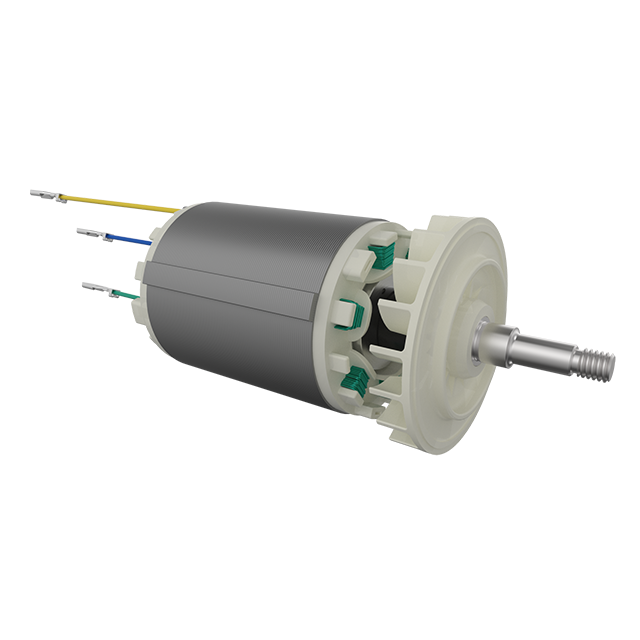
Removing these physical contact points changes the operational dynamic entirely. A brushless motor utilizes external magnets and stationary copper coils to generate rotation through magnetic fields. No physical contact means zero friction-induced heat from brushes. The tool runs significantly cooler during extended operational shifts, even when ambient shop temperatures rise. Thermal management directly correlates to overall motor lifespan. Cooler motors simply last longer. They survive aggressive, multi-hour sanding sessions without burning out or requiring cool-down periods.
Electronic Commutation and RPM Stability Under Load
Electronic commutation controls the tool. Instead of relying on mechanical contact, an internal circuit board constantly monitors the rotational resistance at the backing pad. It dynamically adjusts the electrical power draw to maintain a constant speed.
When you apply heavy downward pressure to level a stubborn high spot on a slab of oak, a traditional brushed motor bogs down. You hear the pitch of the motor drop. A brushless motor detects this resistance instantly and feeds more current to the coils to keep the pad spinning at the selected RPM. You hear the motor surge with power to match your physical input.
This RPM stability prevents uneven material removal across large surfaces. It stops pigtail scratches dead in their tracks. Pigtails happen when the pad slows down enough to drag a single piece of abrasive grit across the surface instead of cutting cleanly. Consistent power pairs perfectly with the dual-action movement of the tool. The pad spins on a central axis and orbits simultaneously in an elliptical pattern. This complex motion guarantees a flawless, swirl-free finish even when you are forced to sand directly across the material grain.
Corded vs. Cordless: The Continuous Power Advantage
The Dust Collection Reality: Why Cordless is Often Redundant
Shop owners frequently debate between corded and cordless models when buying new equipment. Cordless tools promise ultimate mobility and freedom from trip hazards. Corded tools offer unlimited runtime and consistent voltage. However, you must look at the practical reality of professional sanding environments.
Effective dust management requires a tethered vacuum hose connected directly to the tool. You cannot sand indoors safely or effectively without active dust extraction pulling debris away from the abrasive pad. Airborne silica dust, wood flour, and atomized clear coat present severe respiratory hazards.
OSHA regulations regarding silica dust and wood dust are stricter than ever. You cannot just blow dust around the shop with an air compressor anymore. You need point-of-source extraction. This means a vacuum hose is permanently attached to your sander. A standard 27mm anti-static hose weighs a few pounds. When you drag that hose across a workbench or over the roof of a car, you feel the drag.
If the tool must be tethered to a bulky dust extractor hose anyway, the mobility argument for cordless sanders vanishes completely. Adding the substantial weight of a high-capacity lithium-ion battery offers zero practical workflow advantage. You drag a heavy, ribbed vacuum hose across the workpiece regardless of how the tool receives its power. You might as well drag a lightweight power cord alongside that hose. Taping the power cord to the extraction hose creates a single, manageable umbilical cord that never runs out of energy. Many modern dust extractors even feature integrated power outlets, allowing the sander to trigger the vacuum automatically when you press the paddle switch.
Eliminating Battery Swaps in High-Volume Workflows
Battery depletion ruins shop productivity and breaks operator concentration. Charging cycles interrupt your rhythm, forcing you to stop work and swap power sources. Thermal lockouts happen frequently when batteries overheat during heavy stock removal, leaving you waiting for the pack to cool down before it will accept a charge.
These interruptions compound over a busy week. Consider the workflow of a standard cordless setup:
The operator notices a drop in tool performance as the voltage sags.
They stop sanding, walk to the charging station, and swap the battery.
They return to the workpiece and try to find where they left off, often missing spots.
If the spare battery is not fully charged, the cycle repeats prematurely.
A continuous 120V or 230V power supply eliminates these bottlenecks entirely. It allows for uninterrupted Auto Paint Sanding & Polishing sessions. Operators stay focused on the panel in front of them. Continuous power means continuous production. You never experience the frustrating drop in performance that occurs as a battery drains its final twenty percent of capacity.
Evaluating Efficiency Gains: Features to Outcomes
Material Removal Rates and Operator Fatigue
Tool weight directly impacts daily productivity on the shop floor. Brushless motors weigh significantly less than their brushed counterparts because they require fewer heavy internal components. They pack more raw power into a much smaller, low-profile housing. This compact pancake design creates a lower center of gravity, placing the operator's hand closer to the work surface.
A lower center of gravity prevents the tool from tipping and requires less downward force from the user to keep the pad flat. You simply guide the tool across the surface instead of pressing it down aggressively. This ergonomic advantage drastically reduces wrist, elbow, and shoulder strain over an exhausting 8-hour shift. Less physical fatigue means operators maintain better control, resulting in fewer costly mistakes at the end of the workday. When you sand vertical surfaces, like the side of a van or a standing cabinet, shedding a few pounds of tool weight makes a massive difference in operator comfort.
Operator Technique: Maximizing the Brushless Advantage
You have to change your sanding technique to get the most out of a brushless motor. The most common mistake operators make is treating a modern brushless sander like an old brushed model. Let the tool's weight do the actual work. Do not apply excessive downward pressure. Pressing too hard compresses the abrasive grains, traps heat against the surface, and prevents the dust extraction holes from clearing debris.
Move the sander at an optimal, controlled speed. Approximately one inch per second works best for most applications. This slow, deliberate movement allows the random orbital action to effectively clear dust from the surface. It prevents localized heat buildup that ruins finishes. It also maximizes the lifespan of your expensive abrasives. Rushing the movement across the panel leaves distinct curly scratches behind, forcing you to repeat the entire process.
Operator Technique Comparison
| Technique Variable | Incorrect Approach | Correct Brushless Approach |
| Downward Pressure | Leaning heavily onto the tool to force material removal. | Resting the hand lightly on the grip, letting the tool weight cut. |
| Movement Speed | Scrubbing back and forth rapidly across the panel. | Gliding at one inch per second in overlapping passes. |
| Starting the Tool | Turning the tool on in the air, then dropping it onto the surface. | Placing the pad flat on the surface before engaging the power. |
| Stopping the Tool | Lifting the tool while the pad is still spinning at full RPM. | Releasing the paddle switch and letting the pad stop on the surface. |
Stroke/Orbit Size Selection for Specific Applications
Orbit diameter changes how the sander behaves. You must match the stroke size strictly to the task at hand. A larger orbit moves the abrasive further from the center point, cutting faster but leaving a rougher scratch pattern. A smaller orbit keeps the abrasive tighter, cutting slower but leaving a highly refined finish ready for final coating.
Orbit Size Application Guide
| Orbit Diameter | Primary Application | Material Removal Rate | Finish Quality |
| 8mm (5/16") | Aggressive stock removal, shaping body filler, stripping thick paint | Very High | Coarse |
| 5mm (3/16") | General purpose sanding, leveling primer, medium stock removal | Medium-High | Good |
| 3mm (1/8") | Fine finishing, clear coat preparation, solid surface blending | Low | Excellent |
| 2.5mm (3/32") | Ultra-fine finishing, final polishing steps, sensitive veneer work | Very Low | Flawless |
Vibration Reduction and Ergonomic Longevity
Hand-Arm Vibration Syndrome (HAVS) ends careers. Prolonged exposure to heavy tool vibration causes permanent nerve damage, numbness, and severe joint pain. Protecting operators from excessive vibration is a strict safety mandate. Brushless designs inherently produce less internal vibration because they utilize fewer moving mechanical parts.
Precision-balanced backing pads also contribute massively to safer usage limits. High-quality pads absorb mechanical resonance before it travels up through the tool housing and into your hand. Symmetrical internal counterweights offset the eccentric motion of the spinning pad. This combination of smooth magnetic motor rotation and balanced mechanics drastically extends your safe daily trigger time. You can run the tool for hours without experiencing the tingling sensation in your fingers that older sanders cause.
Industry-Specific Applications and Success Criteria
Auto Paint Sanding & Polishing: Achieving Flawless Clear Coat Prep
Automotive refinishing requires incredibly tight tolerances. A single deep scratch left under the base coat ruins an expensive paint job instantly. Consistent RPMs prevent the sudden heat buildup that plagues auto body work. Excess heat can burn through delicate clear coats in seconds. It can even warp or melt thin automotive plastics underneath the paint.
Brushless stability prevents these expensive disasters. The motor maintains its speed perfectly as you transition from flat hoods to curved fenders. Start with P80 or P120 to knock down body filler. The 5mm orbit clears the heavy dust without loading up the paper. Once the panel is flat, switch to P220 and P320 to feather the edges of the repair area into the surrounding clear coat. The brushless motor keeps the pad spinning fast enough to cut the paint cleanly without tearing the edges.
For final prep before primer, drop down to a 3mm orbit with P400 or P600. The smaller stroke leaves a scratch pattern so fine that the primer fills it effortlessly. After painting, use P1500 and P2000 wet sanding discs to remove orange peel, followed by a foam pad and cutting compound. The sander doubles as a polisher, maintaining the torque needed to break down the abrasives in the compound evenly across the entire panel, leaving a mirror finish without holograms.
Commercial Woodworking: Managing High-Volume Stock Removal
Preparing raw timber requires serious power. Leveling poured epoxy river tables or smoothing thick hardwood veneers demands aggressive mechanical action. You need a non-stalling orbital motion to flatten wide boards efficiently. Working through dense end-grain or exotic hardwoods challenges the limits of any electric motor.
When building a dining table from rough-sawn slabs, you start with a router sled to establish flat faces. This leaves deep tooling marks across the grain. A standard sander takes hours to remove these marks. A brushless sander with an 8mm orbit and P40 grit mesh abrasive removes them in minutes. You guide the tool diagonally across the grain, letting the aggressive stroke level the high spots.
Once the mill marks are gone, you move to P80, then P120, switching to a 5mm orbit. The consistent power ensures you don't leave deep pigtails in the softer earlywood. For the final finish, a 3mm orbit with P180 and P220 prepares the surface perfectly for hardwax oil or polyurethane. The wood absorbs the finish evenly because the scratch pattern is uniform across the entire board. You spend less time chasing defects and more time applying the final finish.
Implementation Realities and Adoption Risks
Initial Capital Investment vs. Long-Term ROI
Brushless tools cost more upfront. Traditional brushed sanders look much cheaper on the retail shelf, making them tempting for budget-conscious buyers. However, professionals must calculate their return on investment differently. You must factor in the value of eliminated downtime.
Add the zero brush replacement costs over a five-year lifespan. Measure the increased daily output achieved through lower operator fatigue and faster material removal. When you calculate these operational variables, a premium brushless sander pays for itself within months in a high-volume production environment. The initial sting of the purchase price fades quickly when the tool performs flawlessly day after day. You stop paying operators to stand around waiting for batteries to charge or tools to cool down.
Infrastructure and Compatibility Requirements
You cannot run these tools effectively by themselves. To realize their full efficiency potential, you must pair the sander with a dedicated M-Class or HEPA dust extractor. Clean surfaces cut significantly faster because the abrasive grains constantly bite into fresh material rather than riding on a layer of waste dust.
You also need compatible, high-quality abrasives. Modern ceramic mesh abrasives vastly outperform traditional punched paper discs. Ensure the hole patterns on your abrasive discs match the extraction holes on your backing pad perfectly. Mismatched holes trap dust, generate excess heat, and kill your cutting efficiency immediately.
Steps to Maximize Abrasive Life:
Align the abrasive holes perfectly with the backing pad extraction ports.
Run the dust extractor on the correct suction setting to prevent the pad from sucking down too hard onto the surface.
Use a pad saver interface when sanding aggressive edges to protect the expensive backing pad hooks.
Blow out the mesh abrasive periodically with compressed air to dislodge stubborn resin or clear coat buildup.
Maintenance Expectations for Brushless Systems
Manufacturers often call these tools "maintenance-free." This claim only applies to the lack of carbon brushes. You still have strict maintenance responsibilities to keep the tool running properly. Backing pads wear out over time, losing their hook-and-loop grip and their flat profile. You must replace them regularly.
Internal bearings require periodic inspections and cleaning. Severe drops onto concrete floors can cause catastrophic circuit board failure. Power surges from faulty generators can fry the sensitive electronics. Repairing a damaged circuit board costs significantly more than replacing a burned-out brushed motor. You must handle the tool with professional care, blow out the dust regularly with compressed air, and store it safely in a hard case when not in use.
Conclusion
Audit your current dust extraction setup to ensure the hose fittings match the exhaust port of the new sander.
Test different orbit sizes on scrap material to understand how 5mm and 3mm strokes affect your specific clear coat or timber.
Transition your abrasive inventory from traditional paper discs to high-performance ceramic mesh to maximize dust collection.
Train your operators on proper brushless technique, emphasizing slow movement and minimal downward pressure.
FAQ
Q: What is the difference between a brushed and brushless random orbital sander?
A: A brushed sander uses physical carbon brushes pressing against a commutator to transfer power, creating friction and heat. A brushless sander uses an electronic circuit board and magnets to drive the motor. This eliminates physical contact, drastically reduces heat generation, and removes the need for routine brush maintenance.
Q: Why choose a corded sander over a cordless one for auto body work?
A: Auto body work requires continuous power for uninterrupted sanding and polishing. Cordless models introduce heavy battery weight and frustrating charging delays. Because you must attach a vacuum hose for dust extraction anyway, the mobility of a cordless tool is useless. A corded model provides endless power without the battery bulk.
Q: Does a brushless motor actually improve the quality of the sanded finish?
A: Yes. Brushless motors maintain consistent RPMs even under heavy downward pressure. Traditional motors bog down, which causes the abrasive to drag and create uneven sanding marks or deep pigtail scratches. The stable speed of a brushless motor ensures a uniform, swirl-free finish.
Q: What orbit size should I choose for a random orbital sander?
A: Choose a 5mm (3/16") orbit for general purpose work, rapid stock removal, and leveling primer. Choose a smaller 2.5mm (3/32") or 3mm (1/8") orbit for fine finishing, clear coat preparation, and final polishing steps where a flawless surface is required.
Q: Are corded brushless sanders worth the higher initial cost?
A: For professional, daily use, absolutely. The return on investment is achieved rapidly through longer tool life, zero brush maintenance, increased material removal rates, and significantly reduced operator fatigue. For occasional DIY use, the technology may be over-engineered and unnecessary.
Q: How does a random orbital sander differ from a standard orbital sander or belt sander?
A: Random orbital sanders spin the pad while simultaneously moving it in an elliptical orbit, leaving a swirl-free finish regardless of grain direction. Standard orbital (sheet) sanders only vibrate in tiny circles, which can leave visible marks. Belt sanders move linearly, removing material aggressively but leaving deep directional scratches.


