Woodworkers and serious hobbyists hit a wall during the finishing process. Heavy cordless batteries cause physical fatigue. Traditional brushed motors wear out fast and vibrate aggressively. Sanding takes hours of sustained effort. Tool selection dictates surface quality and operator health. You need a sander that delivers continuous, fade-free power while minimizing fatigue during multi-hour sessions. It must integrate seamlessly into your shop dust collection system to maintain a clean environment and extend abrasive life. Relying on outdated technology or mismatched equipment compromises the final finish and slows down production. We evaluate these tools based on orbit diameter, ergonomic design, dust extraction compatibility, and long-term operational efficiency. This framework helps you select a Corded Brushless Random Orbital Sander that actually performs on the bench.
Continuous Power Over Portability: Corded brushless models eliminate battery swapping, voltage drop, and ecosystem lock-in, providing consistent RPMs critical for uniform scratch patterns in fine woodworking.
Ergonomics and Form Factor: The absence of carbon brushes allows for a lower center of gravity and a paddle-style grip, significantly reducing wrist strain and surface tipping.
Application-Specific Orbit Sizes: Selecting the correct stroke size (e.g., 3mm for finishing, 5mm for general purpose) dictates the tool's efficiency in material removal versus surface prep.
Ecosystem Compatibility: Operational efficiency hinges heavily on the sander's compatibility with existing shop vacuums, hose fittings, and standardized abrasive hole patterns.
The Case for the Corded Brushless Random Orbital Sander in the Shop
Corded vs. Cordless Realities
Cordless tools offer mobility on a framing site. In a dedicated woodworking shop, they introduce severe limitations. A high-amp-hour battery adds over a pound of dead weight to the top of the tool. This alters the center of gravity. You end up fighting the tool to keep it flat on the workpiece. The top-heavy design creates a pendulum effect. You grip the sander tighter to prevent it from tipping and gouging the wood. Over a three-hour session, this added exertion destroys your forearms and wrists.
Unlimited runtime is mandatory for large-scale projects. Flattening a dining table or prepping a kitchen's worth of cabinet doors takes hours. Stopping to swap depleted batteries breaks your rhythm. More importantly, as a battery drains, the voltage drops. This sags the motor's RPM. A lower RPM changes the scratch pattern left on the wood. Consistent 120V wall power ensures a uniform finish across the entire surface.
Choosing a corded model breaks you out of battery ecosystem lock-in. Woodworkers frequently compromise on tool quality just to buy a bare tool that fits their existing plastic chargers. By utilizing standard 15-amp shop outlets, you select the best-in-class machine based purely on performance metrics. Corded power dominates dedicated benchwork. Save the cordless tools for mobile jobsite punch lists.
Brushless vs. Brushed Motor Architecture
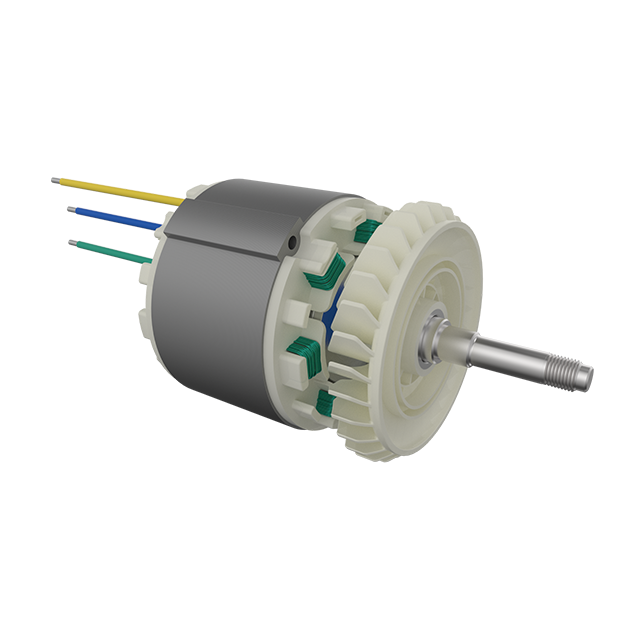
Traditional sanders rely on brushed motors. These use physical carbon blocks rubbing against a spinning copper commutator to transfer electricity. This mechanical contact generates massive friction and heat. During continuous, heavy-load operation, brushed motors overheat. The brushes wear down and eventually require replacement. Brushless motors eliminate this physical contact entirely. They utilize a circuit board and magnets to drive the rotation. This advanced thermal management allows the tool to run significantly cooler, even when aggressively removing stock for hours.
Removing the carbon brush housing revolutionizes the tool's physical footprint. Manufacturers can design highly compact, low-profile sanders. Bringing your hand closer to the sanding pad drastically improves tactile feedback. You feel the wood grain and surface inconsistencies better. The lower profile also naturally prevents tipping.
Electronically commutated brushless motors inherently produce less vibration than traditional brushed armatures. The internal components are lighter and better balanced. Reducing vibration improves the surface finish by preventing erratic pad bouncing. It also protects you from long-term nerve damage. Hand-Arm Vibration Syndrome (HAVS) is a real threat in production shops. Low-vibration tools keep your hands healthy over a decades-long career.
The Pneumatic Comparison: Why Corded Brushless is Taking Over
Historically, high-volume production shops relied exclusively on pneumatic air sanders. Pneumatic tools are incredibly lightweight. The motor is just a simple air vane spinning inside a housing. They feature the ultimate low-profile design. However, the hidden infrastructure required to run them is massive. A single pneumatic sander demands a large, industrial air compressor capable of sustaining 15 to 20 CFM at 90 PSI continuously.
These compressors are deafeningly loud. They consume massive amounts of electricity. Compressing air also generates condensation. You must install complex air-drying systems and water separators to prevent moisture from spitting out of the sander onto raw wood. Water on raw wood raises the grain and ruins the finish prep.
Corded brushless models bridge this gap perfectly. They achieve the same lightweight, low-profile ergonomics of pneumatic sanders without requiring any compressed air infrastructure. You get the tactile feel and control of an air sander by simply plugging into a standard wall outlet. You eliminate the compressor noise, the moisture risks, and the massive electricity draw of a 5HP compressor motor.
Core Evaluation Dimensions: Features to Outcomes
Orbit Diameter (Stroke Size) and Material Removal
The orbit diameter, or stroke size, dictates how aggressively the sander removes material. A random orbital sander spins the pad while simultaneously moving it in a small elliptical orbit. This dual-action prevents the obvious, repeating scratch marks left by standard sheet sanders or pure rotary grinders. The physical size of that elliptical orbit changes the tool's primary function on the bench.
Sanders with a 2.5mm to 3mm orbit are engineered for ultra-fine finishing. The tight stroke keeps the abrasive grains moving in a very confined area. This leaves a microscopic scratch pattern that becomes virtually invisible under stains and clear coats. This smaller orbit is ideal for delicate veneer work, sanding between coats of finish, and final surface preparation before applying oil or lacquer.
Conversely, sanders featuring a 5mm to 6mm orbit are built for rapid stock removal. The larger stroke throws the abrasive grain further across the wood with each revolution. This tears away material quickly. This size is highly effective for leveling epoxy resin, removing milling marks from rough lumber, and general dimensioning.
Using a 5mm orbit requires strict discipline when progressing through grits. You cannot skip from 80 grit directly to 150 grit. The larger orbit leaves deeper pigtail scratches. You must progress methodically through 80, 100, 120, 150, and 180 grits to remove the previous scratches completely.
Sander Orbit Diameter and Application Guide
| Orbit Size | Primary Use | Stock Removal Rate | Recommended Grit Range |
| 2.5mm - 3mm | Final Finish / Veneer | Low | 150 - 400+ |
| 5mm - 6mm | General Woodworking | Medium to High | 80 - 220 |
| 8mm+ | Aggressive Shaping | Very High | 40 - 120 |
Ergonomics, Center of Gravity, and Vibration Control
Tool geometry dictates how your body reacts to prolonged use. Traditional barrel-grip or top-handle sanders force your wrist into an unnatural, elevated angle. You have to grip the body tightly to control the torque. Modern brushless sanders utilize a paddle-switch design. This allows your hand to rest flat across the top of the tool, wrapping naturally around the body.
Activating the tool requires only the downward pressure of your palm. You eliminate the need to squeeze a trigger constantly. When you release your palm, the tool stops. This ergonomic shift reduces forearm pump and wrist strain during long sessions.
Vibration control remains a critical health and safety metric. Prolonged exposure to high-vibration tools causes permanent numbness and loss of grip strength. Premium brushless sanders incorporate active vibration dampening technologies. These systems use internal counterweights to offset the eccentric movement of the sanding pad. This isolates the vibration from your hand, allowing you to work longer without fatigue.
Dust Extraction Efficiency and Pad Design
Dust extraction is not just about keeping the shop floor clean. It directly impacts the quality of the finish and the lifespan of the abrasive. When sanding dust is not evacuated immediately, it builds up beneath the pad. The heat and friction compress this trapped dust into hard pills, commonly called corns. These corns dig into the wood, creating deep pigtail scratches that ruin the surface.
Modern pad designs focus heavily on maximizing airflow. Traditional 8-hole pads are obsolete for high-end finishing. Manufacturers now use multi-hole designs, featuring 17, 49, or even multi-zone hole patterns. These advanced pads pull air from the outside edges toward the center vacuum port.
When paired with net or mesh abrasives, the entire surface of the pad becomes a vacuum intake. There is no solid paper backing to block the airflow. This ensures near-perfect dust extraction. It keeps the abrasive cutting cooler and drastically extends the life of each disc.
Traditional Film vs. Mesh Abrasives
| Abrasive Type | Dust Extraction Efficiency | Durability | Best Application |
| Traditional Film (8-Hole) | Moderate | High edge durability | Heavy stock removal, sharp edges |
| Mesh / Net Abrasives | Exceptional | Prone to snagging on splinters | Flat surface prep, fine finishing |
Electronic Speed Control and Pad Braking
When you apply downward pressure on a standard brushed sander, the motor bogs down. The RPM drops, and the cutting dynamics change. Brushless models feature electronic speed control with active feedback loops. The internal circuit board constantly monitors the motor's load. If it senses resistance from heavy pressure, it instantly feeds more current to the motor.
This maintains a constant speed under load. A consistent RPM guarantees a consistent scratch pattern regardless of how hard you press or variations in wood density. You get the same cutting action on soft pine as you do on hard maple.
Pad braking is another workflow efficiency feature. When you power off a standard sander, the pad continues to free-spin for several seconds due to momentum. If you set the tool down on the workbench before it stops, the spinning pad will gouge the wood or shoot across the table. Rapid pad braking systems use electronic resistance or physical friction rings to stop the pad almost instantly. You can set the tool down safely the second you release the paddle.
Cross-Functional Capabilities and Tool Limitations
Woodworking vs. Drywall Joint Sanding
Contractors often attempt to use a high-end woodworking sander for Drywall Joint Sanding to avoid buying dedicated equipment. While physically possible, this crossover carries massive risks. Fine gypsum dust is highly abrasive and carries a static charge. It easily bypasses standard rubber bearing seals and infiltrates the electronic control boards of brushless motors.
Gypsum dust acts like microscopic sandpaper inside the motor housing. It destroys bearings and shorts out circuit boards. If you must use your woodworking sander on drywall, strict precautions are mandatory. You must use a HEPA-rated dust extractor to ensure the microscopic particles are pulled away from the tool.
Additionally, mesh abrasives are required to allow maximum airflow. Standard paper discs will clog immediately on drywall mud. Failure to manage gypsum dust will result in premature bearing failure and fried electronics, turning an expensive tool into a paperweight.
When to Supplement with a Detail Sander
Despite their efficiency, random orbital sanders have physical limitations. A 5-inch or 6-inch round pad physically cannot reach into 90-degree internal corners, tight profiles, or between narrow louvers. Attempting to force a spinning round pad into a square corner usually results in damaged adjacent surfaces and uneven sanding.
In casework and complex furniture making, supplementing your primary tool with a Detail Sander is required. These tools feature a fixed, oscillating triangular pad designed specifically to navigate tight geometry. The pad does not spin; it only vibrates.
Using the random orbital sander for broad, flat surfaces and the detail sander for inside corners ensures a comprehensive, flawless finish across the entire project. Hand sanding is still required for complex curves, but the detail sander handles the bulk of the corner work efficiently.
Implementation Risks and Operational Considerations
Proprietary Abrasives vs. Universal Discs
When selecting a sander, you must evaluate the consumable ecosystem. Some manufacturers design their sanders with proprietary pad hole patterns. While these patterns often provide excellent dust extraction, they force you to purchase abrasives exclusively from that specific brand. These branded abrasives are typically sold at a massive premium.
Sanders that accept universal 8-hole patterns or utilize multi-hole pads compatible with modern mesh abrasives offer far more flexibility. Mesh abrasives do not require hole alignment at all. You just slap them on the pad and get to work.
This allows you to source high-quality, bulk abrasives from third-party manufacturers. You reduce your daily operational expenses without sacrificing dust extraction performance.
Hose Compatibility and Vacuum Adapters
Mismatched dust ports are a constant source of frustration in the workshop. Many sanders feature proprietary exhaust ports that do not fit standard shop vacuums. Evaluate sanders that utilize standardized 27mm or 36mm dust ports. These seamlessly connect to most professional dust extractors without the need for duct tape or flimsy aftermarket adapters.
Consider the ergonomic drag of the vacuum hose. A heavy, ribbed anti-static hose hanging off the back of the sander pulls the rear of the tool down. This lifts the front edge and causes uneven sanding. Implementing a hose management system preserves the tool's natural balance.
Steps to eliminate hose drag in the shop:
Install a ceiling-mounted swing arm above your primary assembly table.
Route a 27mm anti-static vacuum hose along the arm using velcro straps.
Zip-tie the sander's power cord directly to the vacuum hose to create a single umbilical line.
Adjust the drop length so the sander hovers just above the bench height when released.
Connect the hose to a HEPA-rated dust extractor with an automatic tool-triggered start function.
Maintenance Realities of Brushless Systems
The primary appeal of brushless systems is the lack of mechanical maintenance. There are no carbon brushes to inspect or replace. However, this convenience comes with a different set of maintenance realities. The electronic control boards and sealed bearings that drive these tools are highly complex.
If a brushless motor fails post-warranty, repairing it is rarely a simple DIY fix. Replacing a proprietary circuit board or a specialized sealed bearing assembly requires specific diagnostic tools. Protecting the tool from excessive drops is mandatory.
Ensuring pristine dust extraction and avoiding severe overheating are critical to maximizing the lifespan of these electronic components. Blow out the motor housing with compressed air weekly to prevent dust buildup on the circuit board.
Decision Framework: Matching the Sander to the Shop
High-Volume Production Shops
For shops processing dozens of sheet goods or large solid wood slabs daily, efficiency dictates profitability. The ideal criteria include a 6-inch pad for maximum surface coverage and a 5mm or larger orbit for aggressive stock removal.
These sanders must integrate perfectly with centralized vacuum systems. The goal is to achieve pneumatic-like low-profile ergonomics to sustain operator comfort over eight-hour shifts. A 6-inch pad covers 44% more surface area than a 5-inch pad, drastically reducing sanding time on large dining tables and conference desks.
Fine Furniture and Custom Cabinetry
Precision takes precedence over raw speed in custom furniture making. The ideal sander features a 5-inch pad for versatility on narrower face frames and a tight 3mm orbit for ultra-fine finishing.
Ultra-low vibration and highly responsive precision speed control are mandatory. The tool must leave a flawless, finish-ready surface on delicate veneers and complex grain patterns without burning the wood. A 3mm orbit ensures the scratch pattern remains invisible under high-gloss finishes.
The Serious Hobbyist / Hybrid Shop
Hybrid shops require a balance of capability and budget. A multi-purpose 5mm orbit on a 5-inch pad serves as the perfect all-rounder. It is capable of both decent stock removal and acceptable final finishing if you progress through the grits carefully.
Compatibility is key here. The sander must easily connect to standard residential shop vacs via simple adapters. It must run flawlessly on standard 15-amp residential circuits without tripping breakers when other tools cycle on.
Conclusion
Take the following steps to finalize your sanding setup:
Audit your current dust extraction system to confirm hose diameters and identify any required 27mm or 36mm adapters.
Standardize your shop's abrasive inventory by switching to mesh discs, eliminating the need to match specific pad hole patterns.
Install an overhead hose boom or suspension system above your assembly bench to eliminate ergonomic drag during operation.
Select a sander with an orbit size that matches your primary workflow, prioritizing a 5mm stroke for general purpose or a 3mm stroke for dedicated finishing.
FAQ
Q: Are brushless sanders worth the extra cost for woodworking?
A: Yes. They offer a lower profile, significantly reduced vibration, and constant speed under heavy load. The elimination of carbon brushes means a longer lifespan without mechanical maintenance. This easily justifies the premium over traditional brushed models for serious woodworkers who sand for hours at a time.
Q: Can I use a random orbital sander for drywall joint sanding?
A: Yes, but with extreme caution. Fine drywall dust easily bypasses standard seals and destroys electronics. It requires rigorous dust extraction using a HEPA-rated vacuum and mesh abrasives to prevent premature motor or bearing failure.
Q: What is the difference between a random orbital sander and a detail sander?
A: A random orbital sander uses a spinning and oscillating round pad for fast, swirl-free sanding on flat or gently curved surfaces. A detail sander uses a fixed oscillating triangular pad designed specifically to reach into 90-degree corners and tight profiles where round pads physically cannot fit.
Q: Does a corded sander perform better than a cordless one?
A: For sustained shop sanding, yes. Corded models provide continuous, fade-free power, are significantly lighter, and possess a lower center of gravity. This reduces hand fatigue and prevents the uneven sanding often caused by balancing heavy batteries on top of the tool.
Q: Which orbit size is best for general woodworking?
A: A 5mm (3/16-inch) orbit is widely considered the best all-rounder. It offers an excellent balance between efficient material removal and the ability to achieve a finish-ready surface without leaving obvious scratch marks, provided you follow a strict grit progression.
Q: Do I need a dedicated dust extractor for a brushless sander?
A: While a standard shop vacuum works, a dedicated dust extractor with variable suction, HEPA filtration, and anti-static hoses maximizes the sander's performance. Proper extraction prevents dust from trapping under the pad, extending abrasive life and ensuring a flawless finish.


