Picture a crew halfway through a critical slab modification. Suddenly, the saw bogs down. The telltale acrid smell of burnt carbon fills the air. Equipment breakdowns constantly ruin tight project deadlines. They leave skilled workers idle and cause project budgets to bleed out. Traditional brushed motors overheat quickly during heavy-duty tasks. This inherent mechanical flaw makes daily construction work incredibly frustrating. However, upgrading to brushless technology definitively solves these common bottlenecks. In this comprehensive guide, you will learn how modern engineering vastly improves on-site productivity and safety.
Key Takeaways
Brushless Technology Superiority: Eliminating physical friction yields significantly more runtime and delivers massive torque for demanding masonry applications.
Cost and Time Efficiency: Eradicating carbon brush replacements and extending overall tool lifespans translate directly to a higher return on investment for contractors.
Enhanced Safety and Precision: Advanced electronic controllers prevent kickback, stalling, and overheating, ensuring safer operations and cleaner cuts on structural materials.
Future-Proofing Your Fleet: Investing in advanced gear prepares construction businesses for stricter environmental regulations, silica dust compliance, and noise standards.
The Evolution of Construction Power Tools: From Traditional to Brushless
The construction industry is undergoing a massive mechanical transformation. Recent market analysis indicates a rapid phase-out of legacy brushed equipment across global job sites. Stricter occupational health mandates and a universal push for greener building practices force contractors to rethink their arsenals. To truly grasp the value of modern capital investments, one must first examine why older construction power tools are failing to meet today's rigorous demands.
The Limitations of Brushed Motors in Heavy-Duty Tasks
For decades, traditional brushed motors served as the standard for job site equipment. These motors rely on carbon brushes pressing against a rotating commutator to deliver electrical current to the rotor. While this design is initially cost-effective, it presents severe operational limitations during intense applications like stone and concrete cutting.
The primary culprit is physical friction. As the motor spins at high speeds to slice through dense materials, the constant contact between the brushes and the commutator generates excessive heat. Consequently, this heat buildup leads to rapid internal wear and tear. A significant portion of the electrical power is wasted as thermal energy rather than being converted into cutting torque. Under heavy loads, such as grinding through steel-reinforced concrete, brushed motors frequently experience voltage drops. This ultimately leads to stalling, overheating, and permanent motor burnout.
The Rise of Brushless Technology in Construction
To address these glaring mechanical inefficiencies, the industry has shifted decisively toward brushless motor technology. Instead of using physical brushes, modern tools utilize a closed-loop electronic controller paired with permanent rare-earth magnets.
This structural evolution means electrical current is delivered directly to the stationary stator. This creates a dynamic magnetic field that drives the rotor without any physical contact. Energy transfer becomes highly efficient. Heat generation drops drastically. The tool draws the exact amount of power needed to overcome the specific resistance of the material being cut. This modernization aligns perfectly with the broader construction trend of utilizing smarter, more reliable, and energy-efficient equipment to meet aggressive project timelines.
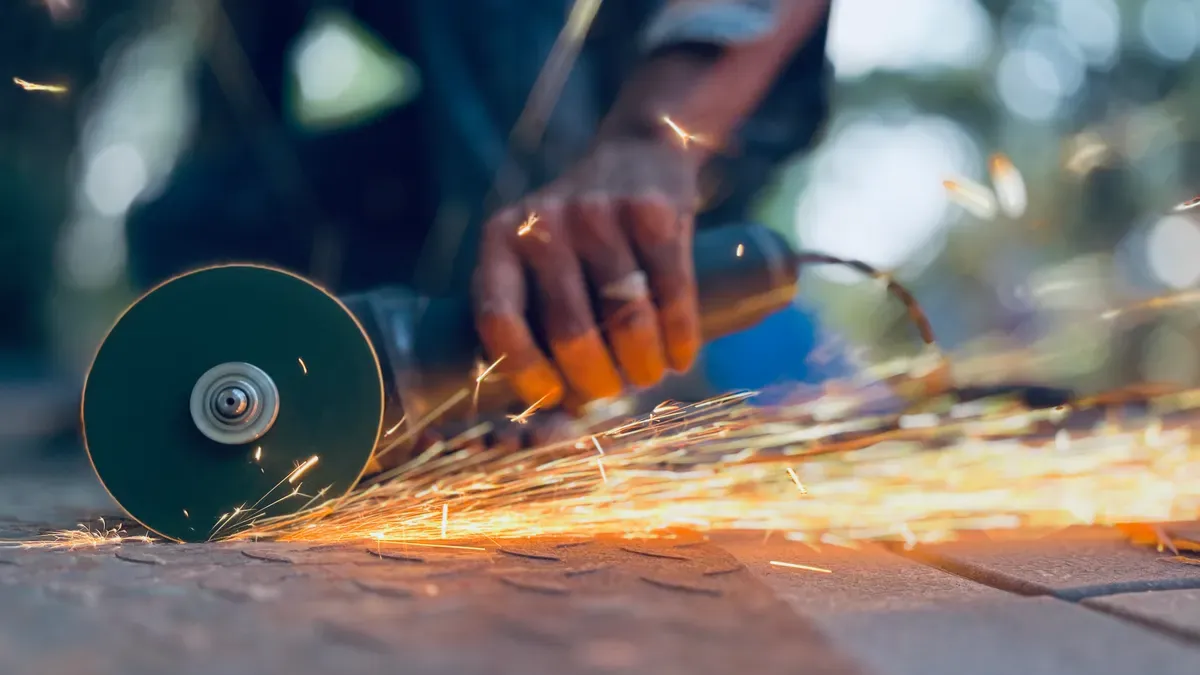
How a Brushless Grinder Revolutionizes Stone and Concrete Cutting
Understanding the internal mechanics of these advanced tools helps procurement managers make informed purchasing decisions when upgrading their equipment fleets.
The Mechanics Behind the Motor
The core differentiator in a brushless system is the inclusion of an intelligent electronic circuit board. When operating a high-performance brushless grinder, this controller acts as the central nervous system of the machine. It continuously monitors the position of the rotor using Hall effect sensors, adjusting the electrical current in milliseconds to match the workload.
Because there are no physical brushes creating mechanical drag, the motor runs significantly cooler. This electronic commutation allows the tool to literally sense the density of the material. If the diamond blade hits a particularly hard piece of river rock aggregate in a concrete slab, the controller instantly delivers more current. It maintains the required rotational speed rather than bogging down.
Tackling Hard Materials with Ease
Slicing through materials like granite, cured asphalt, and steel-reinforced concrete requires immense, sustained power. When a traditional tool encounters this level of resistance, the RPM drops. This slows down the cutting process and damages expensive diamond blades through uneven wear.
In contrast, brushless tools excel in these punishing environments. For instance, a professional-grade 9-inch grinder maintains a consistent 6000 RPM under heavy loads. This prevents the blade from stalling. The diamond segments engage with the material at the optimal speed. The result is faster cuts, reduced operator fatigue, and a significantly extended consumable lifespan.
Benefits of Upgrading Your Masonry Cutting Equipment
For contractors, upgrading equipment must be justified by clear operational and financial advantages. Transitioning to brushless technology offers several transformative benefits that directly impact the bottom line.
Core Technology Comparison
| Feature | Traditional Brushed Motors | Advanced Brushless Technology |
| Energy Efficiency | 70% to 75% due to heat loss | 85% to 90% for optimal power transfer |
| Maintenance Needs | High frequent brush replacements | Zero brush maintenance required |
| Torque Delivery | Drops significantly under heavy load | Sustained torque via smart controllers |
| Lifespan | Shorter prone to commutator wear | Up to three times longer operational life |
Unmatched On-Site Efficiency and Power
Time remains the most expensive commodity on any job site. A brushless machine gets the job done faster with considerably less physical effort. Operators can push through thick masonry walls without needing to pause and let the tool recover its speed.
Extended Tool Lifespan and Zero Brush Maintenance
Every time a tool is taken offline for maintenance, the project bleeds money. Traditional tools require frequent inspections and replacements of carbon brushes. If a brush wears down completely during operation, it can score the commutator and destroy the tool entirely.
Modern alternatives eliminate this failure point completely. The internal components are far less susceptible to wear. Therefore, the overall lifecycle of a brushless stone cutting machine is often double or triple that of its traditional counterpart.
Superior Battery Life for Cordless Freedom
The construction sector is moving steadily toward cordless operations to eliminate trip hazards and reduce reliance on noisy portable generators. Because brushless motors do not waste energy on friction and heat, they maximize the efficiency of lithium-ion batteries. Operators achieve significantly more cuts per charge, making true portability a viable reality for heavy masonry work.
Advanced Thermal Management
Continuous cutting generates intense heat within the motor housing. Brushless tools feature smart controllers that actively monitor internal temperatures. If the tool is pushed beyond its thermal limits, the controller automatically reduces power or shuts the tool down safely before permanent damage to the copper windings occurs. This built-in thermal management protects the contractor's investment from accidental misuse.
Overcoming Common Job Site Challenges with Modern Technology
Modern construction sites present strict environmental and structural challenges. Specialized equipment is specifically engineered to mitigate these daily pain points.
Managing Dust and Debris
Cutting concrete generates massive amounts of highly abrasive silica dust. In traditional tools, the aggressive ventilation required to cool the brushed motor pulls this abrasive dust directly into the housing. This grinds down internal components and causes electrical shorts.
Today's brushless masonry cutting equipment is engineered with superior ingress protection. Because they generate less internal heat, they require less aggressive ventilation. Professional-grade models feature encapsulated electronic boards and mesh-filtered air intakes. This prevents abrasive dust from reaching critical components, ensuring reliability in the harshest environments.
Precision in Complex Cuts
When modifying existing concrete structures, maintaining the structural integrity of the surrounding material is paramount. Using underpowered equipment that stalls or vibrates excessively can cause micro-fractures in the concrete. This weakens the load-bearing capacity of the structure. Professional brushless equipment delivers smooth, continuous power. This allows for exact cuts crucial for installing expansion joints or plumbing channels without compromising the surrounding masonry.
Why Professional Contractors Rely on Specialized Concrete Cutting Tools
There is a distinct line between consumer-grade do-it-yourself tools and enterprise-grade construction equipment. For professional contractors, investing in specialized technology is a matter of strict economics and safety compliance.
The Cost of Inefficiency
Purchasing cheaper traditional tools may seem like a cost-saving measure initially. However, hidden costs quickly accumulate. When a cheap tool overheats and requires a cooling period, the contractor is still paying hourly labor rates for an idle worker. Furthermore, the cost of replacing burnt-out tools multiple times a year far exceeds the initial premium paid for a high-quality brushless model. Specialized tools maximize uptime, ensuring labor costs translate directly into project progress.
Meeting Strict Safety and Compliance Standards
Occupational safety regulations are becoming increasingly stringent globally. Premium tools are equipped with advanced safety features that traditional models simply lack. Electronic brakes can stop a spinning blade in under two seconds when the trigger is released. Soft-start technology gradually ramps up the RPMs to prevent the tool from jerking out of the operator's hands upon startup. Most importantly, anti-kickback sensors detect sudden pinches in the material and instantly cut power to the motor, preventing severe operator injury.
Actionable Selection Criteria for Stone Cutting Machines
When investing in heavy-duty construction equipment, objective performance metrics must guide the purchasing decision. Evaluating a machine requires looking beyond basic horsepower and examining the internal engineering that dictates performance under extreme stress.
Sustained Torque and RPM Consistency
Cutting through dense materials requires sustained torque rather than just peak free-speed. Traditional motors often experience severe RPM drops when encountering sudden resistance like steel rebar. Brushless motors resolve this mechanical flaw through electronic feedback loops that instantly adjust power draw.
When selecting a 9-inch grinder for reinforced concrete, look for a machine that can sustain at least 6000 RPM under load. For natural stone, adjustable lower RPMs combined with high torque prevent material burning and edge chipping. Professional contractors must evaluate the torque curve of the equipment to ensure it aligns with their primary cutting applications.
Smart Controllers and Encapsulated Integration
The operational brain of a modern brushless tool is its electronic controller. High-quality internal controllers monitor temperature, load resistance, and voltage in real-time. Buyers should prioritize tools with epoxy-coated internal electronics and sealed bearings. Equipment lacking robust electronic sealing is far more susceptible to catastrophic failure when exposed to abrasive slurry and moisture.
Ergonomics and Active Vibration Control
Prolonged exposure to heavy machinery vibrations leads to Hand-Arm Vibration Syndrome, a serious and irreversible occupational hazard. Modern equipment incorporates active vibration dampening systems and decoupled handles to isolate the operator from motor oscillations. A lighter, ergonomically balanced tool reduces operator fatigue. This directly correlates to more precise cuts and fewer workplace accidents during extended shifts.
Future Trends: What’s Next for Stone and Concrete Cutting?
The construction equipment sector is evolving rapidly. Staying ahead of technological trends allows forward-thinking contractors to maintain a competitive edge, especially as regulatory bodies tighten standards around silica dust exposure and workplace ergonomics.
Smart Diagnostics and Fleet Management
The integration of the Internet of Things into masonry equipment allows fleet managers to track tool health remotely. Sensors embedded within the motor housing log operating hours, temperature spikes, and load stress. This empirical data enables predictive maintenance. It alerts operators to potential mechanical issues before a breakdown occurs on the job site. Next-generation tools will automatically adjust their performance parameters based on the specific wear patterns of the internal components.
The Complete Shift to Cordless Job Sites
Historically, high-demand tasks required tethered AC power or gas-powered engines due to massive energy draws. Industry analysis shows a massive shift toward battery-powered solutions driven by green building initiatives and zero-emission mandates in urban centers. The synergy between high-density lithium-ion batteries and highly efficient brushless motors is making fully cordless job sites a reality. This shift eliminates trip hazards from extension cords and provides unparalleled mobility for contractors working on multi-story projects.
Conclusion
Upgrading to a brushless grinder dramatically increases overall site productivity. These highly engineered tools handle the toughest materials with ease, ensuring that your crew is never left waiting for an overheated motor to cool down. Smart electronic controllers prevent expensive downtime, offering better safety mechanisms and remarkably longer tool lifespans.
Investing in advanced masonry equipment is no longer just a luxury. It is an operational necessity. It prepares your business for strict future environmental and safety regulations while drastically cutting maintenance overhead. By choosing the right concrete cutting tool for your specific projects, your crew will operate faster, smarter, and significantly safer. Evaluate your current fleet and explore the professional-grade solutions available at Hoprio to find the exact equipment engineered to keep your projects on time and under budget.
Frequently Asked Questions
Can a brushless grinder be used for both stone and concrete cutting?
Yes. A high-quality brushless grinder is highly versatile and capable of slicing through natural stone, asphalt, and reinforced concrete efficiently. The determining factor is the abrasive accessory attached to the tool. Using a segmented diamond blade is ideal for aggressive concrete cutting, while continuous rim blades are better suited for smooth cuts in granite or marble. The brushless motor provides the sustained torque necessary for both applications.
Why is a brushless concrete cutting tool more expensive than a brushed one?
The initial purchase price is typically higher due to the complex internal electronics and premium materials used in its construction. Instead of inexpensive carbon brushes, these tools rely on sophisticated electronic controllers and strong rare-earth magnets. However, evaluating the investment requires looking at the total cost of ownership. Brushless models eliminate mechanical wear and tear, offering significantly longer operational lifespans and reduced job site downtime.
What is the optimal RPM for cutting reinforced concrete?
For heavy-duty concrete cutting using large diamond blades, such as a 9-inch wheel, an optimal sustained speed is typically around 6000 RPM. Maintaining this speed under heavy load is crucial. If the RPM drops too low when hitting rebar or hard aggregate, the blade can glaze over or stall. Brushless technology excels here by electronically boosting power to maintain the target RPM regardless of material density.
How does brushless technology improve safety in construction power tools?
Safety is a critical concern on any construction site. Brushless technology introduces advanced protective features directly into the microprocessor. If a blade binds in a deep concrete trench, the electronic controller senses the sudden spike in electrical resistance and triggers an electronic brake. This stops the cutting wheel in milliseconds, preventing violent kickbacks that cause severe operator injuries.
How much maintenance does a brushless motor actually require?
Compared to traditional motors that need periodic carbon brush replacements and commutator resurfacing, brushless motors require virtually zero internal mechanical maintenance. The primary maintenance involves keeping the exterior vents clear of debris and ensuring the batteries or power connections remain clean. Because the sensitive electronics are typically encapsulated in epoxy, they are well-protected from dust and moisture.
What makes masonry cutting equipment different from standard cutting tools?
Masonry cutting equipment is specifically engineered to withstand the extreme demands and harsh environments associated with processing stone, brick, and concrete. Concrete and stone generate highly abrasive silica dust when cut. Professional masonry tools feature encapsulated motor housings, epoxy-coated stators, and labyrinth air intakes to seal out this destructive debris. They are geared to deliver higher sustained torque rather than just high free-speed RPMs.


